Dhaka 26 October, 2026

Google's data plans in Saudi Arabia 'risk lives'

Deutsche Welle

Publish : 18 Jun 2022, 10:56 PM
Photo: Collected

Internet giant Google is creating a "cloud region" in Saudi Arabia. It says it will protect users there. But digital rights activists say the firm will be putting the lives of government critics at risk.

Who's right?

Saudi Arabia doesn’t exactly have a positive track record when it comes to digital espionage. In 2018, the country’s government reportedly used the notorious spy software Pegasus on devices belonging to the family of Jamal Khashoggi, the Saudi dissident who was killed that year in a gruesome assassination allegedly orchestrated by the government. In 2019, two former Saudi employees of Twitter in the US were charged with using the popular social media platform to unmask critics of the Saudi government. And last year, a Saudi aid worker who had used a Twitter account to make jokes about his government was jailed for 20 years. His case is believed to be connected to the government’s infiltration of Twitter.

And then there’s Google.

The online giant has the most popular search engine and most-used, web-based email service in the world. Part of US company Alphabet Inc., Google regularly boasts about how carefully it protects users data. But it has also had some noteworthy run-ins with authoritarian leaders. Problems in China When the company first introduced its search engine to the Chinese market in 2006, it was criticized by activists for censoring search results critical of the Chinese government. Then between 2009 and 2010, Google was targeted by a far-reaching hacking attack known as Operation Aurora that targeted everything from Google’s intellectual property to the Gmail accounts of Chinese human rights activists, science publication MIT Technology Review reported. Google then withdrew from the Chinese market. Despite that, it was only in 2019 that the US company publicly confirmed it had abandoned a secret project codenamed Dragonfly, a search engine created especially for China, that would filter out results about human rights, democracy, religion and political protest.

Now Google says it wants to set up a cloud region in Saudi Arabia. Given the two actors involved, the reaction from human rights organizations and digital privacy advocates was not surprising. This disturbing new step by Google raises fears that this cloud center could leverage more power to the government of Saudi Arabia in further facilitating human rights abuses, said a 2021 letter signed by 31 human rights organizations, including Amnesty International, the Oxford Internet Institute, and Human Rights Watch.

A cloud center in Saudi Arabia will risk lives, Laura Okkonen of Access Now, the online rights organization that has been a prime mover behind the campaign, told DW. Activist investors Most recently, a group of activists supported by Access Now filed a resolution so that Google’s investors could vote on the Saudi controversy at the annual general meeting of Google’s parent company Alphabet, which was held on June 1. The proposal asked that Google commission a report assessing the siting of Google cloud data centers in countries of significant human rights concern.

Although just over 57% of independent shareholders at the meeting voted for the resolution to be adopted earlier this month, Google’s executive management outrank them in voting power and the resolution was rejected. When responding to DW’s inquiries, Google did not directly address the topic; the company sent an online link to its blog post from December 2021 announcing the Saudi Arabian data center in Dammam would be going ahead. The political issues around setting up a data center in Saudi Arabia are clear. But what are the technical concerns around what are known as cloud services? More private and business users now operate their online devices using the cloud.

What this basically means is that your data things like pictures, documents, music, e-mails and other messages is stored somewhere other than the computer or phone in front of you. The software that lets you play music or post images is being run on larger computers in another location. You simply access them using the Internet. A cloud region is really just a euphemism for the location where all those other computers are, in what is known as a data center. Business opportunities Up until recently, Saudi Arabia has lagged behind in cloud services but industry insiders say it is now being seen as a major, new opportunity.

Of the three biggest cloud operators in the world today, Google is likely to be the first to set up a data center there. The other major players are Amazon and Microsoft. China’s Alibaba already has two data centers in Saudi Arabia. In terms of the technology, there are a number of ways outsiders could gain access to information inside a data center, said Björn Scheuermann, a research director at the Alexander von Humboldt Institute for Internet and Society. Hacking would be one. But as Scheuermann pointed out, hacking can happen everywhere because, by its nature, it usually happens remotely. So it wouldn’t matter if a data center was in Saudi Arabia or not. More specific to Saudi Arabia might be a physical breach at a data center. If somebody marches in there and gets physical access to the hardware, then it becomes very, very difficult in many cases, impossible to guarantee data will be protected, Scheuermann explained. Data centers do tend to have tight security. However employees going into the center would need to be vetted or they could be pressured into extracting data, critics warned. A greater concern than a physical breach of a center occurs when authorities ask for the data by legal means. For example, by a court order that says the data must be handed over, Scheuermann continued. The government says these servers are on our territory and subject to our legal system. In an authoritarian system, defense against legal orders quickly reaches its limits, when your physical assets are in the state’s territory.

According to Saudi laws?

Google has a number of pages on its website about how it deals with requests for user information from governments. It follows several steps and every six months, provides reports showing how many requests it received and how many it responded to positively. (There are no current statistics for Saudi Arabia.) Google stresses that it also complies with local laws. That’s a problem in Saudi Arabia, Marwa Fatafta, policy manager for the Middle East at Access Now, told DW, because Saudi Arabia’s internet regulation laws are hazy and ripe for exploitation. The country’s brand new data protection law, which comes into force early next year, doesn’t allow data collectors to disclose personal data except, Fatafta pointed out, when a government requests it for security purposes, among other reasons.

The country’s legal system is overseen by the Saudi monarchy. In such an authoritarian system, it’s hard to imagine how Google, or any individual, would be able to challenge the government, Fatafta said. Saudi Arabia’s 2007 cybercrime law also comes into it. Google may be asked to block or remove content that violates the law, and then tell the Saudi telecommunications regulator about it. The Saudi cybercrime law is one of the most repressive laws in the region, Fatafta noted. Using the cloud at all is actually a question of trust, research director Scheuermann told DW. After all, you’re storing your personal or professional data with a company, which ostensibly could access it. Most of the time, businesses like Google, Microsoft and Amazon are careful not to do that because of the potential for serious public backlash or major financial penalties, he noted. But essentially, you’re in their hands, Scheuermann said. You have to trust in them to adhere to legal limitations, and also that these limitations are not turned against you.

Follow google news channel to get RTV news Google News
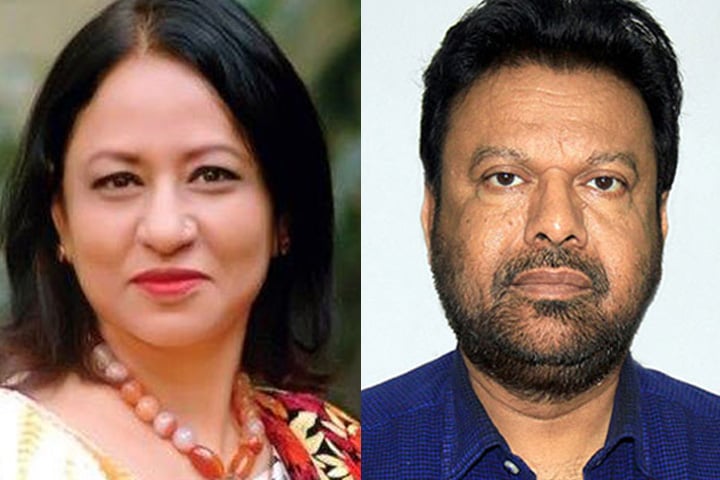
President Farida Yasmin, General Secretary Shyamal Dutta
National Press Club President Farida Yasmin, General Secretary Shyamal Dutta. Farida Yasmin became the president again in the press club elections and Shyamal Dutta was elected as the general secretary. Farida Yasmin got 567 votes and Shyamal Dutt got 496 votes.
President Farida Yasmin, General Secretary Shyamal Dutta
'Bangladesh's Metro Rail News' in the Eye of World Media
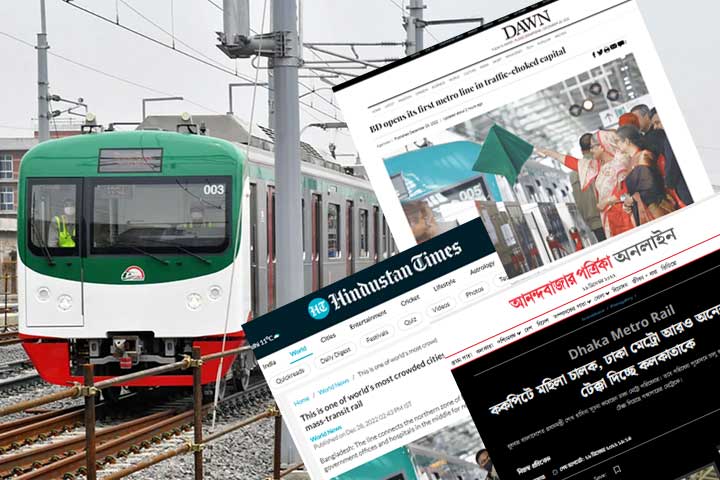
For the first time Bangladesh has set foot in the era of Metro Rail. On Wednesday, December 28, the Metro rail first phase was inaugurated by Prime Minister Sheikh Hasina. A new epoch of metropolitan started. The News of Metrorail inauguration in Dhaka has been circulated in various newspapers around world. The French AFP news agency titled, 'Bangladesh opens first metro line in traffic-choked capital Dhaka'. According to this report, Bangladesh's sprawling capital inaugurated its first ever metro rail line on Wednesday as authorities work to ease congestion that has throttled growth and inflamed tempers in the gridlocked metropolis. United States based media outlet Bloomberg titled, "One of World’s Most Crowded Cities Gets First Mass-Transit Rail." According to the Bloomberg report, "Bangladesh’s capital now has its first metro rail, a Japanese-funded project that aims to ease commuting in one of the most congested cities in the world.  A section of the over 20-kilometer (12.427 miles) urban rail project, known as Line 6, was inaugurated by Prime Minister Sheikh Hasina Wednesday. The line connects the northern zone of Dhaka to a hub of government offices and hospitals in the middle for now. Eventually it will cut through the city to the financial district of Motijheel in the south." The Saudi based media Al-Arabiya titled, "Bangladesh’s congested capital Dhaka gets first mass-transit rail." According to this report, "Bangladesh’s capital now has its first metro rail, a Japanese-funded project that aims to ease commuting in one of the most congested cities in the world. A section of the over 20-kilometer (12.427 miles) urban rail project, known as Line 6, was inaugurated by Prime Minister Sheikh Hasina on Wednesday. The line connects the northern zone of Dhaka to a hub of government offices and hospitals in the middle for now. Eventually it will cut through the city to the financial district of Motijheel in the south." The Indian based newspaper 'Times of India' also published AFP report on metro rail. Another Indian  media outlet NDTV also published Bloomberg report. One of the popular West Bengal Bengali daily 'Anandabazar Patrika' titled,  Dhaka metro rail  inauguration, 'Relief from traffic jams, Metro service started in Dhaka, start off by Sheikh Hasina.' According to the report, Metro rail service begun in Dhaka. Prime Minister Sheikh Hasina waved the green flag and the country's first-ever metro began to roll.  In addition to, Singapore's English daily "The Straits Times", India's "Business Standard", Hindustan Times, Pakistan's "Dawn", "UrduPoint", and many more media outlets around the world published Bangladesh's Metrorail inauguration News.
'Bangladesh's Metro Rail News' in the Eye of World Media
Elon Musk says he will step down as Twitter CEO
Previously, Musk posted a poll on Twitter asking the platform's users whether he should stay on as CEO. More than 57% of the millions who voted said he should step down from his role. Elon Musk said Tuesday he will step down as chief executive of Twitter as soon as a replacement is found. "I will resign as CEO as soon as I find someone foolish enough to take the job! After that, I will just run the software and servers teams," Musk wrote on Twitter. What else has Musk said about stepping down? Earlier this week, Musk received a clear indication from Twitter users that the majority of them would like to see him step down from the job after weeks of controversy surrounding the social media platform. Around 57.5% of the 17.5 million people who took part in a poll he posted on Twitter with the question, "Should I step down as head of Twitter?" answered in the affirmative. Plumbing to new depths After months of lawsuits and the near miss of a full-blown trial, Musk finally took control of Twitter at the end of October. Just before the $44 billion (€41.45 billion) acquisition was finalized, Musk entered Twitter headquarters with a sink in his hands — tweeting the picture with the words, "Let that sink in." The ensuing two months have seen mass layoffs, rows over blue check marks, Donald Trump's account restored, several journalists banned from the platform, the prohibition of promoting other social media outlets and Twitter hemorrhaging millions of dollars per day. There have also been calls from Wall Street for Musk to step down from Twitter, which some investors see as distracting the billionaire from his work at Tesla, the electric vehicle company he also runs. 
Elon Musk says he will step down as Twitter CEO
US to end mpox state of public health emergency
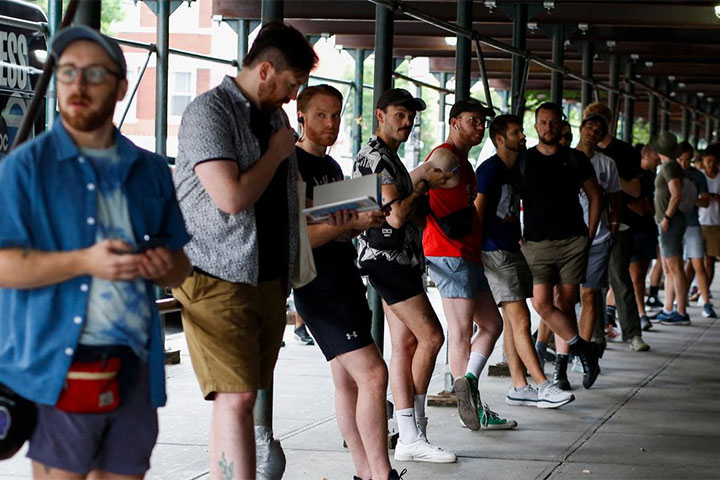
The mpox public health emergency was declared over the summer, as the country struggled to contain the soaring number of infections. However, cases have receded since, with vaccination going strong. The United States will likely end in late January the state of public health emergency declared last summer over the large number of mpox cases. Over 29,000 people were infected in the outbreak. However, cases shrank in recent weeks, after an effective vaccination strategy. The virus was initially known as monkeypox, but the WHO changed this name to mpox earlier this week, as it searched for a "neutral, non-discriminatory, and non-stigmatizing" name. Mpox in the US is most common among men who had sex with infected men. How did the US contain the virus? The US struggle to contain the mpox outbreak started to recede in August, after the declaration of the public health emergency. The White House tasked two top health officials, Robert Fenton and Dr. Demetre Daskalakis, with leading the response. The new strategy centered around targeting local clinics and Pride events with the two-dose Jynneos vaccine. The virus has killed 17 people to date in the US. The Health and Human Services Secretary Xavier Becerra said on Friday that the department expected there will no need to renew the emergency declaration on January 31. "But we won't take our foot off the gas,  we will continue to monitor the case trends closely and encourage all at-risk individuals to get a free vaccine,'' Becerra said. How serious is mpox? In July, the WHO declared the worldwide mpox outbreak a Public Health Emergency of International Concern (PHEIC). Typical mpox symptoms include a rash, headache, fever and chills, among others. The WHO has urged gay and bisexual men to limit their number of sexual partners in order to prevent the spread of the disease. Though endemic to Africa, mpox has spread to several parts of the world this year, claiming lives.    
US to end mpox state of public health emergency
For children, serious respiratory infections are on the rise
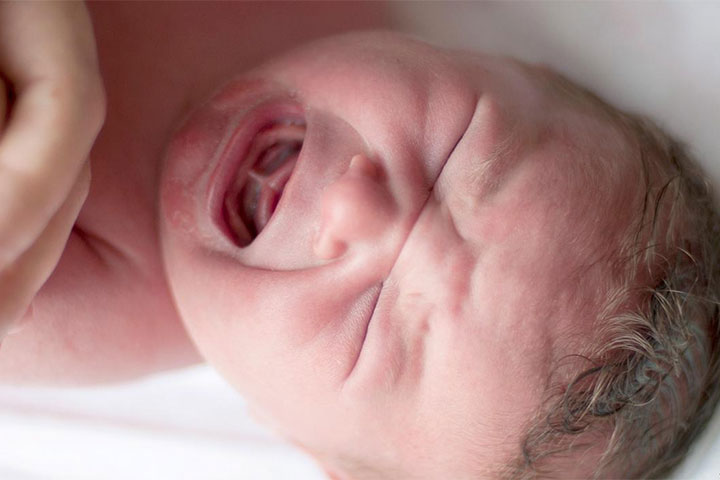
Germany's public health agency reports more than 7 million cases of respiratory illnesses in a month. Babies and children have been infected by a virus that could threaten lives. Why are there so many cases this year? Doctors' offices across Germany are full of coughing, sniffing patients who don't just look miserable but probably feel that way, too.  According to the Robert Koch Institute, the country's public health agency, more than 7 million people have come down with various respiratory illnesses within a month. With cases skyrocketing in such a short stretch of time, doctors are barely able to cope. It's not unusual for cases of infectious disease to increase during the winter months. But this time around, the number is extremely high, and medical and care staff are reaching their limits. Altogether, researchers have identified around 200 different cold pathogens. Four of them are particularly rife in Germany and Europe at the moment, according to the Robert Koch Institute: influenza viruses, rhinoviruses, SARS-CoV-2 and the respiratory syncytial virus (RSV), which can be be dangerous particularly for babies and toddlers. RSV can lead to serious symptoms Many of the children who have been infected by the highly contagious RSV have been sent to the hospital for respiratory support. In some regions of Germany, pediatric wards are completely full. RSV is a common virus, and occurs on a seasonal basis. It can lead to bronchiolitis, which mainly affects children under the age of 2, causing their small airways to become inflamed and swell up. The airways become narrower, reducing air flow to and from the lungs, which can result in breathlessness and pneumonia. Mucus builds up in the fine bronchioles, the smaller branches of the airways, and can leave them seriously damaged. Fever and coughing are also typical of an RSV infection. Some children develop symptoms that resemble those of whooping cough, which can also lead to a life-threatening situation. Adults, for their part, tend to get over such infections without major problems — unless they have serious underlying medical conditions or an immune system that isn't functioning as well as it could. Lax COVID restrictions leading to more cold infections During the worst phases of the COVID-19 pandemic, infections by cold viruses — including RSV — were relatively rare. Most people observed the strict hygiene precautions put in place to stop the spread of COVID: frequent hand-washing, mask-wearing and social distancing. This made it considerably more difficult for viruses of all types to spread far and rapidly. This year, however, the anti-coronavirus measures aren't as strict, both in Germany and many other countries. Cold viruses don't need to overcome distance or face masks to spread their infection, and all those children who escaped infection during the pandemic are now getting sick, creating many more cases than there would be in a typical year. Many of the babies and toddlers who weren't infected two years ago are now getting sick this winter. The same goes for those who avoided illness last year, and the newborns who are just now experiencing their first wave of colds. All these cases are adding up, causing the overall number to explode. All these children have not previously had a chance to build up antibodies against RSV, or many other types of cold virus. Such antibodies help the body to fight off viruses and protect itself from pathogens. The hygiene measures to combat the coronavirus meant that the immune systems of babies and toddlers have, until now, never had to deal with cold viruses — making the current wave of infections all the more serious. What should parents look out for? A major alarm signal for parents is when a child has difficulty breathing, or makes rattling breath sounds. Whistling noises in the lungs or a sort of crackling can also be an indication of a respiratory illness, such as an RSV infection. The Robert Koch Institute has said that children with RSV often don't want to eat or drink, and may vomit. Tiredness can also be a symptom; children sometimes become apathetic and lose interest in everything. Where the symptoms come from exactly, how serious the illness is or whether it could even be life-threatening for a child are best assessed by medical experts. The most important thing to do in such a case is to go to a pediatric doctor, even if making an appointment isn't all that easy at the moment. The RKI has warned that the danger of infections is far from over, with worldwide case numbers possibly rising even further. France already made an emergency plan for a bronchiolitis epidemic in early November. Other countries may soon be forced to follow its example. This article has been translated from German.
For children, serious respiratory infections are on the rise
Read More
Saudi Arabia shock Argentina, but this is no fairytale
Saudi Arabia expects a million pilgrims to make the hajj
FBI seizes retired general's data related to Qatar lobbying
Saudi Arabia to allow one million hajj pilgrims this year