Dhaka 21 September, 2026

AIDS: A new pandemic

Deutsche Welle

Publish : 04 Aug 2022, 11:23 PM
Photo: Collected

About 1.5 million people got HIV in 2021, a million more than predicted. Experts say AIDS programs 'suffered' due to COVID and we have to get back on track.

The COVID pandemic changed a lot in a very short space of time, including our global strategies to slow the spread of and help treat people with HIV and AIDS. And we were doing so well. In West and Central Africa and in the Caribbean, we [saw] substantial declines in new infections, said Winnie Byanyima, executive director of UNAIDS in Geneva. Globally, 26 million people are on HIV treatment in low and middle-income countries, which is an accomplishment that seemed unimaginable just a few years ago, wrote Byanyima in an email to DW.

HIV infections rates are on the rise again UNAIDS published a report in late July, showing HIV infections were rising significantly, with one million more cases reported in 2021 than estimates had predicted. The report highlights an increase in HIV infections in Eastern Europe and central Asia, the Middle East, North Africa and Latin America. There were 650,000 deaths associated with AIDS last year that is more than one death every minute. COVID-19 contributed to higher HIV rates UNAIDS says infection rates started to rise after global resources were diverted away from AIDS to tackle the COVID-19 pandemic. In many countries, the AIDS response was [re-directed] to tackle COVID. This meant a more successful COVID response, but there weren’t the resources to focus on both at the same time. The result was that the AIDS response suffered, said Matthew Kavanagh, deputy executive director at UNAIDS. But gender, economic and racial inequalities continue to play their part in HIV infection rates. For example, new infections disproportionately affect young women and adolescent girls, mostly in African countries, where young women are three times more likely to contract HIV than young men.

In richer countries, HIV rates are higher among people of color than white people. That is true for the USA and UK, including in indigenous communities in Australia, Canada and the USA. The UNAIDS report also shows that men who have sex with men have 28 times the risk of acquiring HIV compared to men of the same age and gender who do not have sex with men.

Some HIV prevention programs still had success

Despite the setbacks under COVID-19, said Byanyima, there are examples of resilience in HIV programs and success. There were, for instance, successful rollouts of antiretroviral treatments in Côte d Ivoire, Malawi, and Kenya and that contributed to a decline in new adult HIV infections. South Africa and Nigeria were [also] able to achieve large reductions in new HIV infections despite serious disruptions from COVID-19, said Byanyima. And on the flipside AIDS programs helped fight COVID-19 with contact tracing, laboratories and public health education. Investments to tackle the AIDS pandemic proved very effective in preparing for a new pandemic, often more so than in the world’s wealthiest countries, added Byanyima.

A new HIV prevention drug is ready to roll

Kavanagh highlighted a new drug called long-acting injectable cabotegravir (CAB-LA). The drug can be injected every 2-3 months to prevent HIV infection. It works by blocking the HIV genome, which means the virus is prevented from integrating itself into human DNA and that stops the virus from replicating. So, it can’t spread and take hold in the body. Experts hope that CAB-LA will build on the success of PrEP or pre-exposure prophylaxis. PrEP is a pill that reduces HIV transmission through sex or intravenous drug use. A recent study in Kenya showed how PrEP had reduced HIV incidence by 74%. But the pill only works in men. Research suggests that, compared to PrEP, CAB-LA may be better at reducing HIV transmission and that it is effective in men and women.

The WHO advises countries to adopt CAB-LA in their strategies to prevent HIV, but notes that it is currently too expensive for most people. If the drug [becomes] affordable for low-and-middle income countries, we can roll it out across the world to reach those who need it most. It can be an inequality buster, said Kavanagh. Experts are also watching HIV vaccine development with renewed optimism after three new mRNA HIV vaccines began trials in March 2022. Gathering the political will But Byanyima and Kavangh say HIV/AIDS programs need renewed support from politics. We need the political will to raise funds to get HIV prevention technologies and strategies out, said Kavanagh. The Global Fund to fight AIDS, tuberculosis and malaria is asking global leaders for $18 billion (17.6 billion euros) to tackle these health issues. It would be a major success if global leaders pledged the money in the coming months, with the global economy in the state that it is. If [they do], we can get the HIV response back on track, but if [they don’t], we will be in deep trouble. We’ll face another pandemic, said Kavangh. I can’t think of a time when it’s been more important.

Follow google news channel to get RTV news Google News
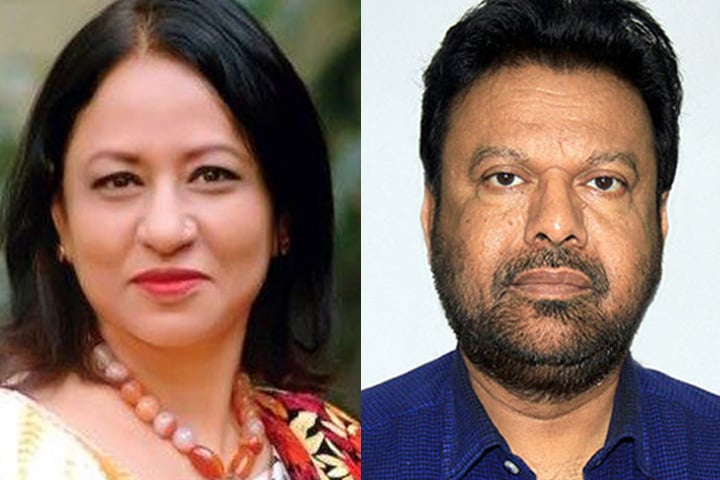
President Farida Yasmin, General Secretary Shyamal Dutta
National Press Club President Farida Yasmin, General Secretary Shyamal Dutta. Farida Yasmin became the president again in the press club elections and Shyamal Dutta was elected as the general secretary. Farida Yasmin got 567 votes and Shyamal Dutt got 496 votes.
President Farida Yasmin, General Secretary Shyamal Dutta
'Bangladesh's Metro Rail News' in the Eye of World Media
For the first time Bangladesh has set foot in the era of Metro Rail. On Wednesday, December 28, the Metro rail first phase was inaugurated by Prime Minister Sheikh Hasina. A new epoch of metropolitan started. The News of Metrorail inauguration in Dhaka has been circulated in various newspapers around world. The French AFP news agency titled, 'Bangladesh opens first metro line in traffic-choked capital Dhaka'. According to this report, Bangladesh's sprawling capital inaugurated its first ever metro rail line on Wednesday as authorities work to ease congestion that has throttled growth and inflamed tempers in the gridlocked metropolis. United States based media outlet Bloomberg titled, "One of World’s Most Crowded Cities Gets First Mass-Transit Rail." According to the Bloomberg report, "Bangladesh’s capital now has its first metro rail, a Japanese-funded project that aims to ease commuting in one of the most congested cities in the world.  A section of the over 20-kilometer (12.427 miles) urban rail project, known as Line 6, was inaugurated by Prime Minister Sheikh Hasina Wednesday. The line connects the northern zone of Dhaka to a hub of government offices and hospitals in the middle for now. Eventually it will cut through the city to the financial district of Motijheel in the south." The Saudi based media Al-Arabiya titled, "Bangladesh’s congested capital Dhaka gets first mass-transit rail." According to this report, "Bangladesh’s capital now has its first metro rail, a Japanese-funded project that aims to ease commuting in one of the most congested cities in the world. A section of the over 20-kilometer (12.427 miles) urban rail project, known as Line 6, was inaugurated by Prime Minister Sheikh Hasina on Wednesday. The line connects the northern zone of Dhaka to a hub of government offices and hospitals in the middle for now. Eventually it will cut through the city to the financial district of Motijheel in the south." The Indian based newspaper 'Times of India' also published AFP report on metro rail. Another Indian  media outlet NDTV also published Bloomberg report. One of the popular West Bengal Bengali daily 'Anandabazar Patrika' titled,  Dhaka metro rail  inauguration, 'Relief from traffic jams, Metro service started in Dhaka, start off by Sheikh Hasina.' According to the report, Metro rail service begun in Dhaka. Prime Minister Sheikh Hasina waved the green flag and the country's first-ever metro began to roll.  In addition to, Singapore's English daily "The Straits Times", India's "Business Standard", Hindustan Times, Pakistan's "Dawn", "UrduPoint", and many more media outlets around the world published Bangladesh's Metrorail inauguration News.
'Bangladesh's Metro Rail News' in the Eye of World Media
Elon Musk says he will step down as Twitter CEO
Previously, Musk posted a poll on Twitter asking the platform's users whether he should stay on as CEO. More than 57% of the millions who voted said he should step down from his role. Elon Musk said Tuesday he will step down as chief executive of Twitter as soon as a replacement is found. "I will resign as CEO as soon as I find someone foolish enough to take the job! After that, I will just run the software and servers teams," Musk wrote on Twitter. What else has Musk said about stepping down? Earlier this week, Musk received a clear indication from Twitter users that the majority of them would like to see him step down from the job after weeks of controversy surrounding the social media platform. Around 57.5% of the 17.5 million people who took part in a poll he posted on Twitter with the question, "Should I step down as head of Twitter?" answered in the affirmative. Plumbing to new depths After months of lawsuits and the near miss of a full-blown trial, Musk finally took control of Twitter at the end of October. Just before the $44 billion (€41.45 billion) acquisition was finalized, Musk entered Twitter headquarters with a sink in his hands — tweeting the picture with the words, "Let that sink in." The ensuing two months have seen mass layoffs, rows over blue check marks, Donald Trump's account restored, several journalists banned from the platform, the prohibition of promoting other social media outlets and Twitter hemorrhaging millions of dollars per day. There have also been calls from Wall Street for Musk to step down from Twitter, which some investors see as distracting the billionaire from his work at Tesla, the electric vehicle company he also runs. 
Elon Musk says he will step down as Twitter CEO
US to end mpox state of public health emergency
The mpox public health emergency was declared over the summer, as the country struggled to contain the soaring number of infections. However, cases have receded since, with vaccination going strong. The United States will likely end in late January the state of public health emergency declared last summer over the large number of mpox cases. Over 29,000 people were infected in the outbreak. However, cases shrank in recent weeks, after an effective vaccination strategy. The virus was initially known as monkeypox, but the WHO changed this name to mpox earlier this week, as it searched for a "neutral, non-discriminatory, and non-stigmatizing" name. Mpox in the US is most common among men who had sex with infected men. How did the US contain the virus? The US struggle to contain the mpox outbreak started to recede in August, after the declaration of the public health emergency. The White House tasked two top health officials, Robert Fenton and Dr. Demetre Daskalakis, with leading the response. The new strategy centered around targeting local clinics and Pride events with the two-dose Jynneos vaccine. The virus has killed 17 people to date in the US. The Health and Human Services Secretary Xavier Becerra said on Friday that the department expected there will no need to renew the emergency declaration on January 31. "But we won't take our foot off the gas,  we will continue to monitor the case trends closely and encourage all at-risk individuals to get a free vaccine,'' Becerra said. How serious is mpox? In July, the WHO declared the worldwide mpox outbreak a Public Health Emergency of International Concern (PHEIC). Typical mpox symptoms include a rash, headache, fever and chills, among others. The WHO has urged gay and bisexual men to limit their number of sexual partners in order to prevent the spread of the disease. Though endemic to Africa, mpox has spread to several parts of the world this year, claiming lives.    
US to end mpox state of public health emergency
For children, serious respiratory infections are on the rise
Germany's public health agency reports more than 7 million cases of respiratory illnesses in a month. Babies and children have been infected by a virus that could threaten lives. Why are there so many cases this year? Doctors' offices across Germany are full of coughing, sniffing patients who don't just look miserable but probably feel that way, too.  According to the Robert Koch Institute, the country's public health agency, more than 7 million people have come down with various respiratory illnesses within a month. With cases skyrocketing in such a short stretch of time, doctors are barely able to cope. It's not unusual for cases of infectious disease to increase during the winter months. But this time around, the number is extremely high, and medical and care staff are reaching their limits. Altogether, researchers have identified around 200 different cold pathogens. Four of them are particularly rife in Germany and Europe at the moment, according to the Robert Koch Institute: influenza viruses, rhinoviruses, SARS-CoV-2 and the respiratory syncytial virus (RSV), which can be be dangerous particularly for babies and toddlers. RSV can lead to serious symptoms Many of the children who have been infected by the highly contagious RSV have been sent to the hospital for respiratory support. In some regions of Germany, pediatric wards are completely full. RSV is a common virus, and occurs on a seasonal basis. It can lead to bronchiolitis, which mainly affects children under the age of 2, causing their small airways to become inflamed and swell up. The airways become narrower, reducing air flow to and from the lungs, which can result in breathlessness and pneumonia. Mucus builds up in the fine bronchioles, the smaller branches of the airways, and can leave them seriously damaged. Fever and coughing are also typical of an RSV infection. Some children develop symptoms that resemble those of whooping cough, which can also lead to a life-threatening situation. Adults, for their part, tend to get over such infections without major problems — unless they have serious underlying medical conditions or an immune system that isn't functioning as well as it could. Lax COVID restrictions leading to more cold infections During the worst phases of the COVID-19 pandemic, infections by cold viruses — including RSV — were relatively rare. Most people observed the strict hygiene precautions put in place to stop the spread of COVID: frequent hand-washing, mask-wearing and social distancing. This made it considerably more difficult for viruses of all types to spread far and rapidly. This year, however, the anti-coronavirus measures aren't as strict, both in Germany and many other countries. Cold viruses don't need to overcome distance or face masks to spread their infection, and all those children who escaped infection during the pandemic are now getting sick, creating many more cases than there would be in a typical year. Many of the babies and toddlers who weren't infected two years ago are now getting sick this winter. The same goes for those who avoided illness last year, and the newborns who are just now experiencing their first wave of colds. All these cases are adding up, causing the overall number to explode. All these children have not previously had a chance to build up antibodies against RSV, or many other types of cold virus. Such antibodies help the body to fight off viruses and protect itself from pathogens. The hygiene measures to combat the coronavirus meant that the immune systems of babies and toddlers have, until now, never had to deal with cold viruses — making the current wave of infections all the more serious. What should parents look out for? A major alarm signal for parents is when a child has difficulty breathing, or makes rattling breath sounds. Whistling noises in the lungs or a sort of crackling can also be an indication of a respiratory illness, such as an RSV infection. The Robert Koch Institute has said that children with RSV often don't want to eat or drink, and may vomit. Tiredness can also be a symptom; children sometimes become apathetic and lose interest in everything. Where the symptoms come from exactly, how serious the illness is or whether it could even be life-threatening for a child are best assessed by medical experts. The most important thing to do in such a case is to go to a pediatric doctor, even if making an appointment isn't all that easy at the moment. The RKI has warned that the danger of infections is far from over, with worldwide case numbers possibly rising even further. France already made an emergency plan for a bronchiolitis epidemic in early November. Other countries may soon be forced to follow its example. This article has been translated from German.
For children, serious respiratory infections are on the rise
Read More
South Africa's Ramaphosa faces impeachment debate
Africa faces climate disaster but is also a beacon of hope
Is Africa's ambitious railway project running late?
Balance of payment may be hit by pandemic and war, PM tells JS