Dhaka 21 September, 2026

Kumari Puja: Significance, Rituals, Offerings

Rtv News

Publish : 11 Oct 2024, 10:56 AM
Photo: Sunil Sharma/Xinhua

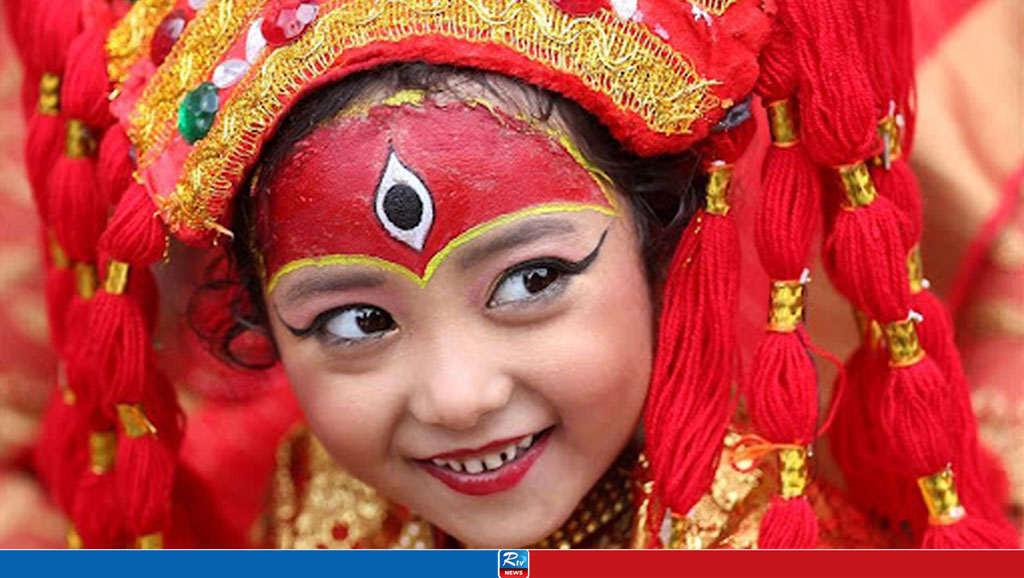
Kumari Puja/Kanya Puja is an important ritual observed during Navratri or Durga Puja. This year Kumari Puja is observed today (Monday, October 11).

During Kumari Puja, an unmarried teenage girl is worshipped symbolically as a goddess. Kumari puja is held at the end of Mahastami puja, but can also be held on the day of Navami puja. Kumari puja may also be held during kali puja, jagaddhatri puja, Annapurna puja and Shakti puja.

According to Hindu scriptures, Kumari puja commemorates the killing of Kolasur by the goddess Kali. According to legend, Kolasur had once occupied the heavens and the earth. The helpless deities approached Mahakali for help. Responding to their appeal, she was born again and, in the form of a maiden, killed Kolasur.

The rituals of Kumari puja and its significance have been described in detail in Yoginitantra, Kularnavatantra, Devipurana, Stotra, Kavacha, Sahasranama, Tantrasara, Prantosini and Purohitadarpana.

Significance
As per religious belief, the Kanya Puja must be done on all nine days of Navratri. However, many opt to perform Kumari Puja on either Ashtami or Navami. As for the Bengalis, Kumari puja always takes place on Ashtami of Durga puja.

Worshipping these young girls is believed to bring good fortune, wealth, and happiness into people’s lives as Mother Divine resides with them. The girls, aged between 2 and 10, represent various forms of Maa Durga, which include Kumarika, Trimurti, Kalyani, Rohini, Kali, Chandika, Shambhavi, Durga, Bhadra or Subhadra.

According to the Bhagavad Purana, the ninth day of Navaratri is believed to fulfill devotees’ wishes. Those who fast for nine days and worship young girls at the end of Navaratri are said to receive blessings. Worshipping a kumari (virgin young girl) is believed to bring good luck, two girls symbolize insight and salvation, while worshipping three girls is associated with virtue.

Rituals

  • Devotees invite nine young girls (between 2 and 10 years old) to their homes. Then, they wash the girls' feet with water, wipe them, and place them on a pedestal.
  • Now, a holy thread, known as Kalawa or moli, is tied around their wrists, while vermilion is applied to their foreheads.
  • Following this, they are offered a variety of special dishes such as poori, chana, ghee halwa, coconut, sweets, and kheer.
  • People also offer money or gifts such as new dresses, bangles, and study materials.
  • Lastly, devotees ask for their blessings by touching their feet.

Offerings
To mark the occasion and conclude the nine-day-long festival, a puja is performed in which flowers, incense sticks, lamps, and other sacred objects are offered while chanting mantras in honor of Goddess Durga. Then, young girls or kanjaks are given Dakshina (money), gifts, and prasad (holy food) as a token of appreciation and attain the blessings of all the divine forms of Maa Durga. The holy food includes halwa-chana, kheer, poori, coconut, fruits, and sweets.

Follow google news channel to get RTV news Google News
Christmas Day Today, Being Celebrated Across Bangladesh
Today is Christmas Day, marking the birth of Jesus Christ, a Jewish preacher and religious leader of the first century. The Day is being celebrated today (December 25) with festivity across the country as elsewhere in the world. Christmas, the biggest religious festival of the Christian community, is the celebration of rebirth, new beginning, forgiveness and peace, and renewing relationship with God and human beings. The Christians of different groups is celebrating the festival amid festivity and religious fervour by offering special prayers, illuminating churches, installing makeshift Christmas trees at homes and places of worship and missions. Elderly people of the community, attired in the outfit of Santa Clause, usually make fun with children and distribute gifts among kids as part of a universal Christian practice.   The day is a public holiday. In separate messages, President Mohammed Shahabuddin and Chief Adviser Professor Muhammad Yunus greeted members of the Christian community on the occasion. They wished peace, welfare, and prosperity to all citizens, including Christians, of the country. President Shahabuddin, in his message, said Bangladesh is a country of communal harmony as people of all religions have been practicing their religions and rituals independently in this country for long. He urged all to work together to build a happy, prosperous, and non-communal Bangladesh. About Jesus Christ's contribution to society, the President said Jesus taught people to be in a peaceful position with love, compassion, forgiveness, affection, empathy, and the establishment of justice. "Instead of earthly life, Jesus Christ put emphasis on the importance of spiritual happiness through renunciation, restraint, and charity," Shahabuddin said. The President thought that the teachings and ideals of Jesus Christ are very relevant in establishing peace and harmony in a trouble-torn world apart from establishing harmony and unity among nations.   Chief Adviser Professor Muhammad Yunus, in his message, hoped that Christmas will further strengthen the existing camaraderie and harmony between Christians and other communities in the country. For thousands of years, he said, people of all religions, regardless of race, religion, or caste, have lived together in harmony in this country. People of all religions and communities have ultimate freedom to practice their own religion here. Professor Muhammad Yunus said Jesus Christ was born in Bethlehem on this day, and one of his vows was to establish a society free from exploitation by establishing justice and peace in the world. The great Jesus, he mentioned, sacrificed himself for the poor and starving people, while his ideal lifestyle and strict characteristics still remain immortal in human history. Greeting the countrymen, especially the Christians, on this occasion, the Chief Adviser wished all citizens' peace, welfare, and prosperity. On the holy day, churches in the capital will be illuminated while Christmas trees will be set up and candles lit at abodes and churches by the Christian community to celebrate the event amid religious fervor. According to the tradition, Santa Clause distributes sweets and gifts among children in churches on the occasion. This is a 'great day' for children in the Christian community, who sing carols on the occasion in praise of Jesus Christ and God and exchange gifts.   The national dailies published special articles highlighting the importance of the Christmas.   Bangladesh Television, Bangladesh Betar and private radio stations and TV channels aired special programmes marking the festival.
Christmas Day Today, Being Celebrated Across Bangladesh
Pilgrims Flock to Kuakata Sea Beach
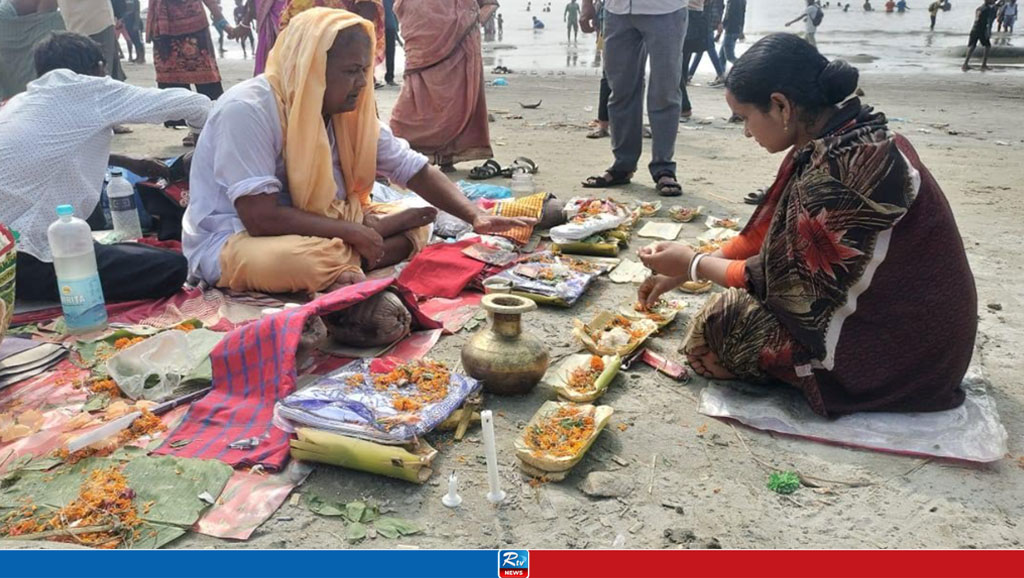
Pilgrims flock to Ras festival in Kuakata. Hindu devotees started coming to Kuakata to celebrate the Ras festival from yesterday afternoon. A lot of devotees gathered at Kuakata Beach and Sri Sri Radhakrishna Temple on the festival of Ras. On Friday (November 15), people encroached on an area of ​​2 km to the east and 1 km to the west, starting from zero point in Kuakata. Since morning, people of the Hindu religion have started to take seats around Sri Sri Radhakrishna Temple to perform religious rituals. Kuakata Raspuja celebration committee president Kajal Baran Das said that Kuakata beach is bustling with thousands of pilgrims on Purnima Tithi. At this time, he also said that the full moon started at 5:43 am today and will remain until 3:32 pm on Saturday (November 16). Therefore, like every year, on this full moon day, Hindu religious men and women will bathe in the sea at Kuakata in the hope of getting rid of their sins. Engineer Nihar Ranjan Mondal, general secretary of the Kuakata Raspuja celebration committee, said, after the formal opening of the puja this evening, Naam Kirtan, Bhagwat reading, and Aarti will continue throughout the night. India's Kabita Ghosh will participate in Leela Kirtan of Sri Krishna. At this time, he said, the Ras festival has started since yesterday. Tomorrow (Saturday) before sunrise, devotees will descend on the sea beach Kuakata in the hope of absolving their sins, according to Ras Purnima Time. On the same day, many people will perform different vows on the beach by bringing priests. People of different religions and races will also meet in Ras Puja, a sea-bathing ceremony. Soumir, who participated in the Ras festival, said, "I wait for this day all year long." I come to bathe for 5 years and offer my vowed puja to Ganga so that Mother Ganga blesses me. Kuakata Tourist Police Region Assistant Superintendent of Police Habibur Rahman said that since yesterday, the entire Kuakata has been covered with strict security. I am vigilant so that no miscreant can cause any trouble. Upazila Executive Officer Mohammad Rabiul Islam said, we expect lakhs of people to gather on the occasion of Ras Purnima and holy bath, which have been going on for hundreds of years. To ensure the safety of the pilgrims coming for the holy bath in Kuakata, a security cordon has been created in coordination with the district, upazila, and municipal administrations. Apart from this, around 500 law and order forces including full-time police, Bangladesh army, tourist police, and village police are working for security.
Pilgrims Flock to Kuakata Sea Beach
Want to Build A Beautiful Country With All Religions: Army Chief
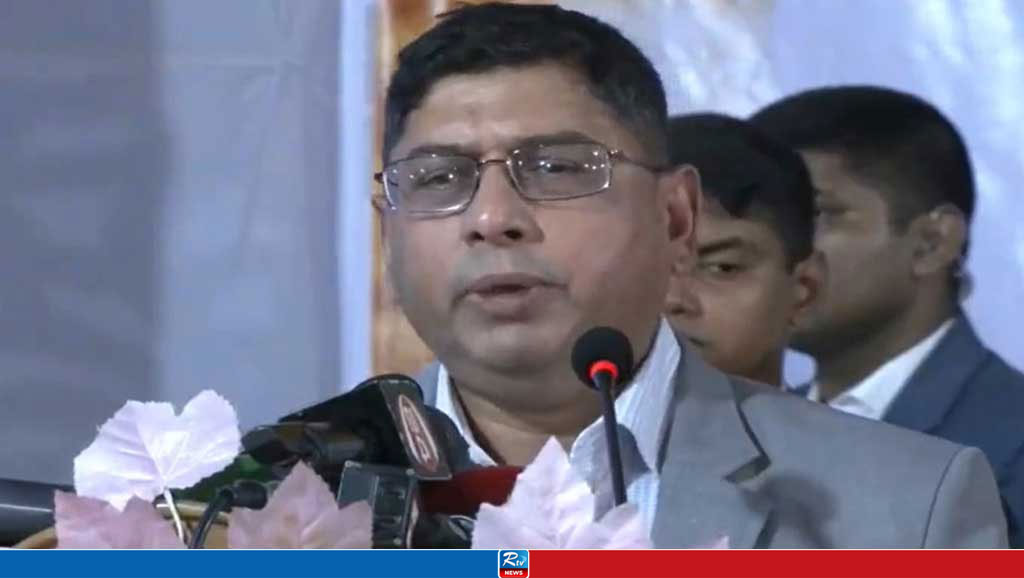
Army Chief General Waker-Uz-Zaman has expressed the hope of building a beautiful country with people of all religions. He stated this on Friday (November 8) afternoon at the capital's International Buddhist Monastery of Merul Badda on the occasion of 'Kothin Chibor Dan and Buddhist Great Convention.' Army Chief said, " We want to build a country of harmony. This is the main motto of Buddhism. We want to build a beautiful country with people of all religions. He also said, "Many people have come here from the hilly areas. We want the day to be celebrated like this every year. We will provide all kinds of assistance for this." Waker-Uz-Zaman said, "The hill region is a great asset of our country. So I will do whatever is necessary for the peace of the hill region." It should be noted that according to Buddhist scriptures, this religious ritual was introduced during the lifetime of Lord Gautam Buddha about two and a half thousand years ago. It is termed 'Kothin Chibor Dan' as it is done within 24 hours from spinning the thread to weaving, sewing, and dyeing the cloth and giving it to the Buddhist monks.
Want to Build A Beautiful Country With All Religions: Army Chief
Bangladeshi Muaz Wins First Place in Turkey’s International Quran Competition
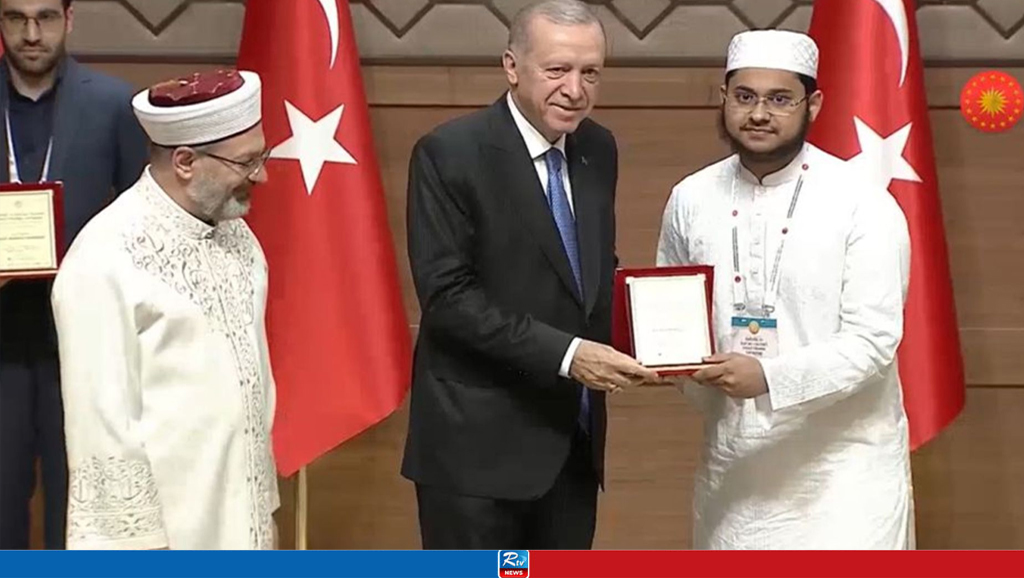
Hafeez Muaz Mahmud from Bangladesh has secured first place in the 9th International Hifzul (Memorization) Quran Competition held in Turkey. This victory marks Bangladesh’s second time achieving the top honor in this prestigious competition, with the previous win occurring in 2016. On Wednesday, October 30, after the local Dhuhr prayer, Muaz received the honorary crest and award from Turkish President Recep Tayyip Erdoğan. In the selection round of the competition, organized under the supervision of the Islamic Foundation at the National Mosque Baitul Mukarram, Muaz outperformed hundreds of talented Hafeez participants across the country. This achievement led to his selection as the sole representative from Bangladesh in the International Hifzul (Memorization) Quran Competition in Turkey. Additionally, on August 21 of this year, Bangladesh secured first place among 123 countries in the 44th International Hifzul (Memorization) Quran Competition held in Mecca. At that time, Hafeez Muaz Mahmud won first place in the 15 'Para' category. Hafeez Muaz is a student in the Kitab department at Markazu Faizil Quran Al-Islami, located in Mirpur-1, Dhaka. After completing his memorization of the Quran from this institution, he is now pursuing higher studies in the Kitab department.
Bangladeshi Muaz Wins First Place in Turkey’s International Quran Competition
India Lights Up for Diwali Amid Festive Traditions
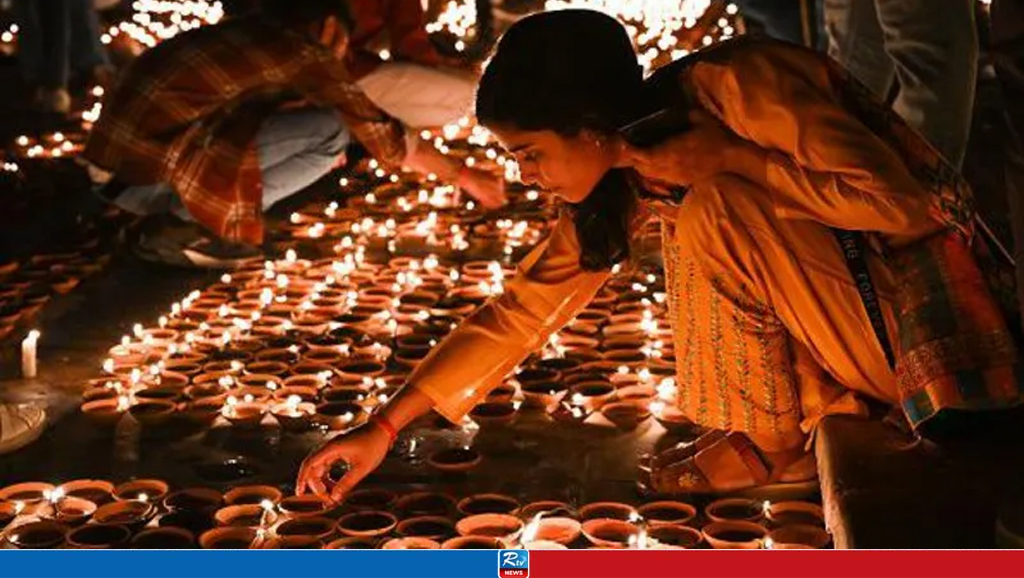
Millions across India are celebrating Diwali, known as the festival of lights and one of Hinduism’s most cherished events. The annual celebration usually occurs between October and November, though the exact date shifts each year due to the Hindu lunar calendar. This year, Diwali falls on Thursday, though some regions will observe it on Friday. On this day, people light oil lamps and candles to represent the victory of light over darkness and good over evil. In preparation for the festival, homes are thoroughly cleaned and organized, new clothes are purchased, and friends, family, and neighbors exchange sweets and gifts. Many people create rangoli, intricate patterns made with colorful powders, outside their doors to invite luck and positivity. Families also worship Lakshmi, the Hindu goddess of wealth, on Diwali, leaving windows and doors open and lighting lamps to guide the goddess into their homes. Fireworks are traditionally part of Diwali festivities, but in recent years, several state governments have restricted or banned them as northern states struggle with intense air pollution. In Delhi, firecrackers are completely banned, while states like Haryana, Punjab, and Karnataka permit their use only during specific hours on Diwali evening. (Source: BBC News)
India Lights Up for Diwali Amid Festive Traditions
Read More
History, Traditions, Significance and Celebrations
Dhanteras 2024: Date, Puja Timings, Significance, and Historical Origins
Schools Resume Today After 11-Day Vacation
Durga Puja Ends with Immersion of Idols