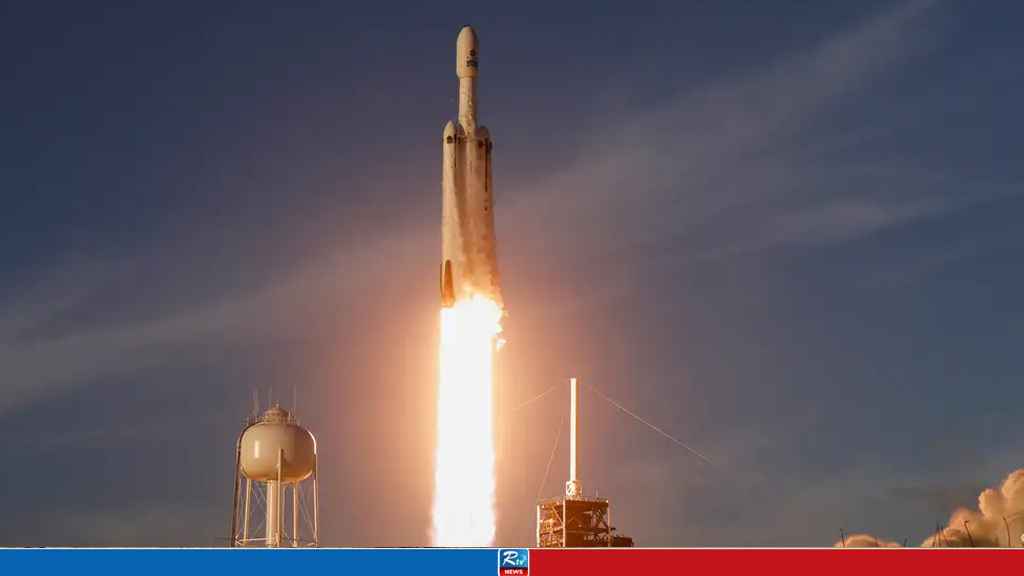
A rescue spacecraft was successfully launched in a high-stakes effort to save a NASA space telescope that has been rapidly losing altitude and currently risks burning up in the Earth’s atmosphere.
Northrop Grumman deployed Katalyst Space Technologies' Link spacecraft from the Marshall Islands utilizing a Pegasus rocket, which was released mid-flight from a modified aircraft.
The specialized rescue vehicle is projected to rendezvous with NASA's Swift Observatory in approximately one month, where it will capture the descending telescope and lift its orbit to secure the future of its scientific mission.
The emergency intervention comes as the 1.6-ton Swift Observatory, originally launched in 2004 to study powerful cosmic phenomena like gamma-ray bursts and exploding stars, faces an accelerated descent.
Increased solar activity has intensified atmospheric drag, drawing the telescope down to its current altitude of about 360 kilometers (224 miles).
To safeguard the observatory until the rescue is finalized, NASA has temporarily suspended all scientific observations.
The space agency is paying Katalyst Space Technologies USD 30 million for the high-risk operation. If the maneuver succeeds, Swift is anticipated to return to full operation by September.
The Link spacecraft will employ its thrusters to gradually boost the telescope's orbit by around 240 kilometers (150 miles), safely restoring it to its original operational altitude while minimizing the risk of structural damage.
Katalyst completed the entire mission preparation in a rapid nine-month window following an urgent request from NASA.
Officials warned that without this immediate orbital lift, Swift would drop too low to recover, resulting in an uncontrolled re-entry into the Earth's atmosphere as early as October.
Prior to Friday's successful deployment, the launch had faced multiple delays due to technical complications and unfavorable weather conditions.
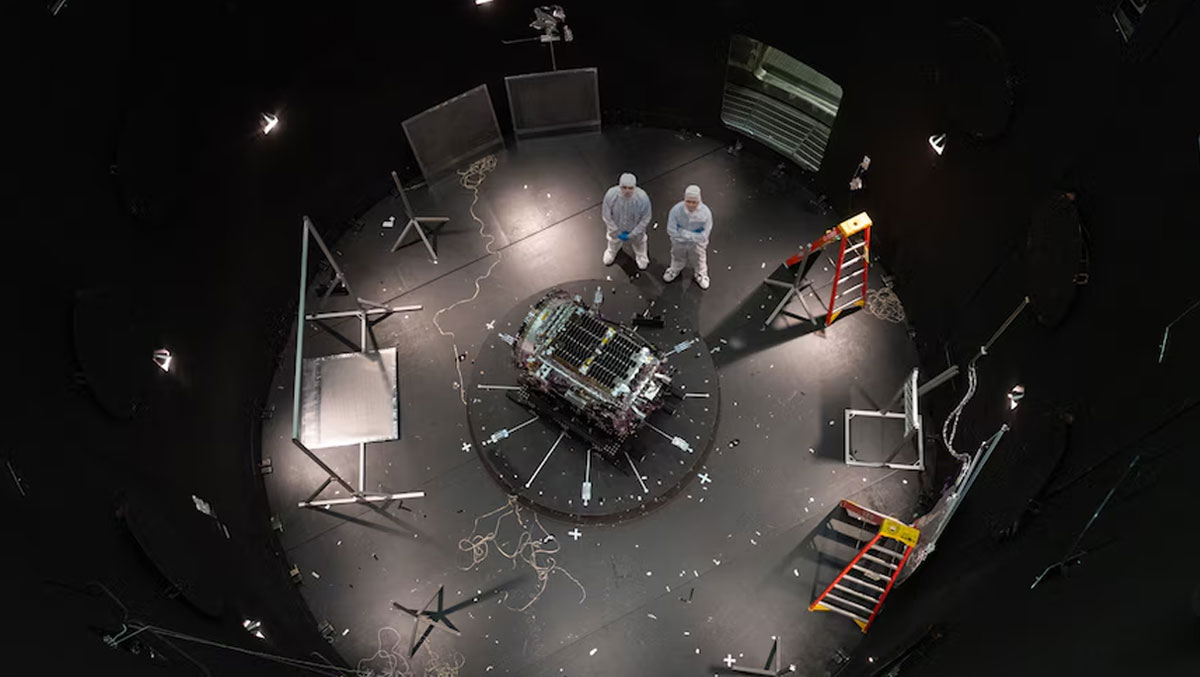
A photo provided by NASA captured Kieran Wilson, LINK’s principal investigator, and Hunter Robertson, a space systems engineer, both at Katalyst Space, standing next to their spacecraft inside the Space Environment Simulator (SES) at NASA’s Goddard Space Flight Center in Greenbelt, Maryland during thermal vacuum testing on April 17, 2026.
Characterizing the undertaking as a "high-risk, high-reward" mission, Katalyst Space CEO Ghonhee Lee emphasized the extreme urgency of the project.
He noted that the single greatest risk had always been failing to launch in time, which would have doomed the telescope to destruction.
Lee stated that the successful launch represents a vital first step toward ensuring the long-term survival of the observatory.
NASA indicated that the pioneering methodology demonstrated in this mission could eventually be replicated to extend the operational lifespan of the iconic Hubble Space Telescope.
Like Swift, Hubble is also experiencing a slow, gradual descent driven by heightened atmospheric drag from ongoing solar storms.
Source: AP





 Live TV
 RTV Plus