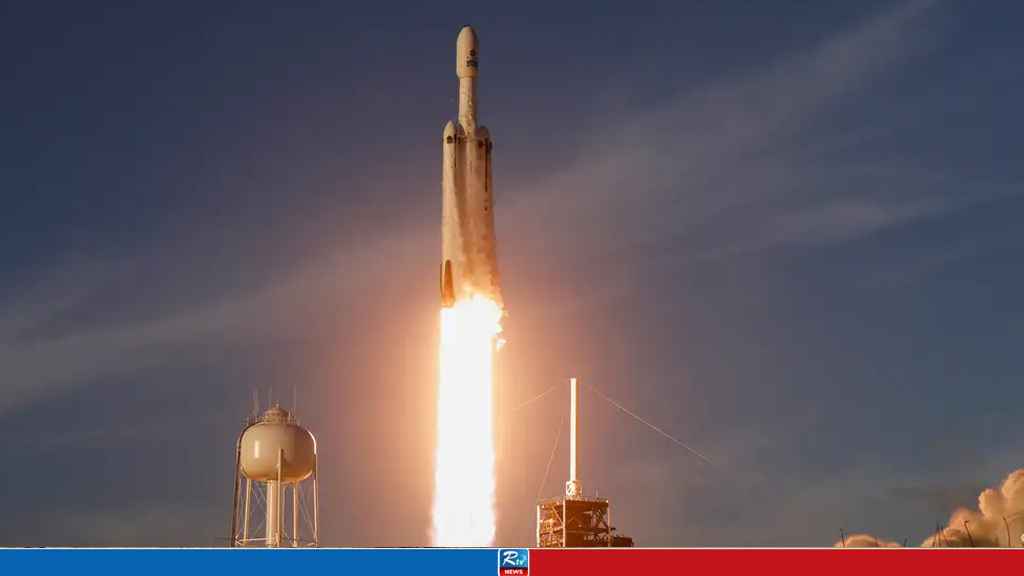
Marking the end of a historic chapter in lunar exploration, the four astronauts of the Artemis II mission have returned safely to Earth after completing a journey around the Moon—the first in over half a century.
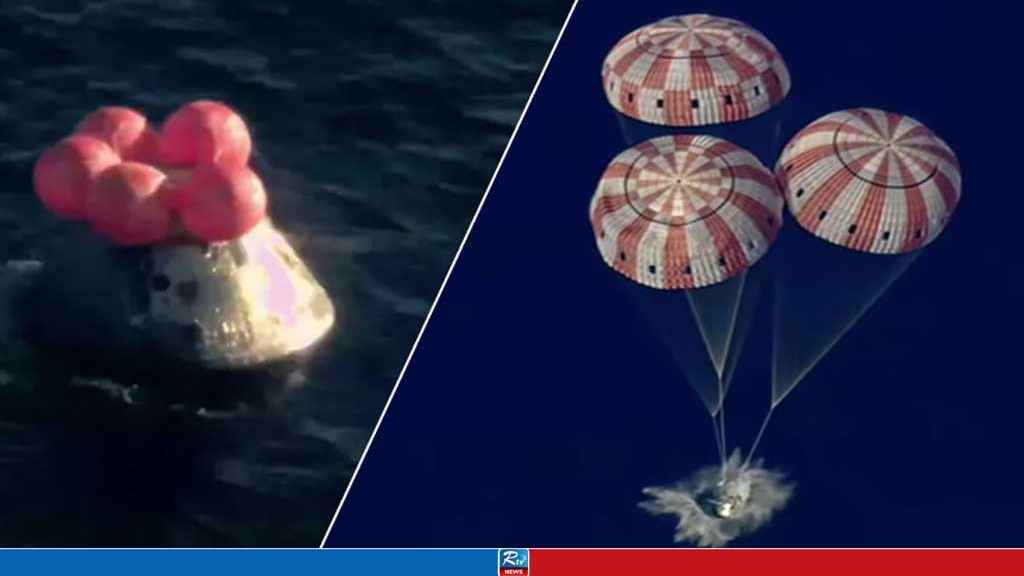
The Orion spacecraft successfully splashed down in the Pacific Ocean off the coast of San Diego, California, at 8:07 PM ET Friday (6:07 AM Bangladesh Time, Saturday).
"What an incredible journey," exclaimed Artemis II Commander Reid Wiseman shortly after the capsule hit the water.
Recovery and Medical Evaluation
Following the splashdown, the crew was transferred from the Orion capsule to a specialized watercraft known in aerospace terms as the "front porch."
From there, they were airlifted via helicopter to the medical bay of the USS John P. Murtha, a sophisticated U.S. Navy recovery ship.
Onboard, specialists are conducting routine evaluations of the astronauts' vitals, including heart rate, blood pressure, and neurological function.
These checks are standard procedure to assess the physical impact of prolonged weightlessness. Following these initial exams, the crew will be transported to the Johnson Space Center in Houston.
A Record-Breaking Journey
While the mission had a 10-day target, NASA confirmed it concluded successfully in 9 days, 1 hour, 32 minutes, and 15 seconds. The crew—consisting of Reid Wiseman, Christina Koch, Victor Glover, and Jeremy Hansen—launched on April 1.
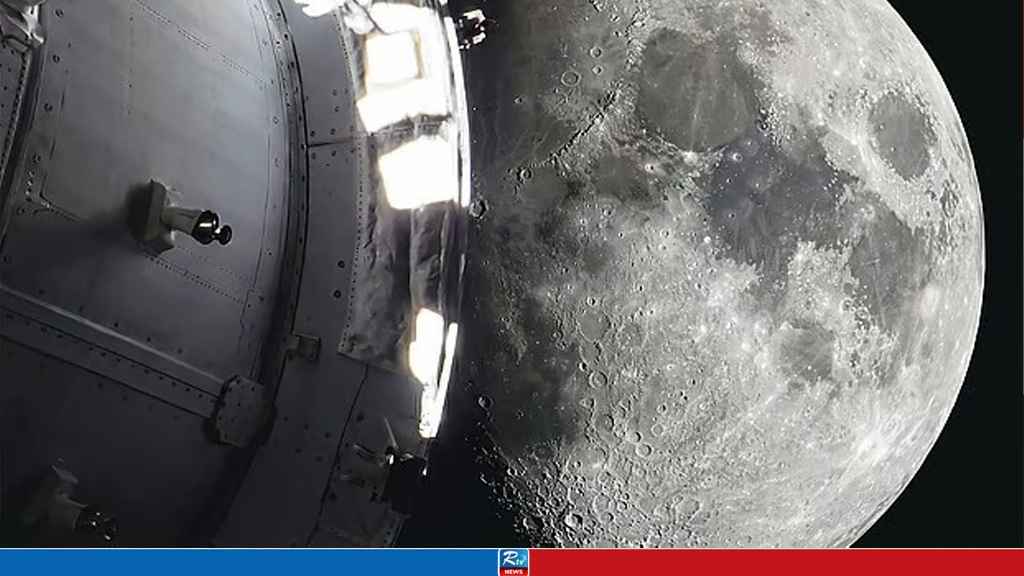
Artemis II has officially etched its name in the history books by surpassing a long-standing record held by Apollo 13. At its furthest point behind the Moon, the spacecraft reached a distance of 252,757 miles from Earth, breaking the 1970 record of 248,655 miles.
During the flight, the crew also witnessed a rare celestial display, observing at least six bright meteor strikes on the lunar surface.
A Milestone for Diversity
The mission stands as a landmark for inclusivity in space exploration:
As the astronauts moved from the capsule to the recovery craft, scientists at Mission Control in Houston erupted in applause, celebrating the flawless execution of the mission.
Looking Toward Mars
This mission serves as a critical test flight for NASA’s broader goal of landing humans on the lunar South Pole by 2028.
The historic return was broadcast live across multiple platforms, including NASA Plus, Amazon Prime, and Netflix.
Experts suggest that the success of Artemis II not only paves the way for a permanent lunar presence but also provides vital momentum for future human missions to Mars.
Source: AFP and CNN







 Live TV
 RTV Plus