Prime Minister Tarique Rahman on Saturday called upon physicians to cultivate public confidence through compassionate, high-standard medical care and a humane philosophy, asserting that bolstering trust in domestic healthcare can help curb an annual outflow of roughly USD 5 billion spent on medical treatments abroad.
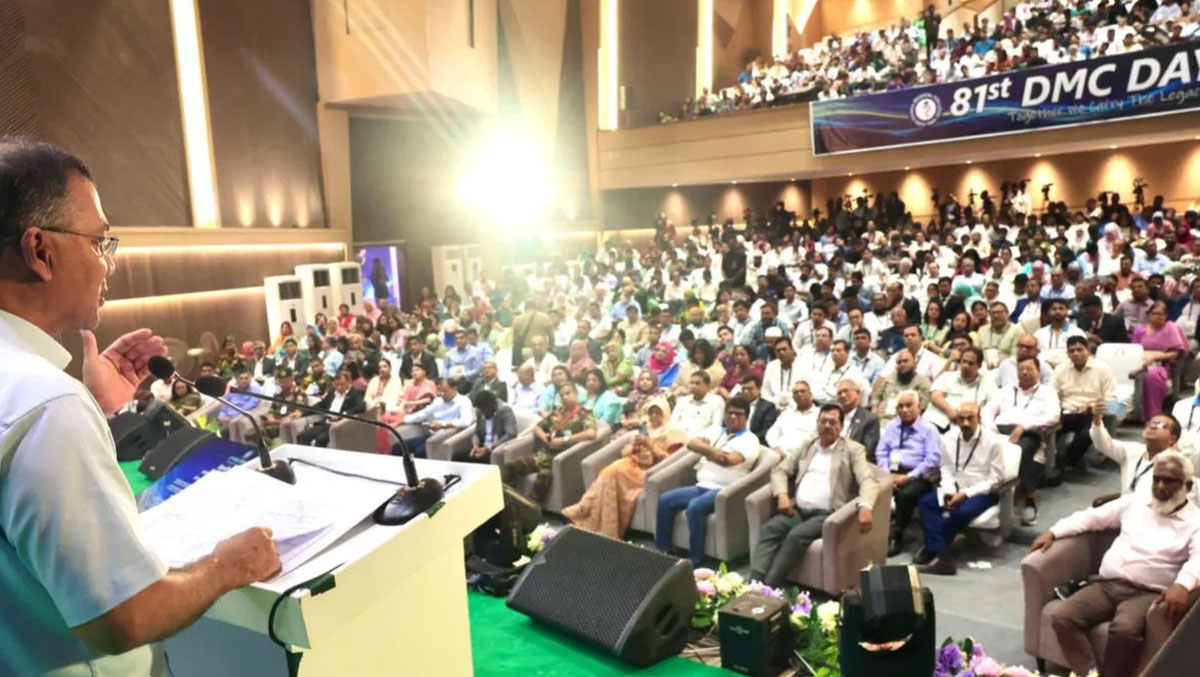
Addressing the inauguration of DMC Day 2026 in celebration of the 80th anniversary of Dhaka Medical College (DMC), the Prime Minister stated, "Every year, around USD 5 billion flows out of the country as thousands of our people travel abroad for medical treatment. As a result, we also lose valuable foreign exchange."
He emphasized that such a systemic shift cannot be accomplished solely via legislation or institutional reforms without the active dedication of the medical community.
Speaking in his capacity as a political worker entrusted with governance, Prime Minister conveyed his expectation that current and prospective medical professionals will help transform the landscape by fostering reliance on national practitioners, asking, "Why can't we change this situation? Why can't we strengthen our people's trust and confidence in our doctors?... It is only possible through your humane approach and proper treatment."
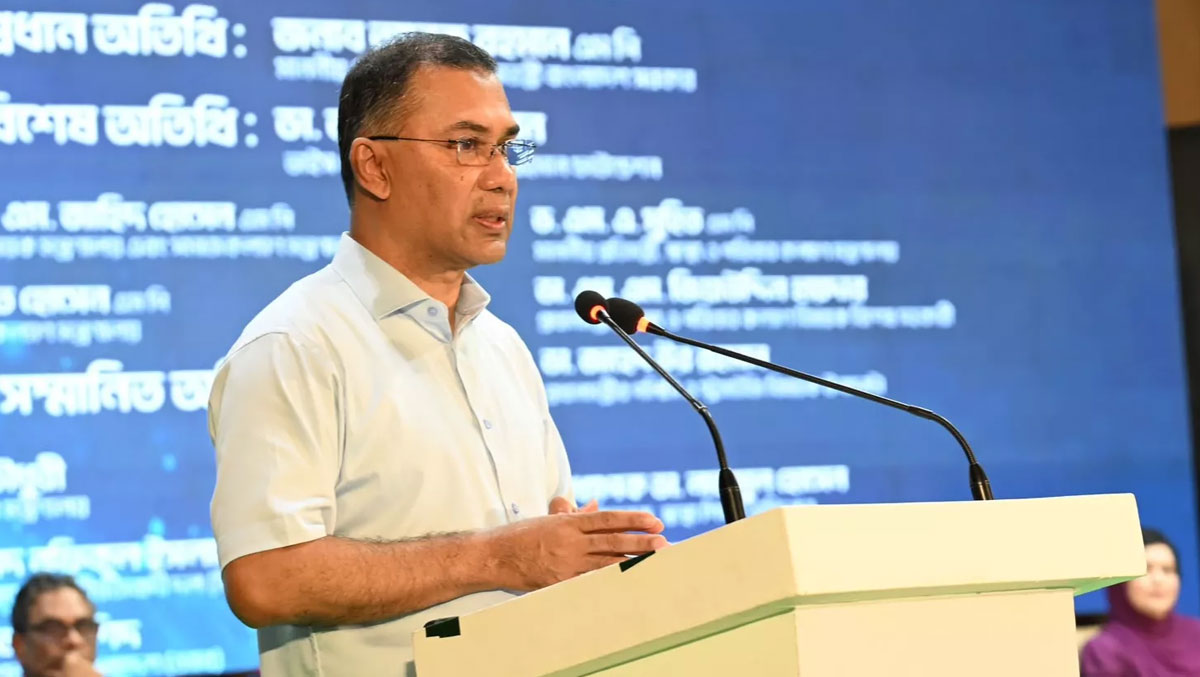
He added, "On the occasion of this anniversary, I have one expectation not only from DMC, but from every hospital and every medical college in Bangladesh—from all doctors and medical students. I hope that, in the future, the people of this country will have complete trust and confidence in our doctors."
Detailing fiscal priorities, the Prime Minister noted that the administration has earmarked the highest-ever budgetary allocation for the health sector in the current national budget, alongside a roadmap to expand health expenditure to 5% of GDP across the next five years.
He highlighted tax and duty reductions implemented on essential medical gear and supplies—such as dialysis filters, heart valves, pacemakers, oxygenators, peripheral vascular stents, radiofrequency ablation catheters, intraocular lenses, and raw ingredients for cancer medications—designed to ease out-of-pocket expenses for families.
To decentralize care, the government plans to elevate 51-bed upazila hospitals into 101-bed facilities, pointing out that only five upazilas currently maintain 100-bed hospitals despite over 70% of the populace residing rurally, with upgraded centers slated to receive battery-backed solar power systems for continuous emergency operations.
Turning to hygiene and civic duty, the PM underscored the necessity of proper medical waste disposal and facility cleanliness, urging personnel, students, and doctors to share communal stewardship for maintaining tidy environments rather than depending exclusively on janitorial teams.
Referencing the example set by Japanese football fans who independently cleaned World Cup stadiums, he remarked, "We all have a responsibility to keep our hospitals clean. A modern building alone is not enough; we must also ensure a clean and healthy environment."
He also pointed to ongoing initiatives designed to advance medical research, technology, and international-standard training over time.
Sharing a poignant personal reflection, the Prime Minister acknowledged the untiring, compassionate care administered by doctors to his late mother and former Prime Minister Khaleda Zia until her passing, noting that no sum of money could have purchased such sincere devotion abroad.
Later, he joined an interactive panel in the auditorium titled "DMCians' Thoughts on the Modernisation of Bangladesh's Healthcare System" to field inquiries from alumni and students, promising gradual solutions to raised concerns and expressing optimism that negative press regarding the medical sector will diminish.
The day's events began with the Prime Minister launching the anniversary festivities by releasing balloons and pigeons on campus alongside his wife and former DMC student Dr Zubaida Rahman, planting an Arjun tree and a Neem tree, accepting commemorative portraits, and viewing a retrospective documentary detailing the institution's legacy.



 Live TV
 RTV Plus