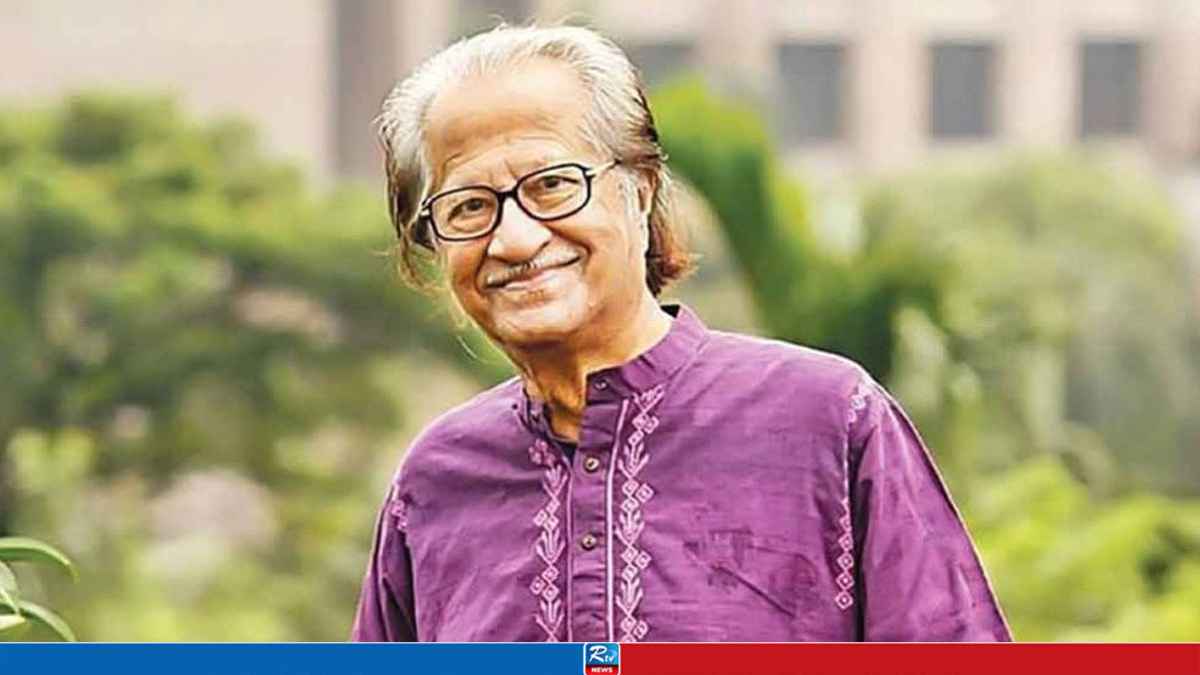
Former acting President, former Speaker of Parliament, BNP Standing Committee member, and veteran constitutional lawyer Barrister Jamiruddin Sircar passed away early Sunday at the age of 95 while undergoing treatment at a hospital in the capital.
Supreme Court Bar Association President Barrister AM Mahbub Uddin Khokon confirmed that Jamiruddin Sircar breathed his last at 4:18 am at the Bangladesh Specialized Hospital in Shyamoli, noting that he had been suffering from various long-standing, age-related health complications.
Announcing the initial arrangements, Khokon stated, "Sir has left us. Arrangements are being made for his janazas and burial."
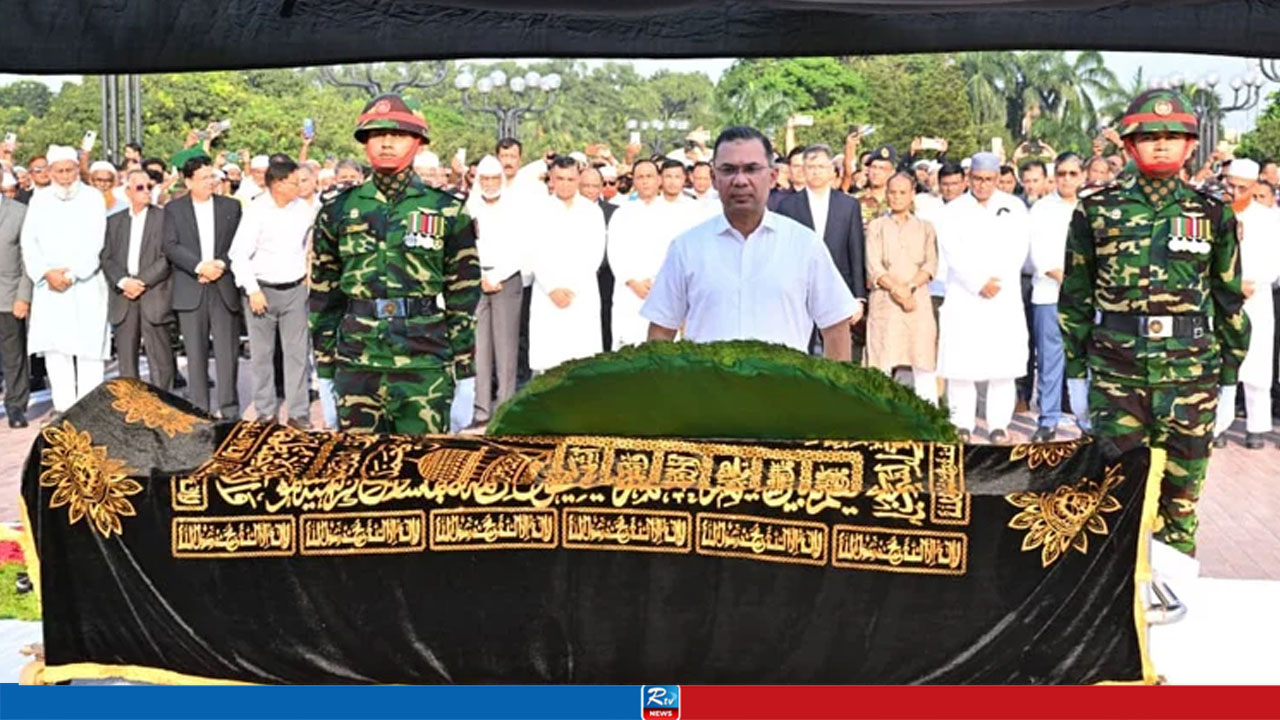
BNP Senior Joint Secretary General Ruhul Kabir Rizvi detailed the schedule for his final farewells, stating that the first namaz-e-janaza would be held after Zohr prayers at Taqwa Mosque in Dhanmondi, followed by a second janaza at the South Plaza of the Jatiya Sangsad Bhaban at 5 pm.
Born on December 1, 1931, in Nayabari village of Tetulia upazila in Panchagarh to Maulvi Muhammad Aziz Box, Jamiruddin Sircar completed his bachelor's and master's degrees in History from the University of Dhaka, earned an LLB degree, and qualified as a Barrister-at-Law from Lincoln's Inn in London.
He enrolled with the then East Pakistan High Court on May 27, 1960, establishing himself as a preeminent expert in constitutional, civil, and criminal law, and actively supported Bangladesh's independence as a High Court lawyer during the 1971 Liberation War.
His international diplomatic and legal stature was further highlighted when he represented Bangladesh at the United Nations General Assembly on five occasions between 1977 and 1981 under President Ziaur Rahman.
His extensive political journey began in 1945 with the Student Federation, later intersecting with the Student Union, Maulana Abdul Hamid Khan Bhashani's National Awami Party (NAP), and founding roles in both the Awami Muslim League and Jatiyatabadi Ganatantrik Dal (Jagadal).
He ultimately became a founding member of the Bangladesh Nationalist Party (BNP) and served on its highest policymaking forum, the Standing Committee, until his passing.
Elected to Parliament across multiple eras—representing Dinajpur-1 in 1979, Dhaka-9 in 1991, Panchagarh-1 in February 1996, June 1996, and 2001 and winning a Bogura-6 by-election—he served as Speaker of the Eighth Jatiya Sangsad and as acting President of Bangladesh from June 21 to September 6, 2002, following the resignation of Prof AQM Badruddoza Chowdhury.
Jamiruddin Sircar's ministerial career included holding the portfolios for housing and public works under President Ziaur Rahman—overseeing the period when the Jatiya Sangsad Bhaban construction was finalized—and serving as state minister for foreign affairs under President Justice Abdus Sattar.
Following the BNP's 1991 victory, he served as state minister for land, education minister, and science and technology minister, before holding the law ministry portfolio in the short-lived Sixth Parliament in 1996, where he introduced the bill paving the way for the caretaker government system.
Beyond law and governance, he was an accomplished educationist and prolific author whose publications included The Origin and Evolution of Democracy, Parliamentary Rules at a Glance, Student Life in London, Law of the Sea, Student Movements in London, Bangladesh: Democratic Transition and Political Ups and Downs, Glimpses of International Law, From Pol Raj to Plassey and From the British Raj to Bangabhaban, Speaker in the Eighth Parliament, Law of International Rivers and Other Watercourses, and Stronger United Nations for a Peaceful Welfare World.
He is survived by a daughter, Nilufar Jamir, and two sons, Naoufel Jamir and Barrister Muhammad Nawshad Jamir, the latter of whom is the current MP elected from Panchagarh-1 on a BNP ticket.
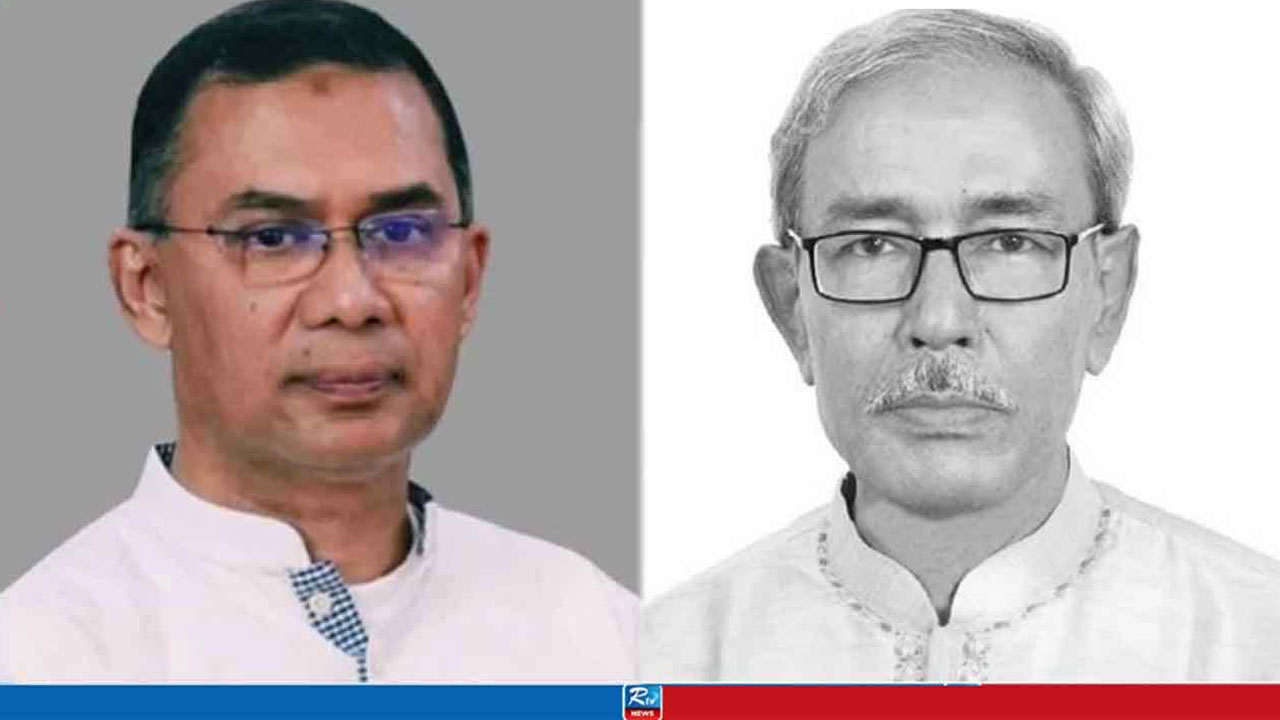
Prime Minister Tarique Rahman and BNP Secretary General Mirza Fakhrul Islam Alamgir issued statements expressing deep sorrow and praying for the eternal peace of his soul as leaders and well-wishers gathered at his Dhanmondi residence to pay their respects.





 Live TV
 RTV Plus