Prime Minister Tarique Rahman called upon international investors on Thursday to establish long-term partnerships in Bangladesh's economic transformation, declaring that his administration is dedicated to constructing a USD 1 trillion economy by 2034 through private sector-driven expansion and business-friendly reforms.
While addressing local and foreign investors, diplomatic representatives, corporate executives, and development partners, the Prime Minister extended an invitation to expand commercial operations in Bangladesh, promising heightened legal protections, streamlined regulations, and an improved business climate.
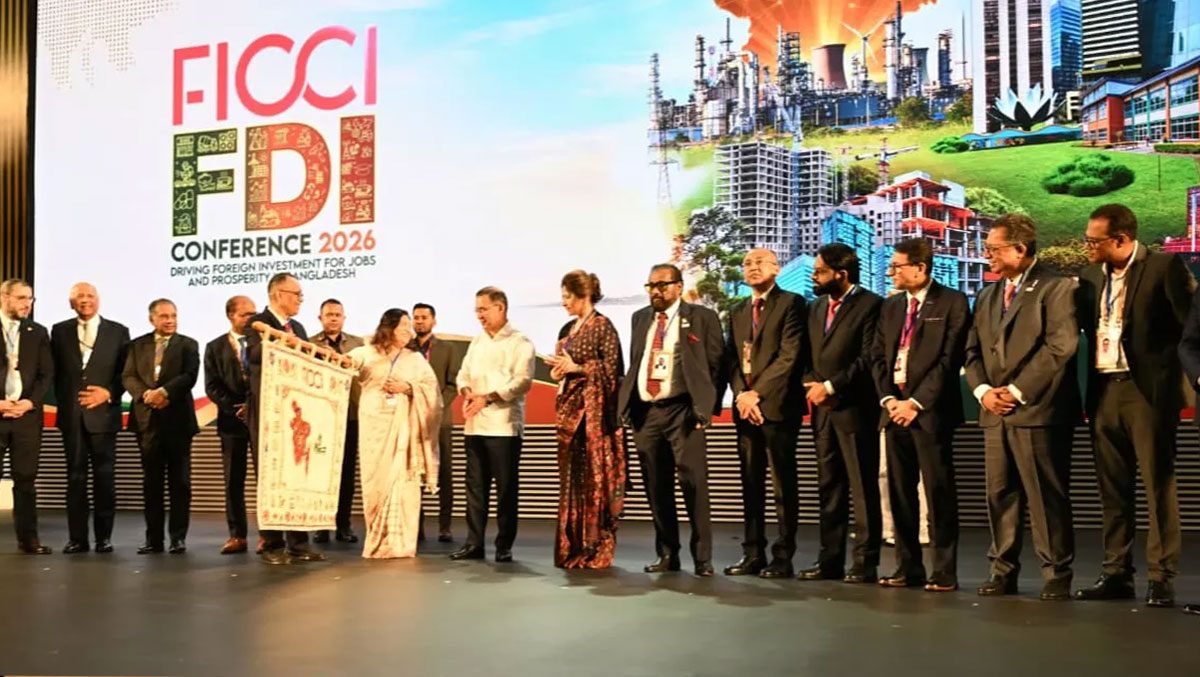
“Whether you are a local entrepreneur or a foreign investor, when you invest in Bangladesh, our government will invest in you through our time, support, and policies. That is a commitment we will keep, InshaAllah,” the Prime Minister asserted while speaking at the "FICCI FDI Conference 2026: Driving Foreign Investment for Jobs and Prosperity in Bangladesh" held at the Bangladesh-China Friendship Conference Centre (BCFCC) in the capital.
PM emphasized that Bangladesh's future hinges not only on securing investments but also on creating enduring partnerships.
“I invite every business leader in this room to become part of that future. Together, we can build an economy that is stronger, equitable, and inclusive. I welcome all of you to invest and flourish in Bangladesh. Let us grow together, create jobs, and shape Bangladesh. Let us become partners in building a prosperous and globally connected Bangladesh,” he stated.
The Premier outlined the government's objective to foster a rules-based, globally integrated, and private sector-led economy, inviting investors to join hands in executing this vision.
He highlighted the nation's key advantages, including a expansive and growing domestic market, a youthful workforce, a strategic geographical location, and an elected government backed by strong public support, noting that these factors collectively position Bangladesh for sustained prosperity.
Drawing from his own past involvement in business prior to entering politics, he noted that commercial success requires not only entrepreneurial drive but also supportive government policies.
Expressing gratitude to foreign investors for selecting Bangladesh, he acknowledged their role in creating employment, transferring technology, strengthening supply chains, and driving national development.
“Our government has completed five months in office but our policy preparations began long before the election,” he said.
He explained that prior to assuming office, the government held consultations with investors, economists, entrepreneurs, trade associations, and development partners.
These stakeholders consistently underscored the need for enhanced legal security for investments, modern regulations, simplified taxation, easier profit repatriation, a deeper capital market, and upgraded infrastructure.
“We listened carefully, and now we are acting accordingly,” he remarked.
In line with these recommendations, the government is modernizing legal frameworks, boosting investor safeguards, refining dispute resolution mechanisms, and streamlining tax and VAT procedures.
Steps are also being taken to simplify profit repatriation, deepen capital markets, nurture startups, and eliminate redundant bureaucratic hurdles.
Furthermore, public services are being digitized alongside upgrades to ports, logistics, infrastructure, and energy security, while investments in renewable energy are actively being encouraged.
“Our government is determined to build $ 1 trillion economy by 2034,” the Prime Minister reiterated.
He mentioned that the administration's inaugural budget introduced targeted incentives across priority sectors, including pharmaceuticals, renewable energy, digital services, electronics, agro-processing, healthcare, advanced textiles and logistics.
Bangladesh is being positioned as a global manufacturing hub while measures are being implemented to expand and diversify the ready-made garment sector, alongside investments in human capital, technology and skills development to underpin long-term economic growth.
Emphasizing the necessity of robust public-private synergy, the Prime Minister stated that Bangladesh can construct a more equitable and inclusive economy through shared partnership.
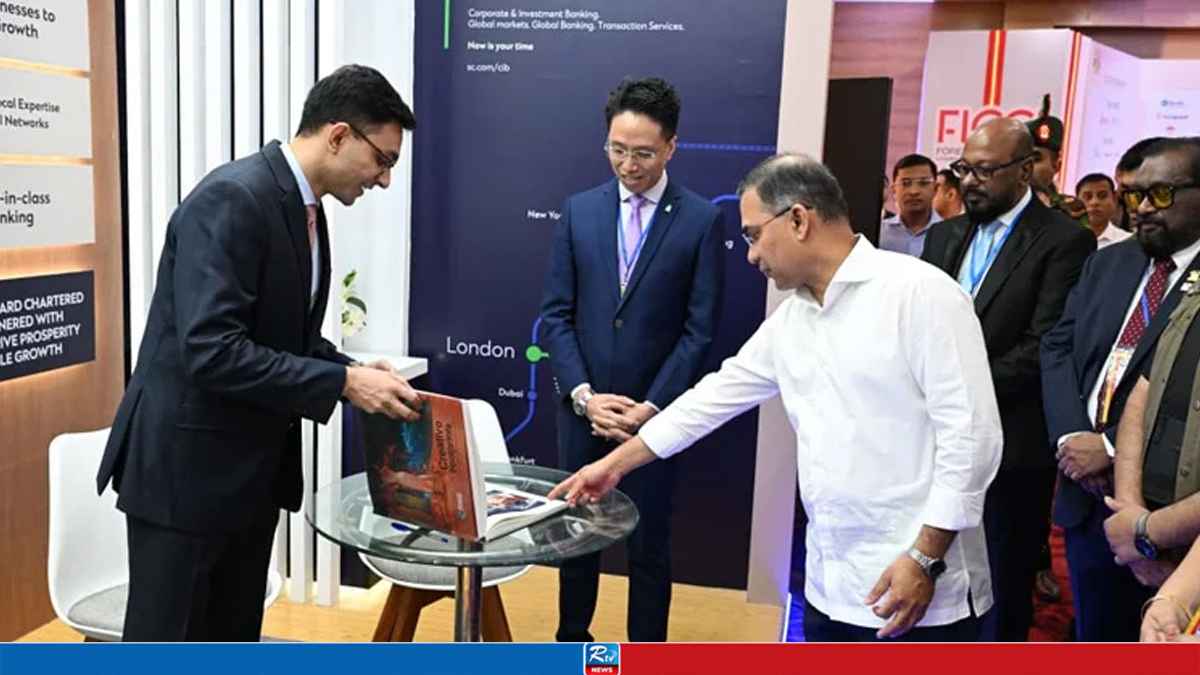
Prior to the official inauguration of the event, the Prime Minister toured the Investors' Expo and interacted with delegates from participating organizations.
The daylong forum was hosted by the Foreign Investors' Chamber of Commerce and Industry (FICCI) as Bangladesh prepares for its graduation from the Least Developed Country (LDC) category and steps up efforts to attract increased foreign direct investment.
Around 600 domestic and international delegates—comprising senior government officials, regulators, policymakers, diplomats, development partners, leaders of multinational firms, investors, and journalists—attended the event.
A FICCI FDI Report was also unveiled during the conference, offering key insights, observations, and recommendations to enhance Bangladesh's investment ecosystem and foster sustainable economic growth.
With Inputs from UNB





 Live TV
 RTV Plus