Local Government, Rural Development and Co-operatives Minister and BNP Secretary General Mirza Fakhrul Islam Alamgir called upon media outlets on Friday to maintain vigilant oversight of the administration and expose its flaws while simultaneously affording it adequate time to produce results.
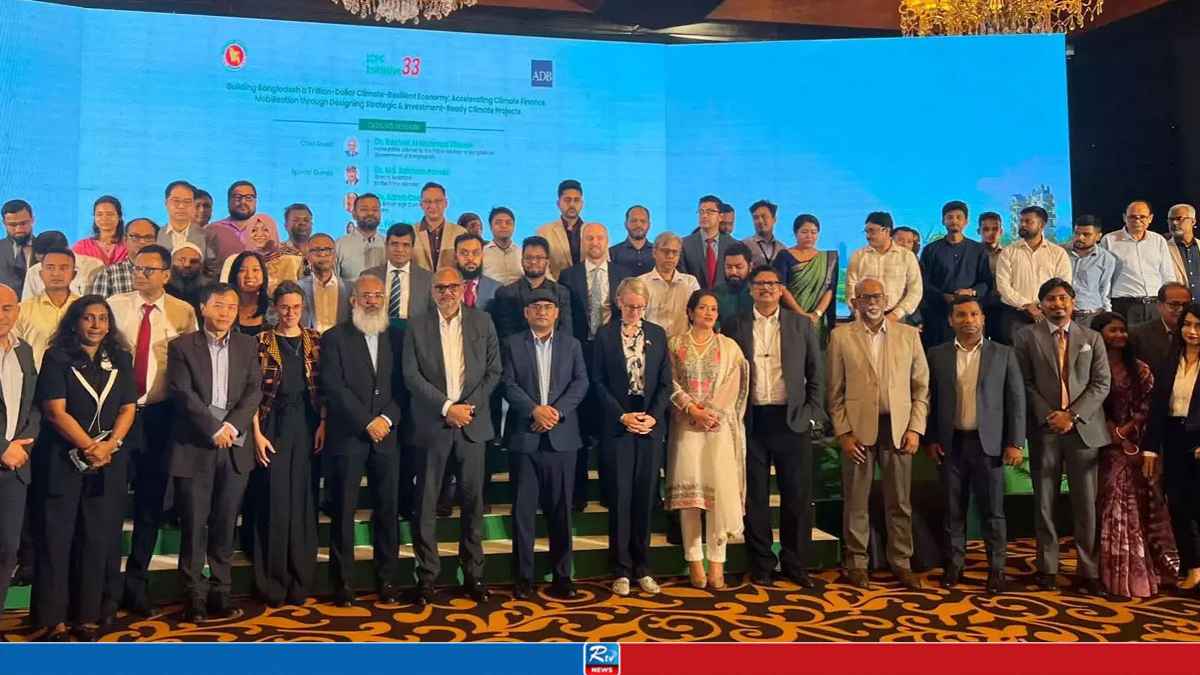
Addressing as chief guest at a seminar titled "Role of Media in Sustainable Democracy," hosted by the Television Editors' Council at a capital hotel, the minister emphasized that journalism should capture both administrative shortcomings and successes.
"The government must always be kept under watch. If it makes mistakes, those should be pointed out. But at the same time, the government must also be given time," Mirza Fakhrul stated.
Pointing to television discussion panels, he observed that several talk shows are structured around the "government's four months of failure," generating a perception of total administrative breakdown while neglecting completed milestones.
"This one-sided approach by the media is not appropriate," he remarked.
Underscoring the connection between press freedom and democratic stability, the BNP leader stressed that robust, uninhibited journalism remains vital for sustaining democracy, advocating for stronger media institutions and healthiest relations between newsroom owners and reporters.
"If the media can work independently and without conditions, democracy will also become stronger. But for that, it is not enough to depend only on the government. Media institutions themselves must also become stronger," Mirza Fakhrul noted.
The minister also voiced deep concern over digital networks, describing social media as "even more dangerous."
He highlighted how "a small post or a short reel can destroy a person's lifetime achievements within moments," referencing measures in nations like the United Kingdom, Australia, and France that restricted minor access to social platforms due to adverse impacts.
Navigating the country's current transitional phase, Mirza Fakhrul cautioned that expecting rapid solutions to every national challenge is unrealistic, a situation he noted is shared across several Asian nations.
"We must not become impatient. We have to remain patient and tolerant. Otherwise, democracy can never move forward," he asserted, urging restraint across state authorities, media outlets, and outlet owners.
Expressing optimism under Prime Minister Tarique Rahman's leadership, he added, "If everyone works with patience alongside Tarique Rahman, Bangladesh can be taken to a stage where democracy stands on a sustainable foundation."
Mirza Fakhrul further stated that each time the BNP assumed governance, it inherited a "ruined system."
Dismissing accusations regarding fuel shortages, he questioned, "Has BNP created the gas crisis? The previous government did not carry out a single exploration scheme. Instead, it built a system dependent on imports."
He similarly faulted the former administration for compromising the power grid through quick rental energy ventures and causing widespread damage to financial institutions.
"The banking sector has also been left in ruins. Restoring it has become a major challenge for the present government," he concluded.





 Live TV
 RTV Plus