Prime Minister Tarique Rahman stated on Saturday that beneficiaries of fascism remain active across the state, political landscape, governance, and administration, seeking to destabilize the nation's power and energy sector by disseminating misleading information and sowing confusion.
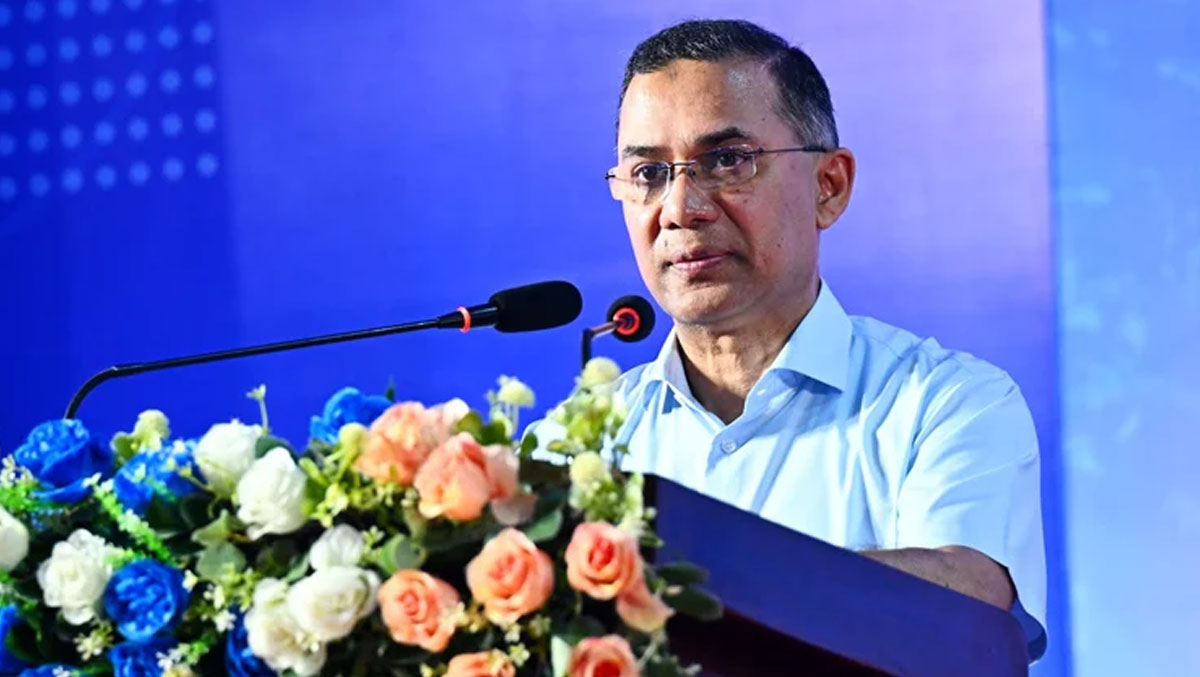
Speaking as the chief guest at a doctors' rally marking the 37th founding anniversary of the Doctors Association of Bangladesh (DAB) at the LD Hall of the Jatiya Sangshad complex this morning, the Prime Minister noted, "Those who are benefited from fascism are not sitting idle. This group is quite active to destabilise the country’s energy and power sector in various ways. They were spreading misleading information about the sector."
Accompanied by his wife, Dr. Zubaida Rahman, Vice Chairman of the Ziaur Rahman Foundation, Prime Minister Tarique Rahman asserted that misaligned initiatives and decisions enacted by previous administrations had exposed the energy grid to severe vulnerability, adding that the current government is taking corrective measures to protect the public from those repercussions.
"The government is not denying that people are currently facing crises of electricity, gas and fuel. But the country, its people and the government are now paying for those unplanned schemes to provide special benefits to certain quarters," he highlighted, emphasizing that his administration inherited a fragile state, a struggling economy, a fragmented administration, and weakened health and education structures.
"We have already started taking various steps to overcome the multifaceted crises," he remarked, outlining that phased strategic blueprints are being framed to progressively alleviate fuel, power, and gas deficits.
Reiterating the security concerns, he noted, "Even in such a situation, the beneficiaries of fascism in the state, politics, governance and administration are not sitting idle. Recently, we have observed that a group is strategically active in trying to destabilise the fuel or power sector," affirming that constructive state efforts are underway to counter these disruptions.
Earlier in the day, the Prime Minister and Dr. Zubaida Rahman planted neem and arjun saplings within the LD Hall premises before formally launching the assembly by hoisting the national and organizational flags, accompanied by the release of pigeons and balloons.
The rally, presided over by DAB President Professor Dr. Harun Al Rashid, drew physicians and organizational leaders nationwide.
Key addresses were delivered by BNP Secretary General and LGRD and Cooperatives Minister Mirza Fakhrul Islam Alamgir, Social Welfare Minister Abu Zafar Md. Zahid Hossain, Health Minister Sardar Md. Sakhawat Husain, and DAB Secretary General Dr. Md Zahirul Islam Shakil. Also in attendance were Prime Minister’s Adviser Ismail Zabihullah, State Minister for Health Dr. M A Muhit, and senior officials from the Prime Minister’s Office.
Directing his address toward healthcare reform, Prime Minister Tarique Rahman cited a quote attributed to American inventor and businessman Thomas Alva Edison, predicting that future medical professionals will move beyond merely writing prescriptions to educating patients on physical exercise, balanced nutrition, and illness prevention.
"The present government’s health policy is closely aligned with this approach," he stated, adding, "The present government believes in the principle that prevention is better than cure. Instead of seeking treatment after a disease develops, we should take necessary precautions beforehand to prevent it from occurring."
To operationalize primary healthcare outreach, the Prime Minister announced plans to recruit 100,000 community health workers nationwide, instructing senior physicians to take charge of their training.
Addressing the broader debate around political participation among scholars and professionals, Tarique Rahman observed, "I believe that in a democratic state, where political decisions influence almost every aspect of life, it is not unreasonable for students, teachers and professionals to remain politically organised or politically aware according to their respective ideologies."
However, he cautioned, "Everyone needs to remain cautious so that excessive political involvement does not interfere with the discharge of their professional responsibilities. It is now time to bring about qualitative changes in politics by going beyond traditional political practices."
Regarding specific professional demands presented by the medical community, the Prime Minister acknowledged several key proposals: conducting a special BCS examination to recruit 5,000 doctors immediately, raising the government service entry age cap for physicians from 32 to 34, extending the physician retirement age from 61 to 65, enacting a Health Services Protection Act to safeguard doctors and patients, providing remote location allowances for upazila-level postings, establishing a standardized pay structure for over 100,000 private sector doctors, and decentralizing specialized medical centers outside Dhaka.
Responding to these demands, Tarique Rahman affirmed that the proposals were reasonable, noting that steps to set up specialized pediatric and general facilities outside the capital have begun and that "the other proposals will also be positively examined and considered in phases."
Detailing fiscal priorities, the Prime Minister highlighted that the government allocated its second-highest national budget share to healthcare for the first time. "We have plans to gradually raise this allocation to 5 percent of GDP over the next five years," he revealed, adding that groundwork has commenced for introducing e-health cards and upgrading every upazila hospital to a 101-bed capacity.
He concluded with an appeal for professional commitment, stating, "Infrastructure development alone will not bring success unless doctors remain dedicated to their profession with a spirit of service."
He acknowledged operational constraints faced by medical staff but warned that unintentional oversight undermines public confidence in the healthcare system and state administration.
"People expect doctors to play a more responsible and humane role," he stated, calling for unified efforts to "build a doctor-friendly Bangladesh where every citizen will receive quality healthcare and no one will have to go abroad for better treatment."



 Live TV
 RTV Plus