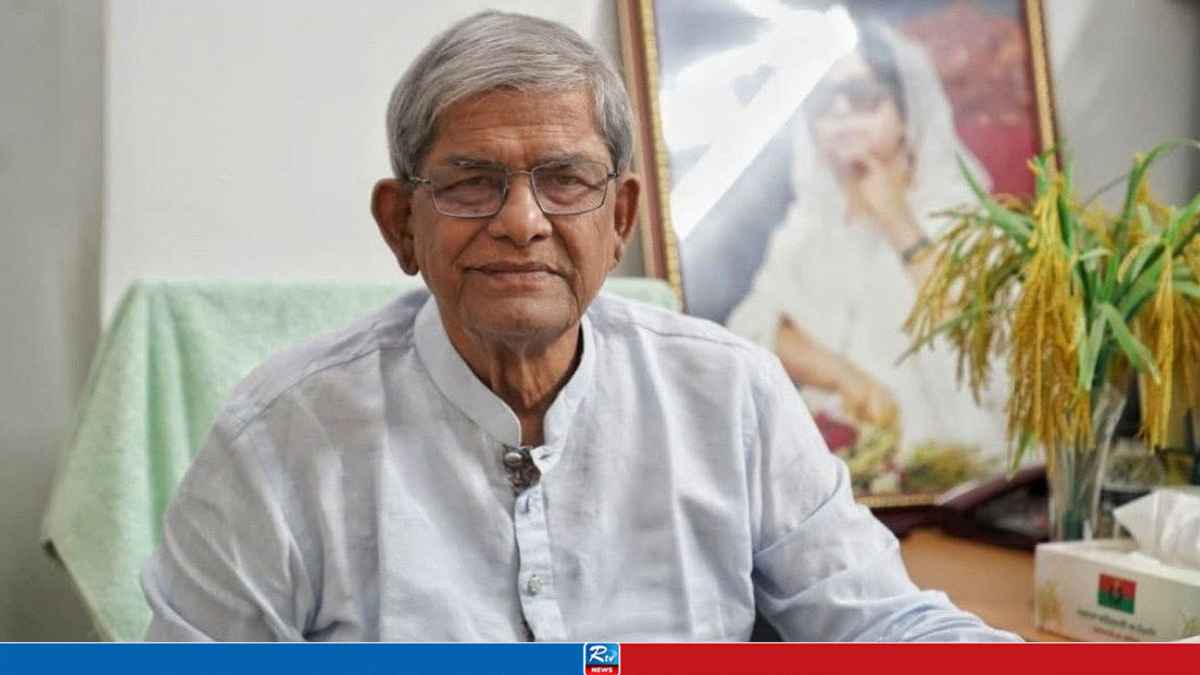
Bangladesh is set to witness a contested presidential election on Thursday, 35 years after lawmakers last went to the polls to choose the head of state, with Members of Parliament scheduled to elect the country’s 23rd President through an open ballot.
Voting will take place in the session chamber of the Jatiya Sangsad from 2 pm to 5 pm, with 349 lawmakers eligible to participate in the election.
The Election Commission (EC) has made preparations for the parliamentary balloting while Bangabhaban is also getting ready to host the swearing-in ceremony of the newly elected President on Friday evening.
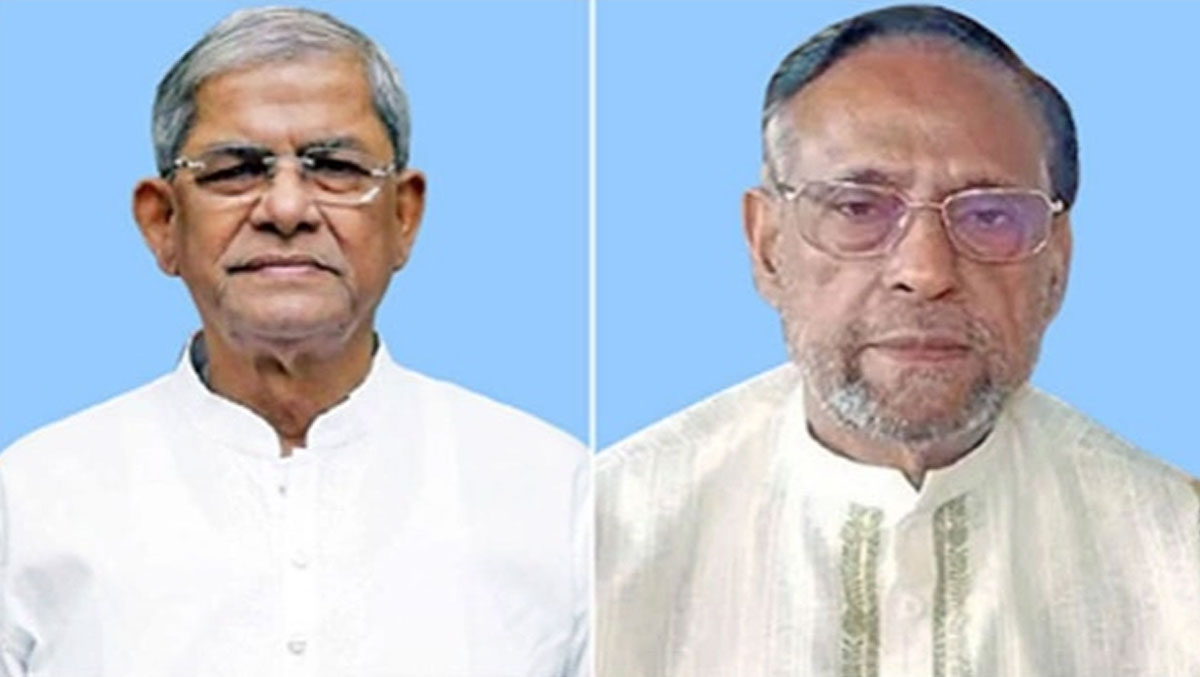
BNP presidential candidate Mirza Fakhrul Islam Alamgir and opposition Jamaat-led 11-party alliance candidate Col (retd) Oli Ahmad are contesting the election.
With the BNP enjoying an absolute majority in Parliament, Mirza Fakhrul Islam Alamgir is widely expected to secure victory and become Bangladesh’s 23rd President.
The election comes with constitutional restrictions on lawmakers’ voting decisions.
Under Article 70 of the Constitution, an MP elected as a candidate of a political party will lose his or her parliamentary seat if the lawmaker votes for a presidential candidate contrary to the decision of the respective political party.
Bangladesh’s last contested presidential election took place on October 8, 1991.
In that election, BNP nominee Abdur Rahman Biswas defeated Awami League candidate Badrul Haider Chowdhury to become the country’s 11th President.
Abdur Rahman Biswas received 172 votes, while Badrul Haider Chowdhury secured 92.
No contested presidential election was held after that.
In every subsequent election, only one candidate remained in the race, allowing the candidate to be elected unopposed.
At a pre-election press conference at Nirbachan Bhaban in the capital on Wednesday, Chief Election Commissioner AMM Nasir Uddin expressed confidence that the Election Commission would be able to conduct Thursday’s election smoothly.
“We don't have any sort of deficit in our preparation,” he said.
The CEC also said the election result would be published in the official gazette on Thursday, only a few hours after voting concludes.
Chief Whip Nurul Islam Moni separately described Thursday’s presidential election as a historic occasion for Bangladesh, saying the country was returning to parliamentary voting for the presidency after a gap of 35 years.
“We will vote in the presidential election on Thursday after 35 years, Inshallah. Voting will begin at 2pm and continue until 5pm,” he said.
Moni also announced that the newly elected President would take the oath of office at Bangabhaban on Friday evening.
He made the remarks while briefing reporters following a meeting of the ruling BNP’s parliamentary party at the Jatiya Sangsad Bhaban on Wednesday afternoon.
BNP presidential candidate Mirza Fakhrul Islam Alamgir attended the meeting.
According to the Chief Whip, portions of the presidential election proceedings will be broadcast live under a joint decision by the Election Commission and Parliament.
He said the first live broadcast would begin five minutes before voting starts.
The broadcast would show President, Speaker, Prime Minister, Leader of the Opposition and presidential candidate Mirza Fakhrul Islam Alamgir casting their ballots.
The rest of the voting proceedings will be recorded rather than broadcast live.
Another live telecast will begin five minutes before voting ends, while the announcement of the election result will also be aired live.
“You will see a historic moment tomorrow. A new journey of democracy will begin,” Moni said.
He said the President-elect would take the oath at Bangabhaban at 7:30 pm on Friday.
Describing the political significance of the election, the Chief Whip said Bangladesh was entering a new democratic phase under the leadership of Tarique Rahman.
He said the presidential election would once again provide an opportunity for people to observe how voting is conducted in the country.
The Election Commission announced the presidential election schedule on August 6, setting August 20 as the date for parliamentary voting.
On Thursday afternoon, shortly before voting begins, CEC AMM Nasir Uddin will brief the MPs, who are the electors, on the procedures they must follow to cast their ballots.
Each ballot paper will consist of two sections: a counterfoil and the main ballot portion.
The counterfoil will carry three pieces of information along with a blank space.
These will include the serial number, the MP’s name and the divisional number, or constituency number, supplied by the Jatiya Sangsad Secretariat.
Before receiving the ballot paper, each MP will be required to sign his or her full name in the designated space.
The names of the two presidential candidates will appear on the right-hand side of the ballot paper in alphabetical order in Bangla.
A designated space will be provided beside each candidate’s name, where MPs will sign their full names and cast their votes.
After marking their ballots, lawmakers will place them in the designated ballot box. Ballots will be accepted until 5 pm, after which the counting process will begin.
A total of 349 MPs are eligible to vote because the Chattogram-4 parliamentary constituency is currently vacant.
The electorate comprises 247 BNP lawmakers, 77 Jamaat MPs, eight NCP lawmakers, eight independent MPs, three Bangladesh Khilafat Majlis MPs and one lawmaker each from Bangladesh Jatiya Party-BJP, Gono Odhikar Parishad, Ganosamhati Andolon, Khilafat Majlis, Islami Andolan Bangladesh and Jatiya Ganatantrik Party.
BJP, Gono Odhikar Parishad and Ganosamhati Andolon are allies of the ruling BNP.
Together, the ruling camp has 250 lawmakers, who are expected to cast their votes in favour of Mirza Fakhrul Islam Alamgir.
The opposition camp, meanwhile, consists of Jamaat, NCP, Bangladesh Khilafat Majlis, Khilafat Majlis and Jatiya Ganatantrik Party, all of which are components of the 11-party alliance.
The opposition alliance has 90 lawmakers in Parliament, and they are expected to support Oli Ahmad in the presidential race.
The presidential office became vacant on July 24 when Mohammed Shahabuddin resigned from the post.
Following his resignation, Speaker Hafiz Uddin Ahmad assumed the responsibilities of acting President.
The constitutional deadline has also set the timeline for Thursday’s election. Article 123(2) of the Constitution stipulates that an election to fill a vacant presidential office caused by resignation must be held within 90 days of the position becoming vacant.
With the parliamentary vote scheduled for Thursday afternoon and the oath-taking ceremony planned for Friday evening, Bangladesh is now poised to complete the process of choosing a new President after the longest gap between contested presidential elections in the country’s recent history.




 Live TV
 RTV Plus