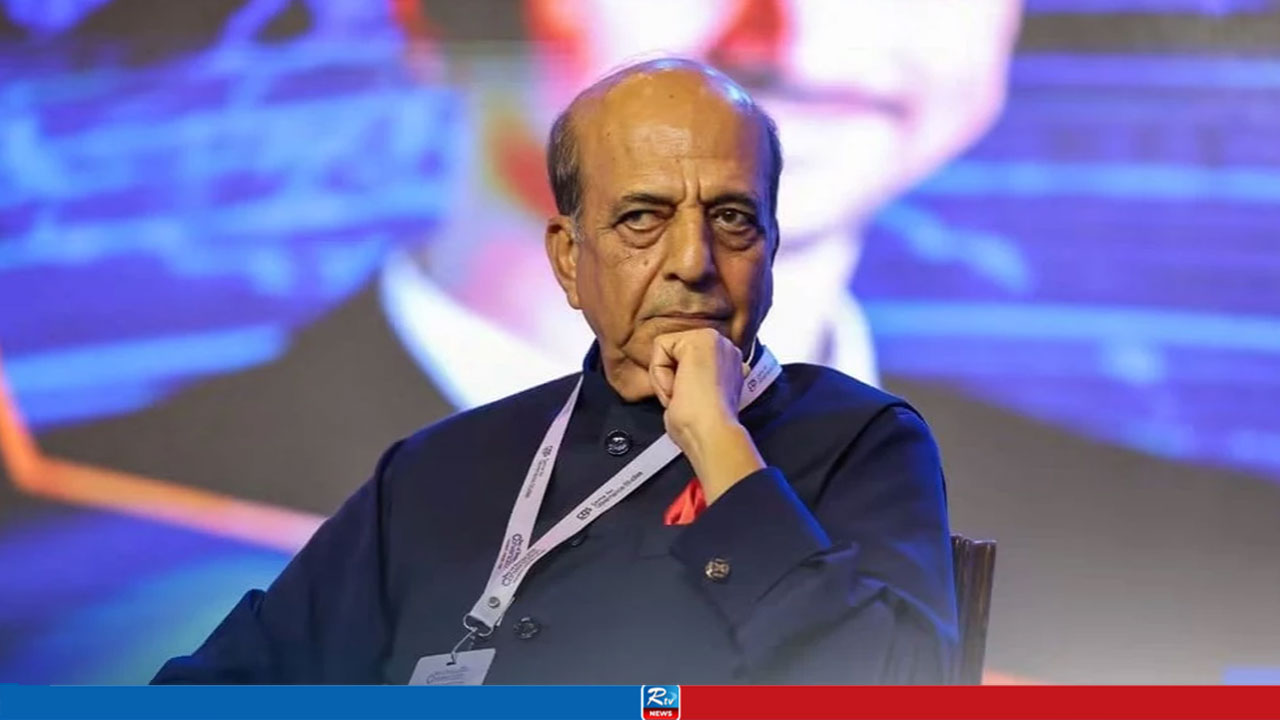
Indian High Commissioner to Bangladesh Dinesh Trivedi on Saturday emphasized the imperative of continuous dialogue, mutual respect and trust between the two neighboring nations to address bilateral concerns, asserting that every issue between the two countries has a resolution.
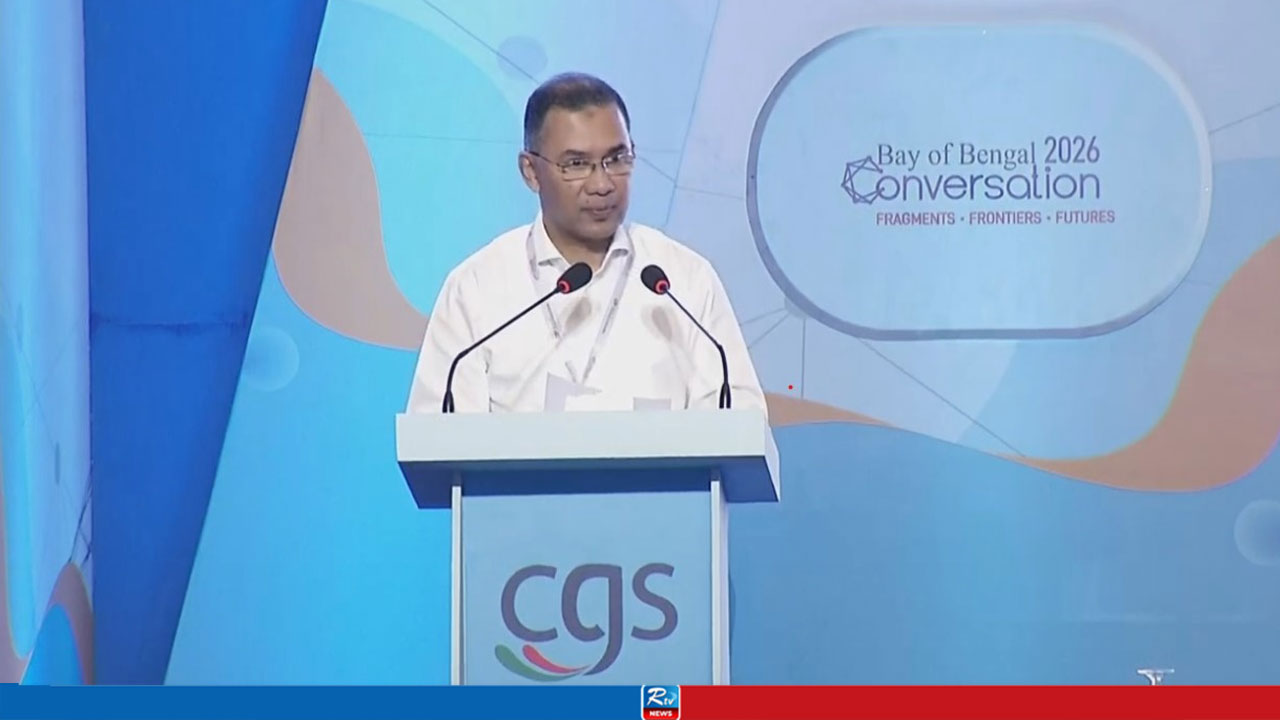
“There’s no point hiding the issues, and there’s no point not talking about the issues,” he remarked while speaking at a panel discussion titled “Power and Prudence: Managing Great-Power Competition without Conflict,” held as part of the ongoing Bay of Bengal Conversation in Dhaka.
Addressing several questions, Dinesh Trivedi stated that both nations must deliberate on all outstanding matters—including water, trade, culture, sports, communication, and transportation—through appropriate platforms.
“In a democracy, the dialogue has to be there at the proper forum. And the dialogue has to be a continuous dialogue,” he noted, observing that while the pace of engagement between the two countries might appear slow, it has not halted.
“I can guarantee you, there is no stoppage of process. The process is ongoing,” Dinesh Trivedi affirmed, adding, “Believe me, there has to be a solution, and there will be a solution.”
The High Commissioner underscored that Bangladesh, as a sovereign and independent nation, fully understands its security priorities and holds the sole right to determine its own path.
“Bangladesh is an absolutely independent country and people have elected democratically. So whatever decision Bangladesh takes is the decision of Bangladesh government,” he stated, reiterating that “Nobody should tell Bangladesh what they should do.”
Dinesh Trivedi further clarified that India’s diplomatic ties with Bangladesh operate independently of Dhaka’s engagements with other global powers.
“As far as we are concerned in India, the relationship doesn’t depend on what relation Bangladesh has with other countries,” he remarked, stressing that both states retain the sovereign right to safeguard their respective national interests.
“They are absolutely in their very much right to protect their very interest of the peoples. So are we,” Dinesh Trivedi asserted.
Differentiating Bangladesh-India relations from a routine transactional partnership, the envoy highlighted the profound historical and cultural ties binding the two peoples.
“We go through not only transactional relationship, it is much beyond which is cultural. And that cultural bond is very, very foundationally solid,” he said.
Noting his roots in the eastern Indian state of West Bengal, Trivedi expressed his deep appreciation for the shared heritage linking the citizens of both nations.
“This relationship is very difficult for the outside world to understand, which is culturally deep-rooted,” he remarked.
He pointed to the unique cultural foundation shared by the two countries, citing the legacy of joint cultural icons as a prime testament.
“Can you imagine that one person, Rabindranath Tagore, has written the national anthem for both the countries?” the envoy asked.
The High Commissioner observed that responsible neighbors should support one another during crises or security challenges while maintaining strict respect for each other’s sovereignty and internal affairs. “At the same time, no neighbour has any reason to interfere in each other’s policies,” he stated.
Acknowledging that friction can arise between neighboring democracies, Trivedi noted that disagreements are natural.
“In a family, there are hiccups, and if I say that no, there are no issues. If there are no issues, there is not democracy. In democracies, you are bound to have issues,” he said.
He reiterated that such differences can only be resolved through sustained engagement rooted in trust.
“Issues can only and only be settled through dialogue, through consultation. And the basis of that dialogue is trust,” he emphasized.
“Without dialogue, it is not possible to sort out relationship from remote. And that is what we feel that is work in progress all the time,” he added.
Dinesh Trivedi expressed firm confidence that strong people-to-people connections would remain the bedrock of bilateral relations, stating, “I have full confidence that it’s here to stay.”
The panel discussion was organized to explore mechanisms for managing strategic rivalries and mitigating escalation risks amid heightened global volatility.
Other distinguished panelist members included President of the Bangladesh Institute of Peace and Security Studies Maj Gen (Retd) ANM Muniruzzaman, former Indian Army Commander Arun Kumar Sahni, Georgetown University Professor Carol Christine Fair, and Mustafa Osman Turan, foreign relations adviser to the mayor of Istanbul Metropolitan Municipality.
The session was moderated by Faris Hadrovic, Managing Director of Cnsltng-Bsnss-Dvlpmnt, Bosnia and Herzegovina.
Turan, who previously served as the Turkish Ambassador to Bangladesh, observed that strategic autonomy extends beyond passive neutrality.
“It means having the ability to make your own decisions in pursuit of your strategic interests,” he explained.
Muniruzzaman noted that the contemporary international order is “extremely contested and fragmented,” positioning Bangladesh as an emerging middle power on the global stage.
Adding to the discussion, Arun Kumar Sahni highlighted that regional stability relies fundamentally on two core pillars—military sovereignty and mutual trust.
With Inputs from UNB






 Live TV
 RTV Plus