Dhaka 04 October, 2026

Looking Back August 4:

‘March to Dhaka’ Program Announced, Signifying Hasina’s Downfall

Rtv News

Publish : 04 Aug 2025, 09:14 AM
Photo: Collected

On August 4, 2024, the coordinators of the Anti-Discrimination Student Movement announced the 'March to Dhaka' program for August 5, signaling the potential resignation of the Sheikh Hasina-led government. On this day, at least 93 people were killed nationwide during the students' all-out non-cooperation movement.

The coordinators of the Anti-Discrimination Student Movement initially announced the 'March to Dhaka' program for August 6, with the single-point demand for the resignation of the Sheikh Hasina government. The program called for students and the general public from across the country to come to Dhaka.

However, due to the large number of people killed in the non-cooperation movement and the combined crackdown by government party workers and police, the program was moved up by one day to August 5.

At around 3 p.m. in Shahbagh, Dhaka, Nahid Islam, one of the coordinators of the Anti-Discrimination Student Movement, addressed the protestors, stating that the Awami League had deployed its party cadres to the streets to create a civil war.

He said, "Our goal, our purpose, and our destination are one—nothing but victory. We are still giving them time. If the government continues the violence, we want to make it clear that we are looking at Ganabhaban."

Nahid Islam added, "If our brothers are shot in the chest, if our sisters are injured again, we will not sit silently. Form resistance committees in every neighborhood. Where there is an attack, build resistance there."

He called on the students to continue their sit-in protest in Shahbagh until the government's fall.

At around 6 p.m. on the same day, protestors marched with the bodies of the deceased from Dhaka Medical College (DMCH) Hospital. The procession went from DMCH through Dhaka University’s TSC to Shahbagh. The students and public participating in the march chanted slogans like, “Why did my brother die, Sheikh Hasina must answer,” “We want a fight, a fight, a fight; we want to live by fighting,” and “One point, one demand: Sheikh Hasina’s resignation.”

When the march reached the Shahbagh police station, police claimed some protestors had thrown bricks. Following this, police fired tear gas and sound grenades, dispersing the procession.

Earlier, on August 3, leaders of the Anti-Discrimination Student Movement had declared a single-point demand for the resignation of the Sheikh Hasina government. They issued 15 instructions to students and the public to ensure the success of the non-cooperation movement against the government.

According to a report by the English-language daily, The Daily Star, the morning of August 4 was relatively calm, but violence erupted in the afternoon as pro-government supporters took to the streets to suppress the anti-government movement.

The report stated that at least 93 people were killed in clashes between pro-government workers, police, and anti-government protestors in at least 20 districts.

As violence escalated, five people were killed in clashes in Raiganj, Sirajganj.

In the capital, Dhaka, at least 12 people were killed. Most of them were brought to Dhaka Medical College Hospital already deceased.

Amid the nationwide turmoil, the homes of Awami League leaders and party offices were vandalized and set on fire. The government imposed a nationwide curfew and shut down 4G mobile internet. The government also declared a three-day public holiday starting on August 5.

According to a report by the English-language daily New Age, 93 people were killed nationwide on August 4 alone.

The quota reform movement turned violent after six people were killed nationwide on July 16. Since then, various media outlets have reported a total of 311 deaths. The actual number of casualties is believed to be higher than what has been published by various media outlets.

On August 4, thousands of people, including students, parents, teachers, day laborers, social workers, and various professionals, took to the streets in different areas of Dhaka, including Shahbagh, Science Lab, Jatrabari, Mohakhali, Dhanmondi-27, Mirpur-10, Uttara, Rampura, and Badda.

Three-way clashes between protestors, pro-government supporters, and police occurred in various parts of Dhaka, including Bangla Motor, Karwan Bazar, Shahbagh, Science Lab, Mirpur, Jatrabari, and Mohammadpur.

In Shahbagh, there were chases and counter-chases between protestors and leaders and activists of the Chhatra League. At one point, Chhatra League members took shelter in the building of the then Bangabandhu Sheikh Mujib Medical University (now Bangladesh Medical University). At least 24 vehicles were set on fire on the hospital premises.

Mirpur-10 became a focal point of the protests, where police and armed Awami League workers were stationed. The sound of gunfire created a climate of fear in the area.

Outside Dhaka, at least eight people were killed in Lakshmipur, eight in Feni, four in Rangpur, five in Bogura, four in Sylhet, three in Pabna, three in Munshiganj, four in Magura, three in Kishoreganj, and three in Cumilla.

In Faridpur, offices of the Awami League and Chhatra League (now banned) were vandalized and set on fire. When the Kotwali police station in the district was attacked, police fired bullets, tear gas, and sound grenades.

On August 4, the Ministry of Home Affairs announced that a curfew would be in effect indefinitely from 6 p.m. in the capital, divisional cities, district headquarters, sub-district headquarters, city corporations, municipalities, and industrial areas. However, media reports indicate that even after the curfew was imposed at 6 p.m. on August 4, protests continued in Chattogram, Sylhet, Rajshahi, Khulna, Barishal, Cumilla, Lakshmipur, Munshiganj, Pabna, Sirajganj, Feni, Rangpur, Mymensingh, Joypurhat, and Bhola.

Earlier, the government had first imposed an indefinite curfew on the night of July 19, which had been occasionally relaxed.

On August 4, Transparency International Bangladesh (TIB) issued a statement condemning the "illegal use of lethal weapons and excessive force" by law enforcement agencies.

TIB stated that the completely non-violent, non-political, and peaceful student movement was deliberately pushed toward violence, and those who ordered and authorized this repression must be held accountable.

According to a report by The Daily Star, on August 4, the Bangladesh University Teachers Network presented a proposal for the formation of an interim government. It called for the launch of a democratic transition process with the participation of teachers, judges, lawyers, and civil society representatives.

The proposal was presented at a press conference at the Sagar-Runi auditorium of the Dhaka Reporters Unity in Segunbagicha by Professor Anu Muhammad, a former teacher at Jahangirnagar University.

The proposal stated that the protesting students would play a key role in electing members of the interim government, and the Sheikh Hasina-led government would voluntarily resign and hand over power to that government.

On the same day, the High Court dismissed a writ petition that had sought a halt to firing on protestors. The court stated that law enforcement agencies could use force if necessary while performing their duties.

Follow google news channel to get RTV news Google News
27 Platoons of BGB Deployed for Khaleda Zia’s Funeral and Burial
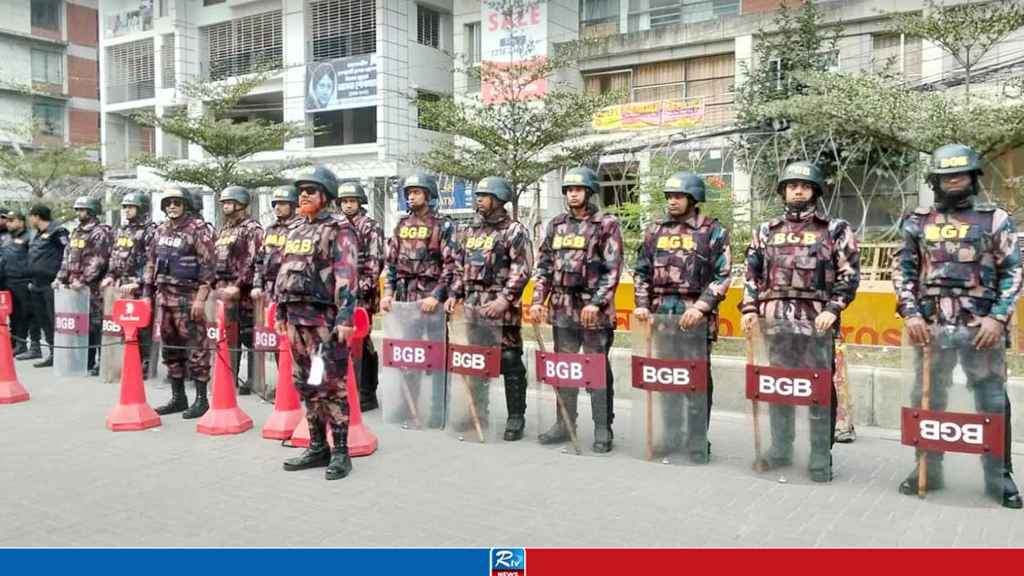
The government has deployed 27 platoons of the Border Guard Bangladesh (BGB) across the capital to ensure foolproof security during the funeral and burial of former Prime Minister and BNP Chairperson Begum Khaleda Zia. The funeral prayer (Janaza) is scheduled to take place after the Zuhr prayer today, Wednesday (December 31), at Manik Mia Avenue. Read More Khaleda Zia’s Funeral Today at 2 PM The Chief Adviser’s Office confirmed late Tuesday night that all logistical preparations for the massive gathering have been completed. Strict Security Measures To maintain law and order and ensure the smooth execution of the services, BGB personnel have been stationed at key points. BGB Public Relations Officer Md. Shariful Islam confirmed the deployment, noting that the 27 platoons are concentrated around: Evercare Hospital The National Parliament (Jatiya Sangsad Bhaban) area Zia Uddan In addition to the BGB, other law enforcement agencies are on high alert to manage the hundreds of thousands of mourners expected to attend the historic leader's final rites. Following the Janaza at Manik Mia Avenue, Begum Zia will be laid to rest with state honors at Zia Uddan in Sher-e-Bangla Nagar.
27 Platoons of BGB Deployed for Khaleda Zia’s Funeral and Burial
Special Assistant to Chief Adviser Prof. Md. Sayedur Rahman Resigns
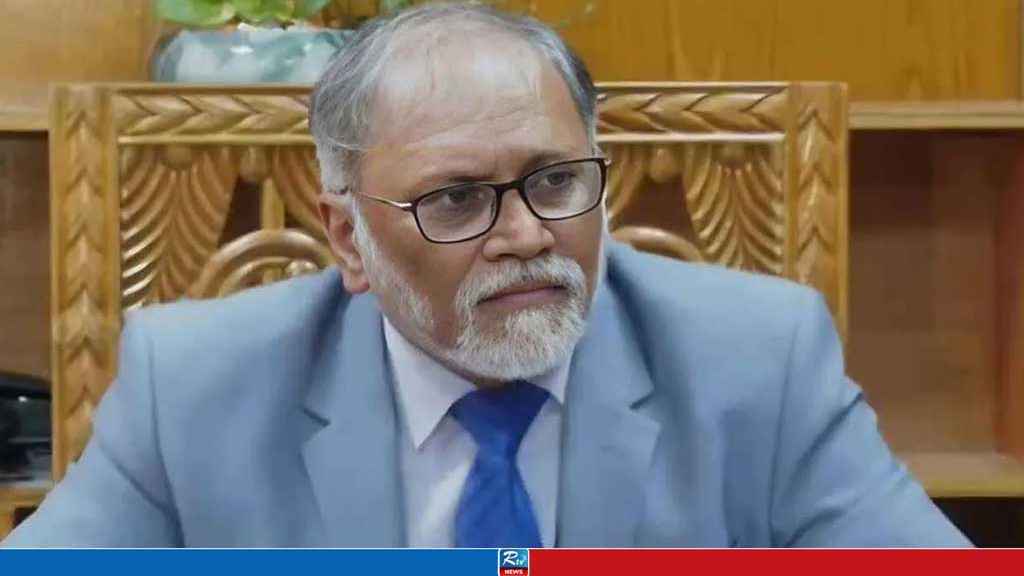
Professor Dr. Md. Sayedur Rahman, the Special Assistant to the Ministry of Health and Family Welfare (holding the rank of State Minister), has resigned from his post. He was one of three special assistants appointed by Chief Adviser Professor Muhammad Yunus. The President accepted his resignation letter on Tuesday night (December 30), according to a statement from the Chief Adviser's Press Wing. A notification issued by the Cabinet Division confirmed the development, stating that the President has accepted the resignation of Professor Dr. Md. Sayedur Rahman, who was entrusted with executive powers as a Special Assistant to the Ministry of Health and Family Welfare of the interim government. Context of Resignations The interim government had previously appointed three special assistants with the status of State Ministers to oversee key ministries: Prof. M. Aminul Islam: Appointed to the Ministry of Education; he resigned several months ago. Khoda Baksh Chowdhury: Former Inspector General of Police (IGP), appointed to the Ministry of Home Affairs; he resigned on December 25. Prof. Dr. Md. Sayedur Rahman: Vice-Chancellor of BMU, appointed to the Ministry of Health; he has now become the latest to step down. With Prof. Sayedur Rahman’s departure, all three initial special assistants appointed to these executive roles have now resigned from their positions.
Special Assistant to Chief Adviser Prof. Md. Sayedur Rahman Resigns
3-Day State Mourning for Khaleda Zia, Public Holiday Today
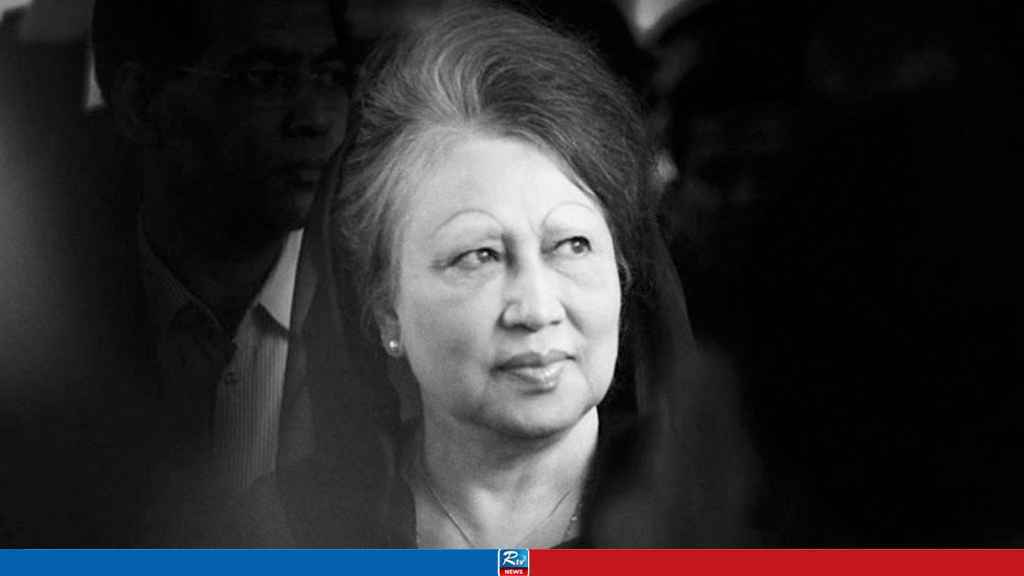
The government has declared three days of state mourning from Wednesday to Friday (December 31 to January 2) following the passing of BNP Chairperson and former Prime Minister Begum Khaleda Zia. Additionally, a nationwide public holiday has been announced for today. Cabinet Secretary Sheikh Abdur Rashid shared the information with journalists at the Secretariat on Tuesday (December 30). A formal notification was subsequently issued by the Cabinet Division. State Mourning and Honors The gazette notification stated that the interim government is deeply saddened by the death of the "uncompromising leader" of the movement to restore democracy. Read More Khaleda Zia’s Funeral Today at 2 PM To honor the memory of the three-time Prime Minister, the government has decided on the following: Duration: State mourning will be observed from Wednesday (December 31) through Friday (January 2, 2026). Flag Protocol: The national flag will be flown at half-mast at all government, semi-government, autonomous, and educational institutions, as well as private buildings and Bangladesh missions abroad. Special Prayers: Special prayers (Dua) for the departed soul will be held at all mosques across Bangladesh on Friday. Other religious institutions will also organize special prayers for her soul. Public Holiday and Exemptions In a separate notification from the Ministry of Public Administration, the government declared a general holiday today (Wednesday, December 31) by executive order. While all offices and private institutions remain closed, the following emergency services are exempt from the holiday: Electricity, water, gas, and fuel supplies. Fire services and port activities. Waste management and cleaning services. Telephone, internet, and postal services. Hospitals, emergency medical services, and vehicles carrying medicine or medical equipment. The notification added that Bangladesh Bank and the Supreme Court would issue specific instructions regarding the operations of banks and courts, respectively. Begum Khaleda Zia passed away at the age of 80 on Tuesday morning while undergoing treatment at Evercare Hospital in Dhaka.
3-Day State Mourning for Khaleda Zia, Public Holiday Today
Jaishankar to Attend Khaleda Zia’s Funeral
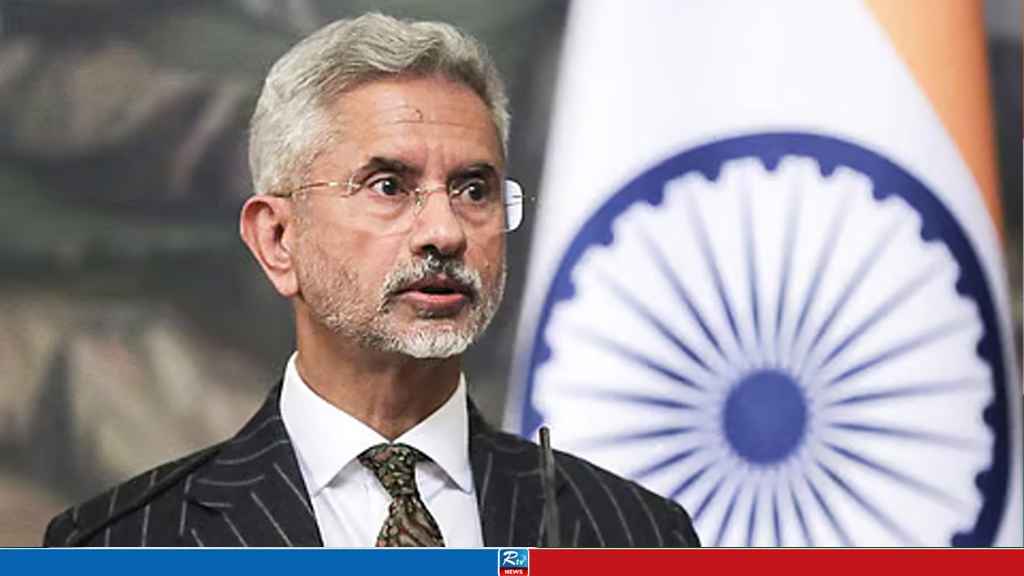
Indian External Affairs Minister, Dr S Jaishankar is to arrive in Dhaka tomorrow to attend the funeral of former prime minister and BNP chairperson Begum Khaleda Zia. “External Affairs Minister, Dr. S. Jaishankar will represent the Government and people of India at the funeral of Begum Khaleda Zia, former Prime Minister of Bangladesh and Chairperson of the Bangladesh Nationalist Party,” the Indian high commission in Dhaka said in a statement this evening. Begum Zia’s Janaza would be held after Zohr prayers while the high commission statement said Jaishankar would accordingly visit Dhaka on December 31. Indian Prime Minister Narendra Modi earlier in the morning expressed deep sorrow at Begum Zia’s demise, recalling her contributions to Bangladesh and bilateral relations. “Our sincerest condolences to her family and all the people of Bangladesh. May the Almighty grant her family the fortitude to bear this tragic loss,” he said. The Indian premier recalled her political legacy saying “as the first woman Prime Minister of Bangladesh, her important contributions towards the development of Bangladesh, as well as India-Bangladesh relations, will always be remembered”. “I recall my warm meeting with her in Dhaka in 2015. We hope that her vision and legacy will continue to guide our partnership,” Modi said.
Jaishankar to Attend Khaleda Zia’s Funeral
Chinese Ambassador Sends Condolences to Tarique Rahman Over Khaleda Zia’s Passin
Yao Wen, the Chinese Ambassador to Bangladesh, has expressed profound grief and condolences to BNP Acting Chairman Tarique Rahman following the death of former Prime Minister and BNP Chairperson Begum Khaleda Zia. The ambassador conveyed his sympathies in a formal letter sent to Tarique Rahman on Tuesday (December 30). The Chinese Embassy in Dhaka later shared the contents of the letter on their official Facebook page. In his message to Tarique Rahman, Ambassador Yao Wen wrote: "It is with deep sorrow and a heavy heart that I extend my profound condolences on the passing of your beloved mother, Khaleda Zia, the Chairperson of the BNP and former Prime Minister of Bangladesh." The ambassador’s gesture follows official diplomatic protocols, as Chinese Premier Li Qiang and Foreign Minister Wang Yi also sent separate condolence messages to Chief Adviser Professor Muhammad Yunus and Foreign Affairs Adviser Md. Touhid Hossain, respectively. A "Steadfast Pioneer" of Democracy Describing her legacy, Yao Wen noted that Khaleda Zia served as a long-standing symbol of democratic aspirations in Bangladesh and was a "steadfast pioneer" of the nation’s independence. "Her leadership played a pivotal role in shaping the country’s history, and her resilience inspired the people," the letter stated. The Ambassador further emphasized her role in international relations, calling her a "dear friend of the Chinese people" whose contributions left a lasting impact on bilateral ties. He noted that the people of China would remember her with "deep gratitude and the highest respect." Future Cooperation Looking forward, Ambassador Yao Wen assured the BNP Acting Chairman that the Communist Party of China (CPC) remains committed to maintaining its long-standing friendly relations with the BNP under Tarique Rahman's leadership. The letter concluded with a wish for the peace of Khaleda Zia’s soul, stating, "May her contributions to Bangladesh and the China-Bangladesh relationship be remembered forever."
Chinese Ambassador Sends Condolences to Tarique Rahman Over Khaleda Zia’s Passin
Read More
Missing former Anti-Discrimination leader Mamun rescued after 5 days
Report on Enforced Disappearances to Go Public, Says Yunus
Full Report Submitted to ICT Against 8 Accused
Concert of Anti-Discrimination Student Movement Postponed