Dhaka 26 September, 2026

Process of Transferring Bank Accounts into Sammilito Islami Bank at Final Stage

BSS

Publish : 27 Dec 2025, 05:54 PM
File Photo

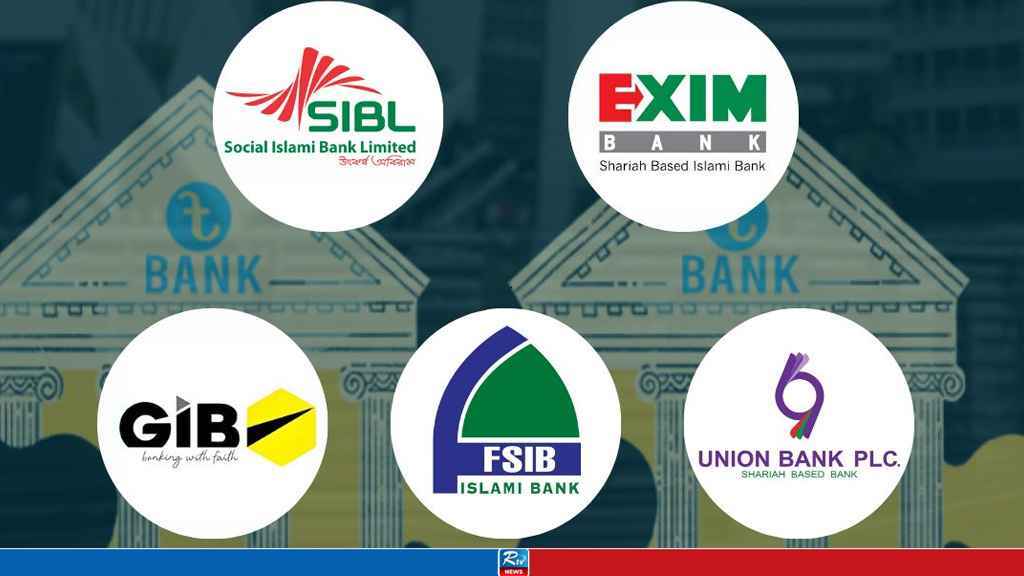
The process of transferring the bank accounts of depositors of the five banks included under the merger to the newly formed Sammilito Islami Bank is at the final stage.

If the process is completed within the next week, the deposits of the existing five banks will be automatically transferred to accounts of the newly formed Sammilito Islami Bank, said a release of the Bangladesh Bank today (Saturday).

Read More

Depositors will be able to withdraw up to a maximum of BDT 200,000 using their existing cheque books. Any remaining balance (if any) will remain secured in their bank accounts, and profit will be paid on such deposits at the prevailing rate.

As the newly formed bank is a state-owned bank, public confidence in the bank is expected to increase, which in turn is likely to significantly reduce the demand for deposit withdrawals.

Follow google news channel to get RTV news Google News
'Sanchaypatra' Profit Rates Likely to Drop in January
The government is preparing to reduce profit rates on national savings certificates (Sanchaypatra) effective January 1, 2026.  This would mark the second rate cut within a six-month period, following pressure from the banking sector to align rates. According to ministry officials, the Finance Division has already drafted a proposal outlining the new rates and submitted it to Finance Adviser Dr Salehuddin Ahmed for final approval.  Once cleared, the Internal Resources Division (IRD) will issue the official circular for implementation. The Finance Adviser noted that he has not yet formally received the document, he acknowledged that bankers have been strongly advocating for a reduction.  "There is a demand from bankers to reduce the profit rates of savings certificates to support credit growth in the private sector," he explained, noting that the final decision will be based on the broader national interest. This adjustment follows a policy established on June 30, under which the government committed to reviewing and adjusting profit rates every six months as part of its ongoing income and debt management strategy. Read More German Central Bank Eyes 1.3% Growth by 2027 Amid Infrastructure Push According to sources within the Finance Division, the new proposal suggests an average reduction by 0.5 percent across various savings schemes. The tiered interest structure will remain.  It means- Small investments: For investments up to BDT 7.5 lakh, profit rates will remain relatively higher.Large investments: For investments exceeding BDT 7.5 lakh, the profit rates will be significantly lower. Currently, the maximum profit rate stands at 11.98 percent, while the minimum is 9.72 percent. The family savings certificate, the most popular scheme among citizens, currently offers 11.93 percent for investments below Tk 7.5 lakh. This is expected to see a slight dip. Other schemes affected include: Pensioner savings certificate: currently 11.98 percent (below BDT 7.5 lakh).Bangladesh savings certificate (5-year): currently 11.83 percent (below BDT 7.5 lakh).Three-Monthly Profit-Based Certificate: currently 11.82 percent (below BDT 7.5 lakh). No changes are expected for the Wage Earner Development Bond, US Dollar Premium Bond, US Dollar Investment Bond, or Post Office Savings Bank ordinary accounts. Abdul Hai Sarker, Chairman of the Bangladesh Association of Banks (BAB), has welcomed the government's move to reduce profit rates on savings certificates.  He noted that high interest rates on these government instruments frequently divert deposits away from private banks.  By lowering these rates, he believes funds will shift back into the banking system, thereby increasing the liquidity available for private sector lending. Recent government data highlights a significant trend in state borrowing. During the first four months of the 2025–26 fiscal year (July–October), the government raised BDT 2,369 crore through the sale of savings certificates.  As of late October, the total outstanding government debt in this sector reached BDT 3.41 lakh crore. With Inputs from UNB
'Sanchaypatra' Profit Rates Likely to Drop in January
German Central Bank Eyes 1.3% Growth by 2027 Amid Infrastructure Push
According to a monthly report released Friday, the German central bank expects a modest economic turnaround in 2026, projecting a 0.6% rise in real GDP.  This figure represents a slight downward adjustment from the Bundesbank’s June estimate of 0.7%.  The revision comes as multiple economic institutions lower their expectations for Germany’s recovery after a prolonged period of sluggish growth. Taking into account the additional working days in the coming year, the Bundesbank’s projection is somewhat more optimistic. The current year is likely to deliver mini-growth of 0.2%, the central bank said. "The German economy will make headway again in 2026: While progress will be subdued initially, it will then slowly pick up," Bundesbank President Joachim Nagel said in presenting the Bundesbank’s new Forecast for Germany. "Starting in the second quarter of 2026, economic growth will strengthen markedly, driven mainly by government spending and a resurgence in exports," he added. For the first quarter of 2026, the Bundesbank anticipates a modest 0.1% increase over the previous quarter, mirroring the growth rate expected in the final quarter of 2025. The central bank predicts that the economic upswing will gain significant momentum by 2027, with growth reaching 1.3%. This updated figure is 0.1 percentage points higher than the estimate provided in June. Looking further ahead to 2028, Europe’s largest economy is forecast to expand by 1.1%. According to the Bundesbank, this momentum will increasingly be driven by multibillion-euro government expenditures on infrastructure—such as road and rail networks—as well as significant investments in national defense. Read More Bangladesh Intensifies Legal Efforts to Recover Laundered Money: BB Governor Exports, recently held back by higher US tariffs, are expected to return to an expansion path over the course of the coming year, the bank said. That should spur corporate investment. The Bundesbank also sees upside potential in private consumption, an important pillar of domestic activity. "Strongly rising wages and a gradual improvement in the labour market will underpin real income and thus consumption," the bank wrote in its report. However, the inflation rate will decline more slowly than expected because of wage growth and a less pronounced fall in energy prices, the Bundesbank said. After 2.3% inflation this year, it expects a rate of 2.2% for 2026 calculated by the European method (HICP), 2.1% in 2027 and 1.9% in 2028, meaning the European Central Bank’s (ECB) 2% target will be roughly reached. Higher inflation rates erode people’s purchasing power. Source: German News Service 
German Central Bank Eyes 1.3% Growth by 2027 Amid Infrastructure Push
Group's Infrastructure Key to India's USD 10 Trillion Economy: Pranav Adani
Pranav Adani, Director of Adani Enterprises Limited (AEL), outlined a data-driven strategy for accelerating India’s economic rise, highlighting the pivotal role of the Adani Group's infrastructure in this trajectory. During a conversation on a private television channel, Adani noted that with India on track to hit the USD 5 trillion GDP mark and projected to potentially reach USD 10 trillion within the next decade, the country’s current momentum is defined by scale, confidence, and execution. Pranav Adani detailed how the Adani Group’s integrated infrastructure strategy is designed to support and facilitate India's march toward becoming a multi-trillion-dollar economy. In the interview, he noted that the Adani Group's portfolio mirrors the contours of India's growth map, from 14 ports handling a quarter of India's cargo to eight of the country's busiest airports, including Navi Mumbai, which will become operational from December 25, from the nation's largest renewable energy pipeline of 50+ GW under development to urban transformation projects serving millions. Infrastructure, he said, "is not a short-term capital cycle; it is a 20-40-year commitment. Countries grow when companies invest with a generational mindset."A significant portion of the conversation centred on the Dharavi Redevelopment Project (DRP), among the world's largest urban renewal programmes. With over one million residents, Dharavi's transformation involves building modern housing, formalising livelihoods and creating new economic opportunities. Read More 'NetBanking 2.0 in India Aims to Make Online Payments Easier, Safer' Pranav Adani emphasised that resident-centric rehabilitation, executed through transparent, phased delivery, remains the project's foundation.He also spoke of strategic investments in emerging growth corridors, especially the Northeast. With major expansions underway in aviation, transmission, logistics and green power, he said the region could become India's "gateway to ASEAN," supported by the diversified conglomerate's ability to deliver large projects on time and at scale. He reiterated the Group's governance strength: its companies operate some of the world's most efficient infrastructure assets, maintain investment-grade credit ratings and continue to attract long-term global partners. The Group's stellar track record, he said, is anchored in transparent processes and disciplined execution -- qualities that have allowed it to remain India's fastest-growing infrastructure conglomerate. He ended with a message to India's youth: embrace risk, innovate relentlessly and participate in building India of 2047."This is the era for bold builders," he said. "India's next leap will come from those who think long-term and build for national impact."  Source: ANI
Group's Infrastructure Key to India's USD 10 Trillion Economy: Pranav Adani
Bengal Commercial Bank Partners with Air Astra for Digital Revenue Payments
Bengal Commercial Bank has entered into a strategic partnership with Air Astra, a renowned private airline, to facilitate the payment of VAT, Tax and other government revenues using the Bank's sophisticated Automated Challan System (ACS). A Memorandum of Understanding (MOU) formalizing this initiative was signed between the two organizations on Wednesday (December 10, 2025) at the Head Office of Bengal Commercial Bank in the capital's Gulshan area, said a press release.   Tarik Morshed, Managing Director & CEO, signed the MOU on behalf of Bengal Commercial Bank while Imran Asif, Chief Executive Officer, signed on behalf of Air Astra. Read More Billion Dollar Remittance in First 8 Days of December High officials from both organizations attended the signing ceremony, including K. M. Awlad Hossain, Additional Managing Director & CBO; Dr Md Rafiqul Islam, DMD & CTO; Md Humayun Kabir, FCS, DMD & Company Secretary; Istiak Uddin Ahmad, Manager of Corporate Branch; and Md Shafiul Asgar, Chief Financial Officer of Air Astra. This collaboration will allow Air Astra to efficiently and digitally manage its government revenue contributions, streamlining the compliance process. Bengal Commercial Bank is committed to delivering timely and contemporary banking services through this strategic partnership.
Bengal Commercial Bank Partners with Air Astra for Digital Revenue Payments
'NetBanking 2.0 in India Aims to Make Online Payments Easier, Safer'
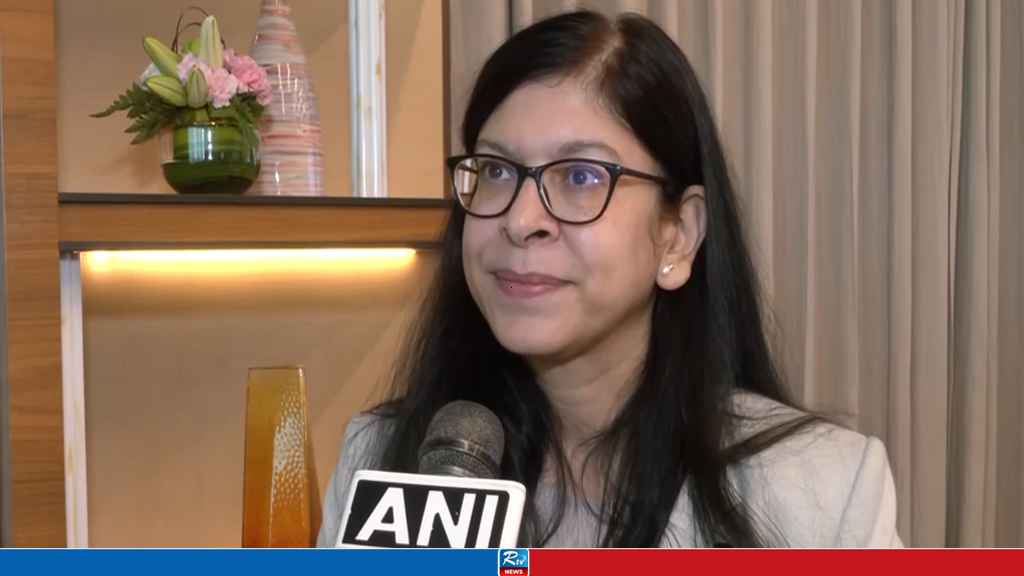
Net banking in India is undergoing a major transformation with the introduction of "NetBanking 2.0," a new system designed to enhance the safety and simplicity of online payments.  Noopur Chaturvedi, MD and CEO of NPCI Bharat BillPay Limited, explained that this overhaul unlocks a significantly smoother digital transaction experience for customers. Chaturvedi said the current net banking process often pushes users to a webpage where they must enter an ID and password, which many people forget, causing the payment to drop midway.  She said the new system removes this friction by taking customers directly to their own banking apps, making the journey more familiar and easier.  "The customer gets routed to their own banking apps, and they can complete the transaction in the comfort of a familiar app," she said.The platform also adds a QR-based option, which uses a dynamic QR code generated during a transaction.  Read More Bangladesh-China BRI Engagement Poised to Drive Sustainable Shared Growth Customers can scan it using their bank app to finish the payment.  According to Chaturvedi, this design reflects how people have become comfortable with QR-based payments in recent years. "We have also incorporated a manner in which a dynamic QR gets shown up, and the customer can use their banking app to scan it and complete the payment," she said, adding that the entire system is built with a mobile-first approach as smartphone use continues to rise across India. Chaturvedi said the company is not focusing on numerical targets but on how many banks and payment players join the new system. More participation, she said, will help build confidence and strengthen the payment network.  She noted that existing net banking transactions stand at nearly 300 million a month, and the hope is to exceed that number eventually.  On safety, Chaturvedi said fraud prevention was an important aspect for the system from the very beginning. She said they are using new technologies to alert banks if a suspicious transaction appears. "We attempt to use new technologies like AI and ML to create fraud management systems which can identify and trigger a message to the bank," she said.  She added that having a central settlement platform makes spotting fraud easier because it provides a clearer view of activity across the ecosystem.  For customers, the immediate change will be the availability of three payment paths: using their bank app, scanning a QR code, or continuing with the existing net banking website if their bank has not yet migrated. She said the aim is to give users a choice while also providing clearer information on grievances, chargeback timelines, and merchant settlements. "A lot of transparency, standardisation and ease is what everyone in the ecosystem can expect immediately," she said. Chaturvedi clarified that earlier references to cash payments pertained only to bill payment systems and were not linked to the new net banking platform launched today.  Source: ANI
'NetBanking 2.0 in India Aims to Make Online Payments Easier, Safer'
Read More
BFIU Seeks Bank Account Details of Model Meghna Alam
Court Orders Freezing of 124 Bank Accounts Belonging to Hasina, Rehana
Summit's Aziz Khan, His Family's 191 Bank Accounts Ordered to be Frozen
Court Orders Seizure of 28 Bighas of Land, 19 Bank Accounts of Palak's Wife