
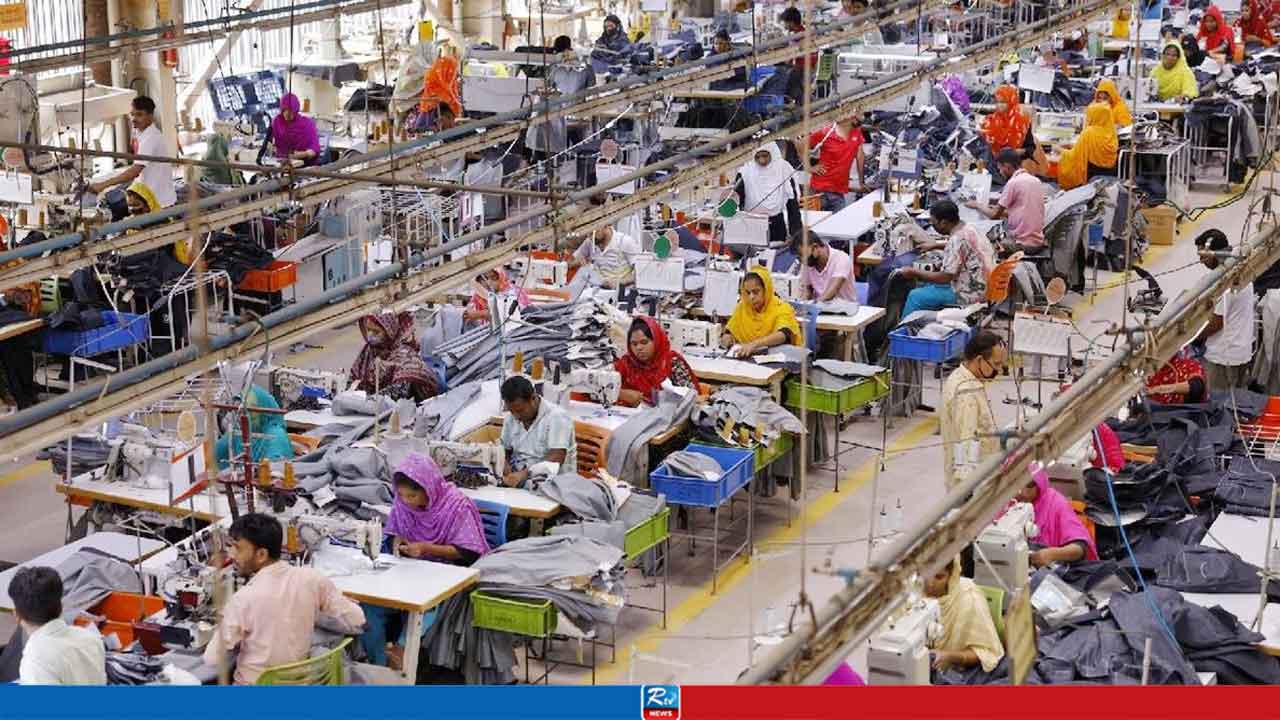
More than 400 garment factories have shut down over a three-year period from July 2023 to June 2026, according to Commerce Minister Khandaker Abdul Muktadir. He also stated that compilation of a complete list of all closed factories is currently underway.
The Commerce Minister shared this information on Thursday (September 3) during a question-and-answer session in the third session of the Jatiya Sangsad, responding to an inquiry from Member of Parliament Md. Ruhul Amin.
MP Ruhul Amin had asked about the total number of ready-made garment (RMG) manufacturing companies currently closed in Bangladesh, their names, the reasons for closure, and whether any steps have been taken for the development of the RMG sector.
In his reply, the Commerce Minister stated that between July 2023 and June 2026, over 400 garment factories have closed—including 282 members of the BGMEA and 123 members of the BKMEA. The process of collecting a comprehensive name list of these shuttered factories is ongoing.
The primary reasons cited for these closures include the global COVID-19 pandemic, the Russia-Ukraine war, the Israel-Palestine conflict in the Middle East, severe warfare between the US and Iran, international recessionary pressures, domestic political instability, liquidity crises in the banking sector driven by money laundering, free trade agreements (FTAs) between European nations and competitors like India and Vietnam, and a reluctance among foreign buyers to place export orders with small and medium factories to streamline their own monitoring processes.
Highlighting the government's initiatives to develop the RMG sector, the Commerce Minister noted that measures to retain Bangladesh's market share in the global apparel industry include: providing a 1.50% alternative cash subsidy in place of streamlined bond and duty drawback facilities for the export-oriented domestic textile sector; an extra 0.50% special assistance on top of the existing 1.50% for textile exporters in the Eurozone; an additional 3.00% benefit for all small and medium enterprises (SMEs) within the export-oriented RMG sector (knit, woven, and sweater); and a special cash incentive of 0.30% for the readymade garments sector.
In response to another query from MP Md. Shamsur Rahman Shimul Biswas, the minister stated that regular market monitoring and surveillance activities are being conducted by the Ministry of Commerce to keep commodity prices at tolerable levels. Nationwide market drives are also being operated through special district-level task forces and the Directorate of National Consumer Rights Protection.
Furthermore, punitive fines and necessary legal actions are being enforced under existing laws against overpricing, hoarding, creating artificial crises, failing to display price lists, and other irregularities. The Bangladesh Competition Commission is also taking requisite measures against syndicates, cartels, and collusive activities to ensure fair market competition.
The Commerce Minister affirmed that these market monitoring, surveillance, and legal measures will continue and be further intensified as needed in the future to protect consumer rights and stabilize commodity prices in the public interest.






 Live TV
 RTV Plus


