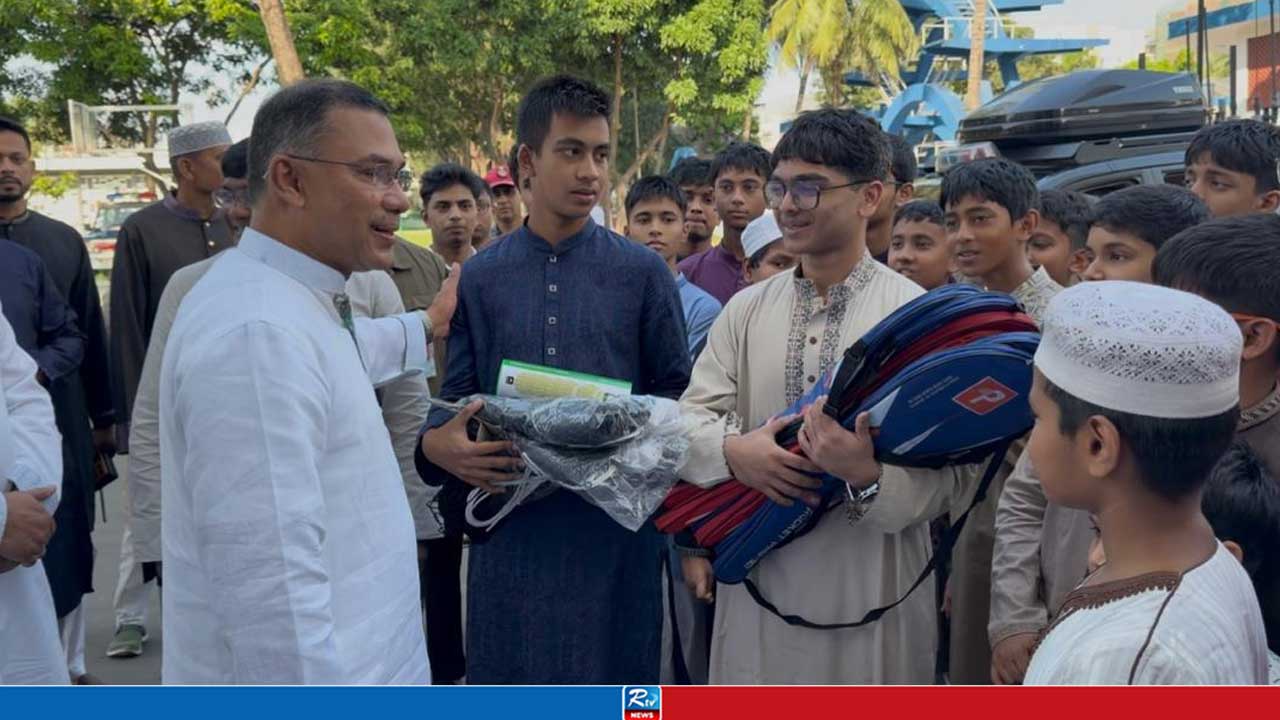
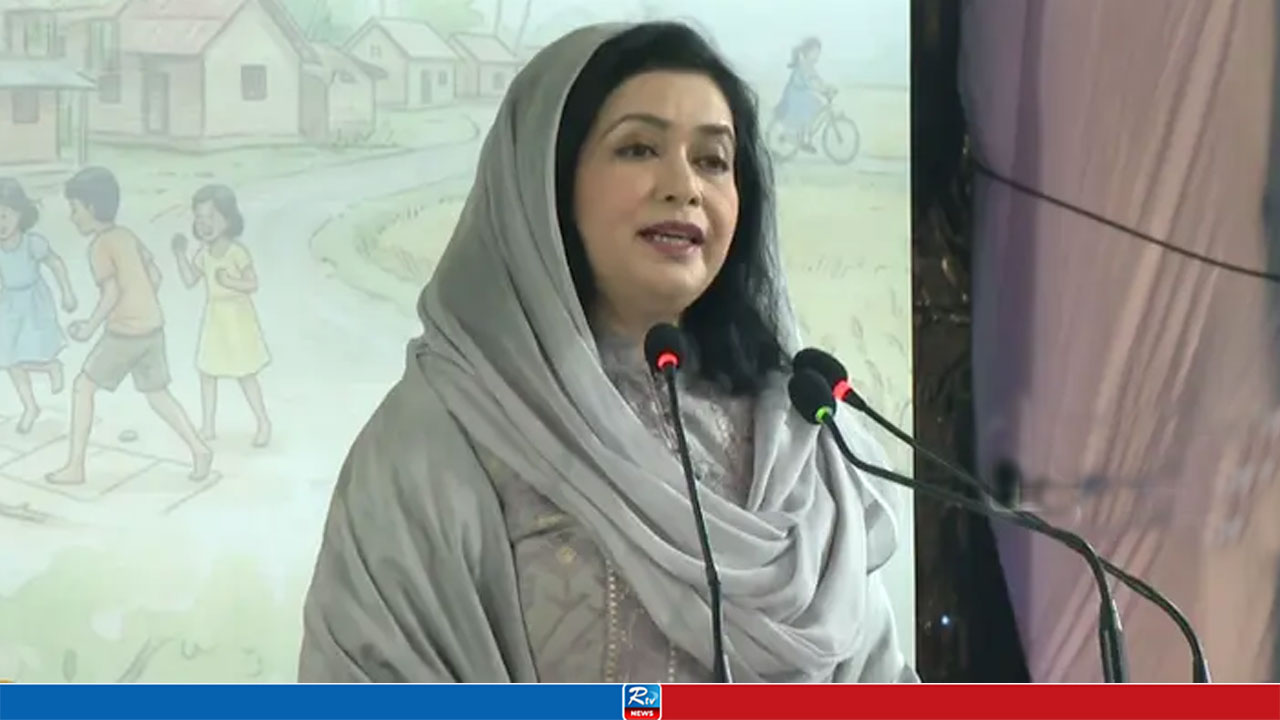
Dr. Zubaida Rahman has announced that the government will launch a midday meal program across all government primary schools in the country starting in 2027 to ensure child nutrition.
Under this initiative, 11 million children will receive daily midday meals, said Dr. Zubaida Rahman, Vice President of the Ziaur Rahman Foundation.
She stated that the school feeding program will play a vital role in addressing nutritional deficiencies among children, boosting school attendance, and sustaining formal education.
She made these remarks on Friday (November 27) at the prize-giving ceremony of a culinary competition organized to mark National Livestock Week at the field adjacent to Sher-e-Bangla Agricultural University (the former trade fair ground) in Agargaon in the capital.
The event was chaired by Fisheries and Livestock Minister Mohammad Amin Ur Rashid. Five participants received awards for the top recipes selected out of 300 entries in the culinary competition.
Speaking on the occasion, Dr. Zubaida Rahman said that around 3.1 million students across 151 of the country's 500 upazilas are currently receiving nutritious meals every day. This project is sufficient to sustain attendance and formal education among children aged four to 10 years at school. Starting in 2027, 11 million children across all government primary schools in all 500 upazilas will receive midday meals.
Alongside the ongoing program, she stressed strengthening monitoring by involving mothers to ensure food quality.
Proposing local-level cooking competitions to improve the quality and nutritional value of school meals, Dr. Zubaida Rahman said such contests could be organized at district or upazila levels to make school midday meals or children's lunches appetizing and readily accessible.
Highlighting the need to follow hygienic cooking methods in primary schools and increase the use of local ingredients, she said hygienic preparation, readily available local produce, vegetables, protein, and dairy products, combined with maternal involvement and oversight, will multiply the nutritional standards of the country's children.
In her address, the specialist physician said, "We often say cooking is an art. However, it is at the same time a language, a science, and a medium of human connection. It is a wonderful convergence of necessity, passion, creativity, and our cultural heritage. We add a part of our history, personality, and love into cooking."
Tahera Islam Tinni from Madaripur secured first place in the culinary competition, Abu Abdullah Md Siam came second, and Sajia Ferdous from Rangpur placed third. Crest awards, certificates, and cheques were presented to the winners. Later, Dr. Zubaida Rahman joined the winners and contestants for a photo session.
Urging participants to keep practicing innovation and creativity in cooking, Dr. Zubaida Rahman said, "Do not stop experimenting with cooking. Your own perspective will make your cooking unique. Never let your passion for cooking fade. Enjoy every moment of this journey. Help make Bangladeshi cuisine even more renowned on the global stage."
Highlighting aspects of the United Nations Sustainable Development Goals on ending global hunger, Dr. Zubaida Rahman said key targets include ensuring food for all, securing food access for vulnerable populations, ending stunting and malnutrition in children, supporting small farmers, building sustainable food systems, and reducing food waste and loss.
Outlining the nutrition situation of children in Bangladesh, she said that according to United Nations statistics across 64 districts, 500 upazilas, 4,599 unions, and 90,049 villages in Bangladesh, 25.1 percent of children under five suffer from stunting.
She added that Prime Minister Tarique Rahman and his government have taken various steps to achieve the United Nations Sustainable Development Goals in Bangladesh by 2030.
Emphasizing the need to spark interest in agriculture among the younger generation in agrarian Bangladesh, Dr. Zubaida Rahman said it is essential to inspire youth in this agricultural nation to care for farming.
Mentioning initiatives to boost agricultural output and address nutritional gaps, she said emphasis must be placed on cultivating improved crops, producing vitamin- and nutrient-rich foods, growing vitamin A-enriched Golden Rice, and cultivating disease-resistant potatoes to tackle deficiencies. Alongside this, insect-resistant brinjal farming is expanding to reduce pesticide use, with more than 30,000 farmers currently growing such brinjal.
On building a modern agricultural system, she said steps must be taken to upgrade modern irrigation and agricultural infrastructure, expand surface water use by excavating canals, eliminate waterlogging, and convert fallow land into cultivable land. Alongside implementing the national food and nutrition security policy, nutrition-sensitive policies must also be prioritized.
Highlighting the need to raise awareness to ensure maternal and child nutrition, Dr. Zubaida Rahman said grassroots awareness must be built with technical support from the Food and Agriculture Organization to ensure diverse and safe food for mothers and children as well as healthy cooking habits.
Dr. Zubaida Rahman called on everyone to work collectively to build a hunger-free world.
"Let us all make efforts to move the world toward zero hunger," she said.





 Live TV
 RTV Plus