Dhaka 21 September, 2026

Why He Never Stopped despite Prison, Exile and Persecution

Delwar Hossain

Publish : 20 Nov 2025, 11:57 PM

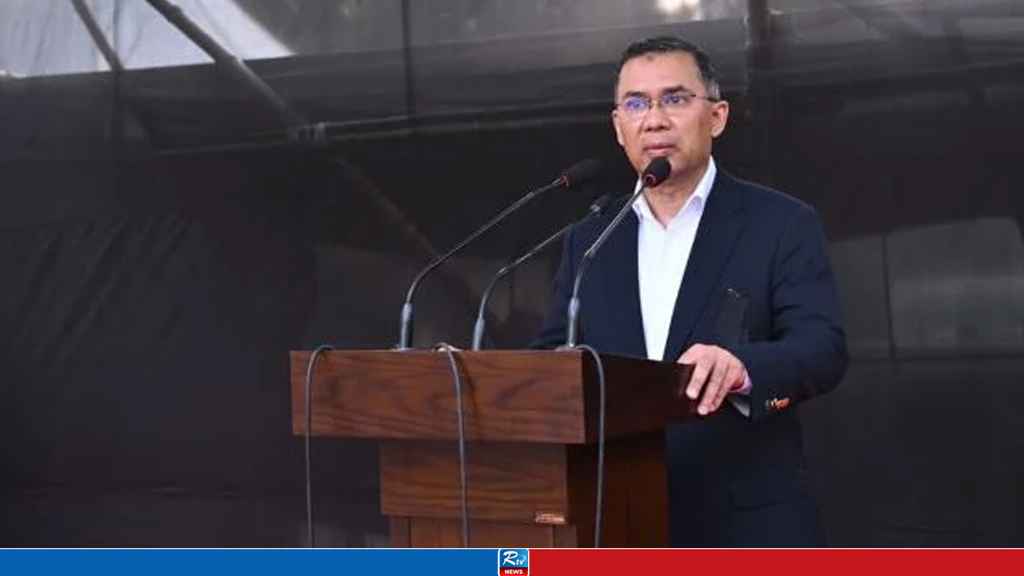
Tarique Rahman is the eldest child of Bangladesh’s two prominent political figures, the martyred President Ziaur Rahman and former Prime Minister Khaleda Zia. In his youth, both domestic and foreign conspirators assassinated his father, President Ziaur Rahman.

Despite being born into a political family, he did not choose a life of luxury or comfort. From adolescence, he became involved in life’s struggles alongside his mother. After overcoming many challenges, he has continued to work under the guidance of his mother—the national leader—for the country and its people.

He has faced conspiracies both at home and abroad. He has suffered persecution and imprisonment and has lived in exile. Yet, he has never compromised with injustice.

Guided by his mother—the former and three-time Prime Minister—he devoted himself to the welfare of the people, aiming to fulfill the dreams of his martyred father.

Today, November 20th, is the birthday of Tarique Rahman, one of the notable figures in the country’s nationalist politics. His name has always carried special significance in Bangladesh’s political sphere.

During the 1971 Liberation War, he remained imprisoned with his mother under the Pakistani forces. The experience of incarceration in childhood brought him very close to the political realities of the country.

After completing his studies at BAF Shaheen School and College in Dhaka, he pursued higher education in the Department of International Relations at the University of Dhaka.

In 1988, he began grassroots politics with the Bangladesh Nationalist Party (BNP) by joining the Gabtali Upazila unit in Bogura as a general member. Before the 1991 election, he participated in campaigning with his mother, Begum Zia, in almost every district of the country.

Before 2001, he established a research unit in Dhaka. There he began identifying local problems, issues of good governance, policy proposals, and gathering opinions from grassroots communities. Alongside this, he initiated various public-interest programs. In continuation of these efforts, the BNP achieved a landslide victory in the 2001 elections. Even though he had the opportunity to be at the center of power, Tarique Rahman never accepted any ministerial position or parliamentary seat.

Strengthening the party’s organizational structure remained his primary objective. In 2002, after being elected Senior Joint Secretary General of the BNP, he organized grassroots conferences, promoted issues such as agricultural subsidies and social allowances, and led movements against plastic bags, through which he developed a large organizational network. He responded in writing to nearly 18,000 letters from party workers, a gesture widely regarded as a sign of humane leadership.

However, the 2007–08 “One Eleven” caretaker government changed the course of his life. His arrest and severe torture made his political path extremely difficult. According to the BNP, such actions were carried out to remove Rahman from politics. During the One Eleven period, he became gravely ill due to torture and was compelled to travel to the United Kingdom for medical treatment.

Read More

Under the subsequent Sheikh Hasina government, he was handed one sentence after another in what the BNP described as fabricated cases filed during the One Eleven era. From abroad, he remained active in the party’s central policymaking. Through technology, he continues to keep leaders and activists united.

In his personal life, he is the husband of Dr. Zubaida Rahman and the father of Zaima Rahman. His interests in study, music, culture, and pets reflect a more humane, calm, and thoughtful character.

Following the political changes after August 5th, each of his statements has become central to national politics. Despite state restrictions and smear campaigns, Tarique Rahman remains an uncompromising leader to millions of supporters. His encouragement for party leaders and workers to avoid formal celebrations even on his birthday further highlights his political restraint.

Follow google news channel to get RTV news Google News
India's Hidden Crisis of Sexual Violence Against Boys
In India's southern state of Kerala, a 16-year-old boy said he was sexually assaulted for over two years by 14 men he met through a dating app designed for the LGBTQ+ community. Police have reportedly opened investigations into 14 men and made at least nine arrests. Though the case has highlighted sexual violence faced by boys in a country that often comes under international focus for attacks on women, experts and survivors say the topic remains a taboo that is rarely acknowledged or discussed in India. Shame, Silence, Stigma DW spoke with one male survivor of sexual abuse, a 24-year-old man who preferred to remain anonymous. He shared his story of how he was "exploited" as a young boy by his relatives, people he "trusted, looked up to and thought were protectors." The man said the silence around the abuse he suffered was largely shaped by the overwhelming pressure of societal expectations that men should be strong — and silent. "Society's idea of masculinity says that, if you speak up, you lose your manhood," he said. Sociologist Vijaylakshmi Brara told DW that the reluctance to accept men as victims stemmed from traditionally rooted notions of masculinity, in which men are seen as dominant — not as victims. "The traditional notion of 'manliness' casts men as strong and superior, making it difficult to accept that men can also be vulnerable or subjected to abuse," Brara said. In mainstream thinking, she said, male victimhood is often dismissed, with patriarchal societies unable or unwilling to accept or even imagine that men and boys could be victims to such crimes. "Society is deeply ingrained with the belief that only women are victims, leaving male experiences largely invisible," Brara said. This experience is one shared by the survivor DW spoke with. "No one imagines a boy could be abused," he said. "When a boy (makes allegations of sexual abuse), he's often laughed at." A national study by India's Women and Child Development Ministry in 2007 found that more than half of boys had suffered sexual abuse, with just under a quarter experiencing a severe form of sexual abuse. Though the study's use of a convenience sample rather than a representative one means the statistics should be viewed with caution, it nevertheless illustrates that the issue is widespread. Male survivors are often overlooked and dismissed Nandini Bhattacharya, who advocates for men who have survived such violence, told DW that male sexual assault survivors face unique psychological challenges — including deep shame and isolation fueled by a general disbelief in their accounts. Survivors have to overcome a culture of victim-blaming that is tied to traditional gender norms, in which men are expected to be providers and protectors, while women are seen as weak and fragile, she explains. "There is an increased feeling of guilt, self-blame and anxiety alongside difficulty expressing emotions and intimacy and often results in silence and reluctance to seek help or report the abuse," Bhattacharya said. This culture of silence also means that boys are often overlooked in discussions about abuse, feminist writer Yashodhara Ray Chaudhuri said. "Contrary to common beliefs, boys suffer abuse at rates comparable to girls, with some cases involving female abusers also," she said. A girl holds a sign reading "You should protect us not hurt us" during a rally against sexual violence in New Delhi [FILE] Chaudhuri said many men only revealed such experiences years later in private, highlighting the critical need to confront social taboos and broaden understanding of the abuse beyond prescribed gender frameworks.  Protecting children regardless of gender Chaudhuri said there was a need for more and stronger gender-neutral laws such as the Protection of Children from Sexual Offences Act that are designed to protect children from sexual abuse — regardless of gender. "Any form of harm or physical abuse on any human body must be equally reprehensible regardless of situations or gender," Chaudhuri said.
India's Hidden Crisis of Sexual Violence Against Boys
Future Journalism in Bangladesh, How it Will?
While discussions on the past, present, and future of journalism in Bangladesh often highlight ongoing challenges, it is also evident that the nature of these challenges is evolving in contemporary times.  Although the University of Dhaka introduced a formal undergraduate program in journalism as early as 1967, studies show that until the year 2000, only a small fraction of practicing journalists held academic degrees in the field. Nevertheless, those who led the profession played pivotal roles during critical moments in the country’s history despite do not have academic degrees in journalism. Their contributions were rooted in relentless dedication, research, hands-on experience, and wisdom.  Yet, it is precisely here that the new crisis begins. Today, most media outlets in Bangladesh explicitly mention in their job circulars that a degree in journalism is a mandatory requirement. This aligns with global professional standards every modern profession demands trained professionals. However, one study indicates that journalism degrees in Bangladesh are primarily being obtained from a handful of public and private universities, making this Subject relatively selective.  Recently, we engaged in in-depth discussions with 25 journalism students from several prominent private universities in Dhaka. Our aim was to understand how these aspiring upcoming journalists view the profession within the context of Bangladesh’s socio-political environment. Interestingly, a few common patterns emerged among the students.  Many expressed a strong interest in sports journalism, driven by a love for sports and the aspiration to be close to their favorite athletes. For them, this proximity is perceived as a personal achievement. However, some also expressed a tendency to criticize less-favored athletes in media narratives.  Similarly, a large number of students showed keen interest in entertainment journalism, motivated by the desire to engage with their favorite celebrities. Among the 25 students interviewed, nearly 20 showed a preference for this specific beat.  While the remaining five students expressed interest in other branches of journalism, it became clear that their perspectives differ significantly from those of the country’s senior journalists who currently lead the media landscape.  This suggests that in the next 4–5 years, as these students begin their professional journeys and today’s senior journalists gradually retire, the ethos and direction of journalism in Bangladesh may experience a significant transformation. Delving deeper into this shift, we identified some notable factors. A major concern lies in journalism education itself.  A considerable number of Journalism teachers do not work directly in any News Media or media industry. Their teaching focuses primarily on theory covering journalism’s frameworks, history, and processes without adequately exposing students to the complex realities of the field. As a result, students remain disconnected from the evolving challenges and unpredictable nature of newsroom life.  This gap calls for a pragmatic solution: universities should incorporate working journalists as adjunct faculty members alongside regular academic staff. This would allow practicing professionals to share real-world insights and foster meaningful connections between classroom theory and newsroom practice.  If this crucial bridge between experienced journalists and Journalism students is not built, there is a growing risk that the future of journalism in Bangladesh will be marked by fragmentation and disconnection potentially leading to a deeper crisis in the profession.(The writer is research enthusiast)
Future Journalism in Bangladesh, How it Will?
Recognizing Palestine Would Deepen French Muslim-Jewish Rift
Mohammed Iriqat has witnessed first-hand France's shifting stance on the crisis in the Gaza Strip, from the taunts he once received for wearing a kaffiyeh, a scarf symbolizing Palestinian solidarity, to being part of widespread protests as the devastating war in the Palestinian enclave grinds on. Now, the Paris-based Palestinian law student is experiencing yet another shift after President Emmanuel Macron announced on July 24 that France will recognize Palestinian statehood at the United Nations General Assembly in September. "It's very symbolic, but ultimately important," Iriqat, 30, said of the statehood recognition, even as he prefers tougher options like boycotts and sanctions against Israel. Still, he added that the move "will build on others for a new era." Iriqat's response echoes the fractured reaction in France to Macron's statehood announcement, which has sharply divided France's political class and deepened tensions between its Jewish and Muslim communities, Western Europe's largest. Both have seen a sharp uptick in attacks since the Israel-Hamas conflict erupted nearly two years ago. Even with a split on the statehood recognition, both faiths also worry their fraying ties may further erode. "The war has ended many relationships, both among leaders and among the population," Gerard Unger, vice president of the Representative Council of French Jewish Institutions (CRIF), told DW. "The two sides hardly speak anymore. Each side is aware that if they do, each will declare it's a victim." The CRIF is among those blasting Macron's declaration, alongside French conservative and far-right politicians. In a statement, the Jewish group called it a "moral fault, a diplomatic error and a political danger." "Macron isn't respecting his own engagements," said Unger. He noted that the French president earlier set still-unmet conditions for recognizing Palestinian statehood, including the release of Israeli hostages and the "demilitarization" of Hamas, an Islamist militant group which Israel, the European Union, the United States and others have designated as a terrorist organization. "That explains the Jewish community's anger and disappointment." Other prominent Jewish figures are also sharply critical. "It's an opportunistic decision," lawyer Arno Klarsfeld, son of famous Nazi hunter Serge Klarsfeld, told France's conservative CNews TV. "It cements the divorce with the Jewish community in France, considerably chills relations with Israel and the United States and reinforces Hamas." Not surprisingly, many of France's Muslim leaders and leftist parties have broadly saluted the president's move. "Mr. Macron's decision has been received with great satisfaction and joy," said Abdallah Zekri, vice president of the French Council of the Muslim Faith. "We hope it will translate to reality in September, without any preconditions." France makes U-turn on Gaza conflictFew dispute that Macron's statehood declaration marks a diplomatic U-turn. Two weeks after the Hamas-led attacks against Israel on October 7, 2023, the French president was in Jerusalem pledging "unconditional support" for Israel, calling for an international coalition to fight Hamas. Last year, he led a ceremony for French victims of the Hamas assault, calling it "the largest antisemitic attack of our century." But Macron reportedly has been shaken by Gaza's escalating humanitarian crisis and Israel's ongoing military campaign. The conflict in Gaza has killed more than 62,000 people, according to the Hamas-run Health Ministry in the enclave, and many currently suffer from widespread famine. In June, France shut down several Israeli weapons stands at the Paris Air Show for refusing to remove attack arms in their display, sparking Israeli fury. Then came Macron's announced intention to recognize Palestinian statehood, a move Israeli Prime Minister Benjamin Netanyahu criticized by saying it "rewards terror." Undeterred, France, along with Saudi Arabia, co-hosted a UN conference in New York on July 28 calling for a two-state solution. How the French public feels about Palestinian statehoodPolls suggest that a majority of French people support the idea. But a June survey from the French Institute of Public Opinion, sponsored by CRIF, shows most first want the remaining Israeli hostages taken during the October 7 attacks freed and Hamas to surrender as conditions. "The majority of French Jews aren't hostile to a two-state solution" under the right conditions, the Jewish council's Unger added. Most also "consider the situation in Gaza with tens of thousands of dead is awful," he said, even as they blame Hamas, not Israel, for the war. Like the CRIF, Pierre Stambul, who heads the small French Jewish Union for Peace, also criticizes Macron's statehood declaration but for different reasons. "It's total hypocrisy," he said. "What France is doing is nothing at all. Many states already recognize the state of Palestine." France has the biggest Jewish and Muslim communities in western Europe Rabbi Michel Serfaty, who has worked for years building interfaith ties, was noncommittal about Macron's announcement. "Let's see how our fellow Muslims will react," he said. "What interests many is just to live in peace." 'Politics are politics. People are people'Events in the Middle East have long reverberated in France, where many of the country's roughly 500,000 Jews and up to 6 million Muslims hail from similar North African roots. Both Jews and Muslims have seen a spike in physical and verbal assaults since the start of the Israel-Hamas conflict in Gaza. Unger, of the CRIF, said antisemitic attacks have "multiplied by two or three. Before, they were verbal threats; now, they're physical ones. Rabbis have been attacked." The French Muslim Council's Zekri described a similar uptick. "Personally, I've received slices of ham in my mailbox, threats sent to my home," he said. Many Muslims, he added, also don't report such acts to the police. In the 19th arrondissement of Paris, home to some of the city's biggest Muslim and Jewish populations, many declined to be interviewed. A group of Hassidic men, chatting outside a religious book shop on a sunny afternoon, only acknowledged that relations were complex. "We're not looking for problems," one said. "We try to keep good relations with the Arabs." A few blocks away, Algerian businessman Karim Kata said the two communities "try to avoid politics." "We've known each other for a long time," he added, pointing out Jewish businesses nearby, including a kosher butchery employing Muslim workers. "We respect each other. Politics are politics. People are people." More diverse pro-Palestinian protests in FranceIriqat, the Paris law student, moved to France four years ago and is no stranger to interfaith tensions. He describes slurs against him in the street and being targeted for joining pro-Palestinian demonstrations, which were initially banned over public order concerns.  "It's difficult to hold any sign that tells that you are Palestinian," he recalled of the early protests that initially mainly drew Muslims. "To wear a kaffiyeh, to hold the Palestinian flag — it was very difficult." Soon, however, "we started to see a lot of French, even the Jewish community, the leftist Jews," Iriqat said. "I saw they began to feel sorry about what was happening." Born in the occupied West Bank, he still recalls the day Israeli soldiers shot dead one of his uncles as the man sat studying on the family's rooftop terrace. Iriqat was 4 years old at the time. "I remember every single thing — even the smell of the food my grandmother was cooking," he said. "I remember pieces of my uncle's brain on the stairs of our home." He hopes growing international pressure on Israel will eventually sway its biggest ally, the United States, to follow suit and ultimately destroy a system he describes as apartheid. "I'm dedicating my life to Palestine and the Palestinians," said Iriqat, who plans to remain in France and continue his studies. "When I'm fighting for Palestine," he adds, "I'm also fighting for the interests of the Israelis."
Recognizing Palestine Would Deepen French Muslim-Jewish Rift
Iran-Israel War: Will India Need to Pick a Side?
India maintains amicable relations with both Israel and Iran, which is the result of a delicate balancing act stretching back many years. Now, New Delhi finds itself in a precarious position as the Israel-Iran conflict seems to be escalating into a broader confrontation with mounting death tolls and rising uncertainty. India's diplomatic tightropeOver the last decade, India has strengthened ties with Israel, particularly in defense and technology. India has acquired advanced weaponry, including Barak 8 defense missiles, unmanned aerial vehicles (UAVs), loitering munitions and sophisticated radar systems. In last month's short-lived conflict between India and Pakistan, New Delhi reportedly utilized various Israeli-origin weapons, underscoring the importance of the strategic defense partnership. At the same time, India values its historical and cultural connections with Iran, as well as its strategic role in regional connectivity, energy security, and geopolitical balance. Tehran is also New Delhi's second-largest supplier of crude oil. Importantly, Iran acts as India's gateway to Afghanistan and Central Asia. The Chabahar Port project on the Gulf of Oman, developed jointly by India and Iran, is central to this strategy, providing India with direct access to this region while bypassing Pakistan. Shanthie Mariet D'Souza, a regional expert monitoring current events, said that "India needs to maintain its balancing act to protect its security ties with Israel and protect its strategic interests and economic commitment to the Chabahar Port." "With such contrasting objectives, strategic ambiguity serves the purpose of India being dragged into the conflict, which is bound to widen if the war drags on," D'Souza, founder of the Mantraya Institute for Strategic Studies, told DW. Safeguarding New Delhi's interestsLast week, India's Ministry of External Affairs issued a statement expressing deep concern at the recent developments between Iran and Israel. "India urges both sides to avoid any escalatory steps. Existing channels of dialogue and diplomacy should be utilised to work towards a de-escalation of the situation and resolving underlying issues," said the statement. "India enjoys close and friendly relations with both countries and stands ready to extend all possible support," it added. Sticking to its policy of strategic ambiguity and nonalignment, India distanced itself from a recent Shanghai Cooperation Organization (SCO) statement denouncing Israel's attacks on Iran. The SCO is a 10-member bloc created by China and Russia to counter the Western-led global order. India is also a SCO member, despite its regional rivalry with China.  Responding to the escalation between Israel and Iran, the SCO expressed "serious concern" and strongly condemned the Israeli military strikes. P R Kumaraswamy, a professor of Middle Eastern studies specializing in Israeli politics at Delhi's Jawaharlal Nehru University, told DW that India's strategic silence on the Israel-Iran conflict, mirrored by its decisive refusal to endorse the SCO, reflects a "calculated, nuanced and matured approach" rooted in its national interests and geopolitical balancing. "This approach, akin to its neutrality during the Ukraine-Russia war, also recognizes the sentiments in several Arab capitals as they are caught between Israeli actions and a nuclear Iran as their neighbor," said Kumaraswamy. "Strategic autonomy can also be pursued through calculated and minimalist responses without any rhetorical declarations." D'Souza, however, said such a policy will be useful as long as the conflict between Israel and Iran is short. "If it drags on, every move of India will be analyzed and assessed, and its impartiality will be tested, which will be a test case for India's diplomacy," she said. "It will come under pressure if the conflict prolongs. However, being a votary of diplomacy and dialogue is a prudent policy that will maintain India's principle of non-alignment," she added. Will India's hand be forced?Earlier this week, India launched "Operation Sindhu" to evacuate Indian nationals, starting with 110 Indian students from northern Iran. These students were assisted in crossing into Armenia by road under the supervision of Indian diplomats. Following the successful evacuation from Iran, India extended the operation to include its nationals in Israel. Indian citizens who wish to leave Israel are being evacuated through land borders and then brought to India by air, according to India's Foreign Ministry. Former diplomat Anil Wadhwa said India would resist the pressure to take a clear side in the conflict unless New Delhi's vital interests like energy, connectivity, or security, are directly threatened. "Strategic autonomy has been prioritized by India. In the Middle East itself, opinions are divided over Iranian nuclear activities. India, therefore, works on a bilateral basis with its Middle East partners to develop trust and enhance its interests," Wadhwa told DW. "India will not want to be drawn into bloc-based confrontations. It is building trust through tailored partnerships," he added.
Iran-Israel War: Will India Need to Pick a Side?
Turkish Authority Granted Power to Censor Quran Translation
Turkey's Presidency of Religious Affairs, known as the Diyanet, is one of the country's most influential authorities. According to its own figures, it employs over 140,000 people and offers religious services in more than 100 countries. Founded in 1924, the Diyanet has reported directly to Islamic-conservative president Recep Tayyip Erdogan since 2018. Its annual budget of around €3 billion ($3.47 billion) also exceeds those of several ministries, including the Ministry of Interior. The Diyanet manages 90,000 mosques across the country, organizes Quran courses, cultural events and annual pilgrimages, and coordinates slaughters for the Feast of Sacrifice. It also trains imams and deploys them both at home and abroad. Its foundation is active in 150 countries and reaches millions of people through educational programs and scholarships worldwide. The Quran is written in Arabic. Translations are essential to making the text accessible to millions, including those in Turkey New authority over Quran translationsIn recent years, the Diyanet's powers have expanded. Most recently, a new law that went into effect on June 4 granted the authority to interpret translations of the Quran. If these "do not correspond to the basic characteristics of Islam," they may be banned. "Problematic copies" that have already been published can be confiscated and destroyed. This also applies to digital texts, audio, and video recordings online. Previously, President Erdogan had granted this authority by decree, which allowed the Diyanet to classify some translations as "untruthful." But the decree was struck down by the Constitutional Court. But the new law has ensured that the Diyanet's power would indeed be constitutional. Critics allege censorshipIn Muslim-majority countries, heads of state regularly invoke Islam to justify their actions. For example, in Iraq, the once secular Saddam Hussein used religious tenets to justify his autocratic measures and war with Iran. In Saudi Arabia, Crown Prince Mohammed bin Salman has been accused of using the push for more religious openness as an excuse to crack down on his political opponents. And as the Middle East Institute has noted, Erdogan's political party, the Justice and Development Party, or AKP, "maintains the loyalty of its base through a historical narrative of religion and nationalism."   Now theologians critical of the government allege that Turkey's new law amounts to censorship, calling it state-enforced Islam that endangers religious freedom. For well-known theologian Sonmez Kutlu, it is a declaration of bankruptcy by the state. A country with over 100,000 Diyanet employees and more than 100 theology faculties should be able to protect the Quran from allegedly problematic translations via intellectual and scientific methods rather than bans, he says. He also warns that publications containing translated verses that allegedly "contradict the fundamental characteristics of Islam" could also lead to investigations and prosecutions. Theologian Ihsan Eliacik sees the Diyanet's new authority as a fundamental violation of the faith. "In Islam, no institution is allowed to stand between people and Allah. However, the Diyanet's review of the Quran for 'truthfulness' does exactly that," he says. Eliacik's own translation of the Quran was previously banned by the Diyanet. He appealed to the Constitutional Court and won. But under the new legal provisions, taking action like this is no longer possible. Religious orders gain influenceIn recent years, Eliacik, Kutlu and other theologians critical of the government have repeatedly been the target of smear campaigns by pro-government brotherhoods and Islamist orders. Omer Ozsoy, theology professor at the Goethe University in Frankfurt, suspects the growing influence on the government from these religious orders is behind the new law. "These circles have been openly opposing academic, critical and pluralistic theology at Turkey's Islamic theological faculties for around a decade," Ozsoy says. He has observed how they "have been conducting systematic campaigns against high-profile theologians for some time." Ozsoy fears that the new law could be broadly applied with repressive and politically motivated interpretations. "Translator colleagues report that the Diyanet has already prepared to impound a total of 12 translations, including those by Mustafa Oztürk and Edip Yuksel," he adds.  The role of translationsThe Quran is written in Arabic. Translations of Islam's holy book are essential to making the texts accessible to millions of people. However, they also contain interpretations, especially in the case of ambiguous words or passages, making them a sensitive topic.  The importance of Quran translations in non-Arabic-speaking countries such as Turkey has increased in recent years. In the past, explained Ozsoy, "it was up to religious scholars to deal with the Quran." Today, however, things are different, he said. "Today, lay believers read the Quran directly and interpret it independently," adding that this is due to critical thinking and the emergence of various movements and social currents. According to Ozsoy, the number of Turkish Quran translations has increased in recent decades. Among the translators there are many without professional qualifications. This problem is widely discussed among experts and there is extensive academic literature on the subject. More non-believersReligion has become a focal point of Turkish social discourse. Young people in particular are engaged in reading scripture and questioning many theories — a cause for concern within the government. President Erdogan has emphasized repeatedly that he wants to raise a "pious generation." Observers suspect the influence of Islamist orders behind the new law. Here, President Erdogan visits the Ismail-Aga order in Istanbul in 2020 However, recent studies by the opinion research institute KONDA show the opposite: The proportion of people who describe themselves as religious has fallen from 55% in 2018 to 46% now, while the proportion of atheists or non-believers has risen from 2% to 8% in the same period.
Turkish Authority Granted Power to Censor Quran Translation
Read More
Begum Zia Laid to Eternal Rest at Zia Udyan with Full State Honors
Please Pray for My Mother: Tarique Rahman
Millions Bid Tearful Farewell as Begum Zia’s Janaza Concludes
Deutsche Welle Highlights Legacy and Resilience of Begum Zia