A 10-day truce began in Lebanon on Friday, marking a potential pause in the fierce fighting between Israel and the Hezbollah militant group while boosting international attempts to extend the broader ceasefire between Iran, the United States, and Israel.
US President Donald Trump announced the agreement as a ceasefire between Israel and Lebanon, though observers noted that Israel has been engaged in combat not with the Lebanese state itself, but with Iranian-backed Hezbollah militants who were not formally party to the accord.
Following the midnight commencement of the truce, barrages of celebratory gunfire rang out across Beirut and displaced families immediately began moving toward southern Lebanon and the capital's southern suburbs despite official warnings to wait until the stability of the ceasefire is confirmed.
Earlier, Israeli Prime Minister Benjamin Netanyahu stated he agreed to the ceasefire “to advance” peace efforts with Lebanon but clarified that Israeli troops would not withdraw from a newly established “security zone” extending 10 kilometers (6 miles) into Lebanese territory, asserting, “That is where we are, and we are not leaving.”
Hezbollah responded by stating that “Israeli occupation on our land grants Lebanon and its people the right to resist it, and this matter will be determined based on how developments unfold,” a stance that could potentially complicate the durability of the truce.
The US State Department clarified that under the agreement, Israel reserves the right to defend itself “at any time, against planned, imminent, or ongoing attacks,” while pledging that it “will not carry out any offensive military operations against Lebanese targets, including civilian, military, and other state targets.”
Hezbollah has vowed to respond to any Israeli strikes, leaving it unclear when the estimated one million displaced people can safely return home.
Shortly after the truce took effect, Lebanon’s state-run National News Agency reported continued Israeli shelling in the villages of Khiam and Dibbine, which the Israeli military said it was investigating.
Leading up to the deadline, Hezbollah continued to fire rockets at northern Israeli communities, with air raid sirens sounding just minutes before midnight.
The agreement was reached following direct diplomatic talks in Washington—the first in decades—facilitated by President Trump and Secretary of State Marco Rubio.
Trump reportedly spoke with Netanyahu and Lebanese President Joseph Aoun to secure the deal, and has since invited both leaders to the White House for what he described as “the first meaningful talks” between the countries since 1983.
“Both sides want to see PEACE, and I believe that will happen, quickly,” Trump wrote on social media.
A Hezbollah official claimed the ceasefire resulted from Iran’s negotiations with the US, facilitated by Pakistan, in which Tehran insisted Lebanon be included in its own ceasefire.
Concurrently, Pakistan’s army chief, Gen. Asim Munir, met with Iranian Parliament Speaker Mohammad Bagher Qalibaf on Thursday to press for an extension of the seven-week ceasefire between Israel, the US, and Iran, which has killed thousands and disrupted global energy markets.
While the White House indicated that further talks might occur in Islamabad, the situation remains fragile due to a US naval blockade of Iranian ports and Iranian threats to target regional shipping.
President Trump suggested he would be open to extending the ceasefire if a deal is close, stating, “If we’re close to a deal, would I extend? Yeah, I would do that.”
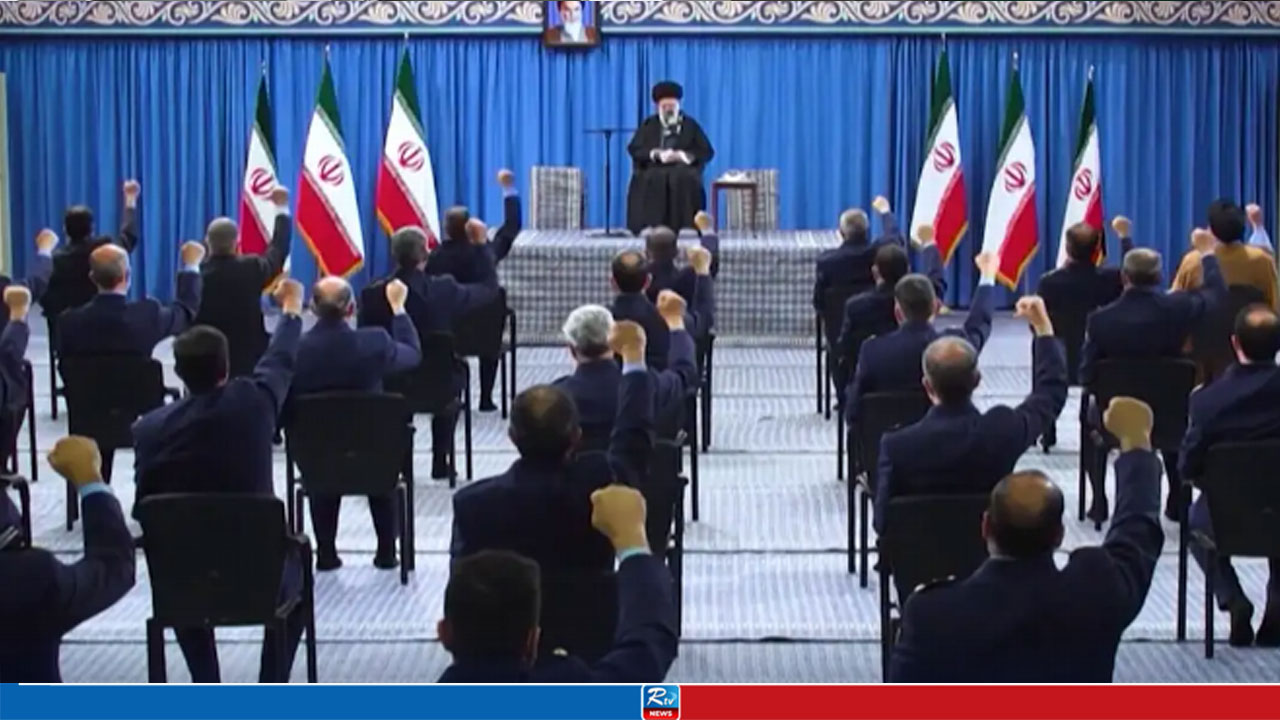
Despite the progress, Ali Abdollahi, commander of Iran’s joint military command, threatened to halt regional trade if the US blockade is not lifted, and a military adviser to Supreme Leader Mojtaba Khamenei expressed opposition to an extension.
Mediators are currently seeking compromises on Iran’s nuclear program, the Strait of Hormuz, and wartime compensation.
Meanwhile, Saudi Arabia’s Ministry of Foreign Affairs welcomed the announcement, with state news agency SPA reporting that the Kingdom “commended the significant positive role played by President Joseph Aoun... the Lebanese government headed by Prime Minister Nawaf Salam and Speaker of Parliament Nabih Berri” in achieving this breakthrough.
With Inputs from Agencies





 Live TV
 RTV Plus