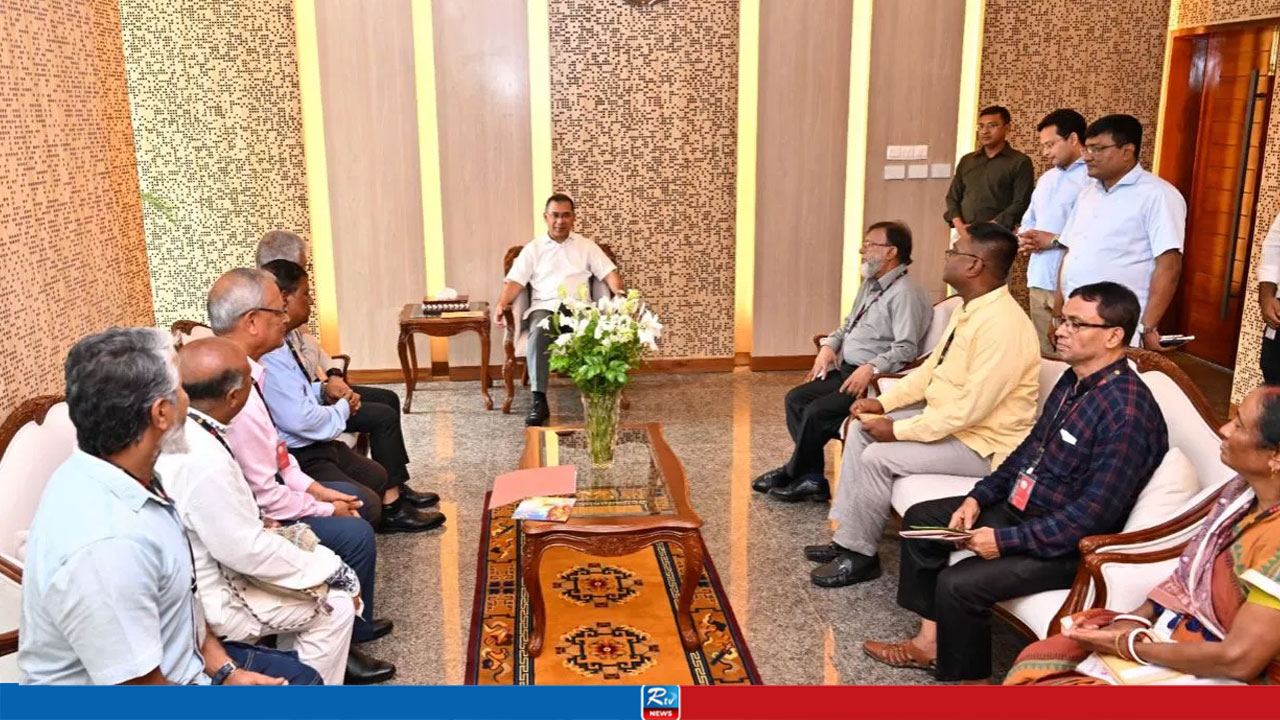
Chief Adviser Professor Muhammad Yunus has urged South Asian academics to overhaul the region's education system to better reflect the expectations and courage of the younger generation.
Speaking at the inauguration of the three-day "South Asian Regional Conference on State of Higher Education and Future Pathway (SARCHE 2026)" in Dhaka, the Nobel Laureate emphasized that the July-August mass uprising 2024 in Bangladesh serves as a crucial case study for understanding the modern youth's mindset.
"Today, I feel very excited that academics at the highest level could get together in Dhaka. It's important that this is Dhaka. I hope you will have a chance to kind of review of the things that have happened in Dhaka in the past few months," he said.
He noted that these young people, who brought down what he described as a fascist regime, have proved they possess a vision far beyond traditional academic structures.
Prof Yunus specifically highlighted the sacrifice of students like Shaheed Shahriar Khan Anas, whose dedication to the cause exemplified a refusal to remain passive under state-sponsored crackdowns.
Addressing a diverse group of delegates from countries including the United Kingdom, Malaysia, Pakistan, and Sri Lanka, Prof. Yunus criticized the current global education model for being overly "job-oriented," which he compared to a form of modern slavery.
He argued that the system currently focuses on preparing individuals to work under orders for pay, effectively stifling human creativity. "Should we continue this education to create slaves? Turning creative beings into slaves, that's a criminal job," he questioned, proposing instead that universities prioritize entrepreneurship.
He asserted that human beings are born with immense imaginative power and that education should empower them to be job creators and agents of change rather than mere job seekers.
The Chief Adviser also made a strong plea for the revival of the South Asian Association for Regional Cooperation (SAARC), lamenting that the organization has been largely forgotten.
He described this neglect as a collective failure, stating that SAARC was intended to facilitate the very kind of academic exchange and mutual learning currently being hosted in Dhaka. Prof Yunus vowed to continue his appeals to regional governments to return to the SAARC framework, which he described as the natural "family" for South Asian nations.
Linking these academic reforms to the country's immediate future, Prof. Yunus discussed the significance of the upcoming national elections and the February 12 referendum.
He explained that the referendum is a direct response to the youth's belief that the root of the nation's problems lies within its constitution. He challenged educators to reflect on whether their institutions are remaining relevant in a rapidly changing world, warning that old methods are self-destructing.
The conference, organized by the University Grants Commission (UGC) and funded by the World Bank’s HEAT project, was also addressed by Education Adviser Professor Dr. CR Abrar and UGC Chairman Professor Dr. SMA Faiz, among other distinguished guests.






 Live TV
 RTV Plus