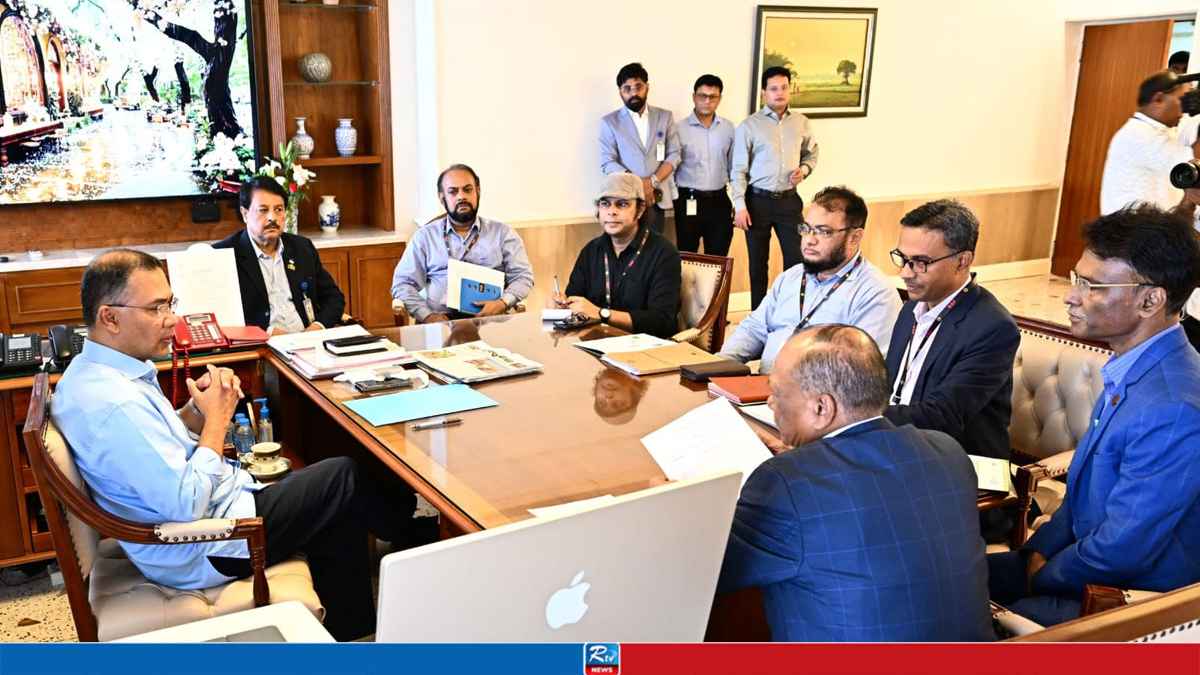
Prime Minister’s Information and Broadcasting Adviser Dr. Zahed Ur Rahman stated on Saturday that the government does not anticipate the recent hike in electricity and fuel prices to trigger a severe or disruptive shockwave through local consumer markets.
“We do not think that this will create a major impact on the market,” the adviser remarked during an emergency press briefing on power and energy.
The media session was hosted in the conference room of the Press Information Department (PID) at the Secretariat, with Information and Broadcasting Minister Zahir Uddin Swapon also in attendance.
Addressing concerns regarding the sensitive timing of the energy price adjustments right before the national budget session, Dr. Zahed explained that such financial revisions are ultimately unavoidable.
He pointed out that while prices for daily essentials, particularly fresh produce and vegetables, traditionally face upward pressure around the budget season, current indicators show a more stable market than in previous cycles.
“There is a trend and we are now seeing signs of reversal,” Dr. Zahed said, noting that inflationary patterns are beginning to settle.
The adviser underscored that soaring subsidy expenses have placed significant financial constraints on state coffers.
Continuing to absorb these rising costs heavily restricts the government's capacity to channel funds into vital public development projects, healthcare systems, national education, and robust social safety nets.
Citing ongoing social support initiatives like farmer cards and family cards, Dr. Zahed emphasized that the state must secure reliable funding pipelines to preserve these critical social protection measures.
While acknowledging that consumer price hikes are inherently unwelcome, Dr. Zahed assured the public that the Ministry of Commerce will maintain intense market surveillance to curb any artificial or unjustified commodity price spikes.
He reiterated that the direct impact of the energy tariff adjustment would remain heavily contained because the country's most low-income populations have been strategically insulated from the changes.
“We have not increased electricity or fuel prices for vulnerable people and many of them will continue to receive government support and allowances,” he explained.
Looking ahead, Dr. Zahed revealed that the upcoming national budget will expand the scope of the family card initiatives to provide enhanced benefits to low-income households.
This will operate alongside ongoing essential food subsidy operations, such as the Trading Corporation of Bangladesh (TCB) truck-sale programs, to ensure food security for marginalized communities.
The adviser concluded by reiterating that the administration will strictly penalize any traders or groups attempting to implement unauthorized or exploitative price hikes in the market.



 Live TV
 RTV Plus