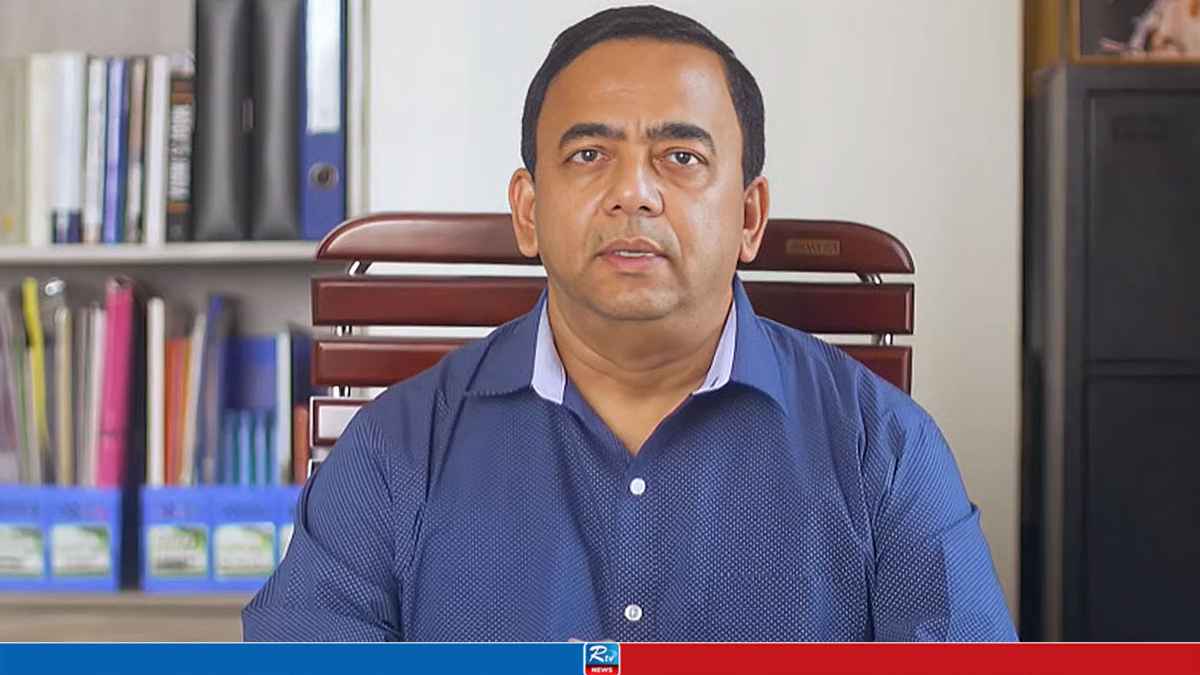
Foreign Minister Dr. Khalilur Rahman on Monday described the detention and entry denial of the Prime Minister’s Adviser on Policy and Strategy Affairs, Dr. Zahed Ur Rahman, at Delhi airport as both 'unfortunate' and 'unexpected', confirming that the Ministry of Foreign Affairs is actively taking appropriate steps regarding the matter.
"It is an unexpected incident, unfortunate, too," the Foreign Minister told reporters at the ministry, adding that an official statement detailing the government’s formal stance would be issued later in the day.
Dr. Zahed Ur Rahman returned home to Dhaka on Monday after being stopped by Indian immigration authorities at New Delhi's Indira Gandhi International Airport on Sunday evening.
The incident occurred after his name was reportedly flagged during a security check, leading to a prolonged delay. Sources close to Dr. Zahed disclosed that he was subjected to "undue harassment" during the immigration check.
As of now, neither Dhaka nor New Delhi has issued an official state-level comment clarifying the definitive reason behind the flag.
It was confirmed that the Adviser was not carrying a diplomatic passport for this visit.
Instead, he was traveling on a regular Bangladeshi green passport, equipped with a standard SAARC visa sticker.
Dr. Zahed was traveling to New Delhi to lead the Bangladeshi delegation at the 28th meeting of the Committee of Senior Officials (CSO) of the Indian Ocean Rim Association (IORA), hosted by India from June 15 to 16.
The high-level regional meeting has brought together senior government officials from all IORA Member States to review progress, discuss regional priorities, and advance maritime and economic cooperation across the Indian Ocean region under the central theme of "Innovation, Openness, Resilience & Adaptability."
The Committee of Senior Officials serves as the second-highest decision-making body within the framework of IORA and acts as the organization’s primary coordinating mechanism.
Comprising senior government representatives from all member states, the CSO holds the responsibility of reviewing key agenda items, coordinating regional initiatives, making strategic recommendations, and submitting crucial policy matters directly to the Council of Ministers (COM) for final approval.





 Live TV
 RTV Plus