Bangladesh is stepping up initiatives to secure global climate financing by enhancing climate literacy, formulating investment-ready projects and deepening alliances with international financial institutions as part of its drive to transform climate vulnerability into lasting resilience, experts affirmed at a high-level policy dialogue in Dhaka on Thursday.
Participants emphasized that evaluating the success of climate finance must extend beyond the raw volume of capital raised, focusing equally on whether funds are accessible, transparent, accountable, and delivered directly to communities confronting severe climate impacts.
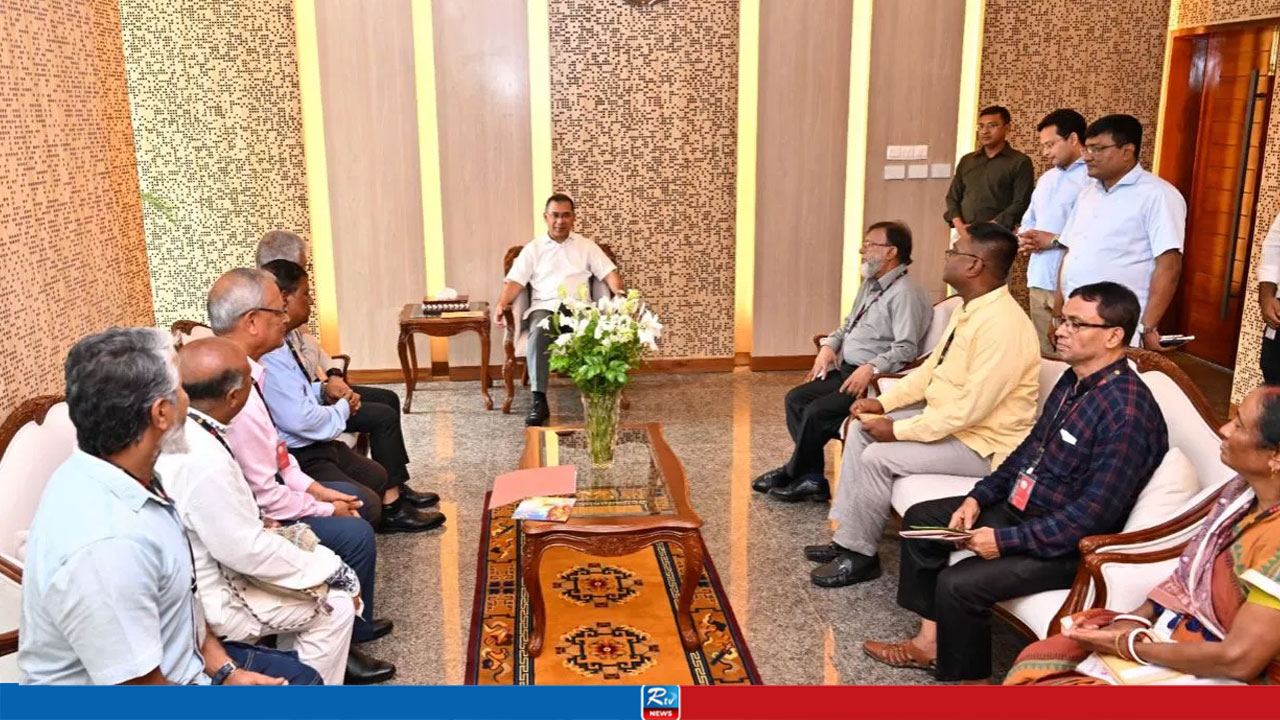
The policy session, titled "Building Bangladesh as a Trillion-Dollar Climate-Resilient Economy: Accelerating Climate Finance Mobilisation Through Strategic and Investment-Ready Climate Project Designs," was hosted by the International Climate Finance Cell (ICFC) of the Economic Relations Division (ERD) within the framework of the Bangladesh Climate Development Partnership (BCDP), supported technically by the Asian Development Bank (ADB).
Bringing together senior policymakers, foreign development partners, financial executives, private sector leaders, scholars, and civil society advocates, attendees agreed that expanding climate literacy throughout government entities, financial channels, and private enterprises remains critical to crafting bankable proposals that draw international funding.
They observed that gaps in understanding climate science, funding frameworks, and project formulation continue to restrict Bangladesh's access to major international climate funds.
Speaking as the chief guest, Prime Minister's Adviser on Finance and Planning Dr Rashed Al Mahmud Titumir linked Bangladesh's economic growth targets to the imperative of protecting future generations.
He urged stakeholders to integrate national development plans with global benchmarks, including the Paris Agreement and the Kunming-Montreal Global Biodiversity Framework, calling for increased private capital participation while pressing global climate funds to streamline approval protocols and respond dynamically to the requirements of vulnerable developing nations.
Presenting a keynote paper, Economic Relations Division UN Wing Chief AKM Sohel highlighted climate literacy as the vital bridge linking environmental realities to financial feasibility.
He stressed the importance of formulating strategic blueprints that empower stakeholders to design projects aligned with the requirements of major international facilities, particularly the Green Climate Fund (GCF).
In another keynote address, ERD Secretary Md Shahriar Kader Siddiky acknowledged that Bangladesh has historically encountered hurdles in attracting sufficient foreign climate finance despite ranking among the world's most climate-vulnerable countries.
He called for intensified national ownership, strengthened institutional capabilities, innovative financing mechanisms, and broader private sector involvement to scale up climate investments.
Asian Development Bank Country Director Qingfeng Zhang reaffirmed the ADB's ongoing commitment to Bangladesh, underscoring the necessity of establishing scalable, financially viable climate ventures capable of drawing international backing.
"He said climate finance success depends not only on available funding but also on the ability to design projects that deliver measurable development and resilience outcomes," Zhang noted.
The policy event also featured contributions from Prime Minister's Special Assistant for Environment, Forests and Climate Change Affairs Dr Saimum Parvez, British High Commissioner to Bangladesh Sarah Cooke and UN Resident Coordinator ad interim Carol Flore-Smereczniak, alongside senior officials from state agencies, global entities, and development partners.
Emphasizing the human dimension of climate investment, Carol Flore-Smereczniak stated that climate finance extends far beyond physical infrastructure or technological tools.
"It is about livelihoods, dignity, resilience, and the ability of communities to remain safe in the face of climate stress," she remarked.
Two thematic panel sessions examined strategies to fortify Bangladesh's climate finance structure.
The first panel focused on elevating climate literacy to facilitate investment-ready project design, while the second examined pragmatic approaches to drafting high-impact concept notes designed to secure funding from the Green Climate Fund.
Panelists further highlighted the importance of a just transition, asserting that green investments must preserve livelihoods, generate employment, and safeguard workers, women, youth, and vulnerable populations as the economy shifts toward low-carbon resilience.
The dialogue concluded with reaffirmed commitments from government representatives, development partners, and climate advocates to reinforce climate governance, broaden access to international funds, and expedite investments yielding long-term resilience and sustainable economic growth.
Participants noted that Bangladesh's efforts serve as a model for how climate-impacted nations can merge indigenous knowledge, institutional innovation, and inclusive governance to shape an equitable and effective global climate finance system.
With Inputs from UNB







 Live TV
 RTV Plus