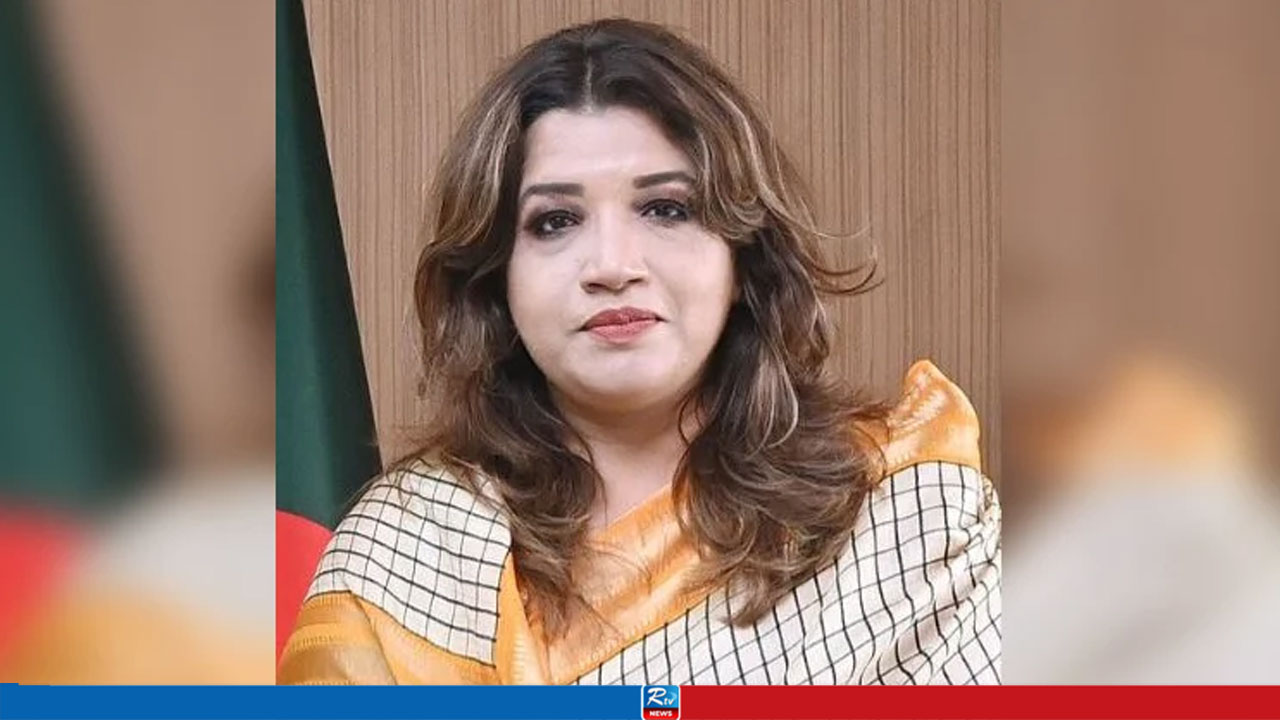
State Minister for Foreign Affairs Shama Obaed Islam on Thursday clarified that Prime Minister Tarique Rahman’s proposed trips to India and Japan have not been finalized, noting that the timing of any official travel hinges on the Prime Minister's availability and the advancement of bilateral discussions.
Speaking to journalists at the Ministry of Foreign Affairs on Thursday, Shama Obaed reaffirmed the administration's open stance toward international diplomacy.
“The government is positive about visits to all countries. But it will depend on the Prime Minister’s schedule and on how far discussions between the two countries progress,” she stated.
When asked whether Prime Minister Rahman would attend the upcoming BRICS Summit outreach segment in India or engage in a standalone bilateral visit, the state minister indicated that ample time remains before a formal decision is required.
“BRICS is still a long way off. A lot can happen in a month,” she remarked.
Elaborating on the Prime Minister's current focus, Shama Obaed highlighted that significant domestic priorities and constitutional proceedings require his immediate attention, including the upcoming presidential election and the resumption of parliamentary sessions.
“We have many programmes and activities going on internally in the country. A number of constitutional matters are also ahead. From that perspective, the government is busy and the Prime Minister is also busy,” she explained.
Despite these internal commitments, she emphasized that foreign visits remain on the horizon if conditions align favorably.
“If everything falls into place, then of course there will be a visit to India, a visit to Japan, and visits to other countries,” she noted, adding specifically regarding Tokyo that the schedule for the proposed Japan visit would be set at a mutually convenient time for both nations.
Addressing the potential impact of a bilateral visit to India on resolving outstanding issues between Dhaka and New Delhi, the state minister stressed the value of direct dialogue between leadership.
“Whenever the leaders of the two countries talk and hold bilateral discussions, there is an opportunity to resolve many problems. That opportunity certainly exists and remains open,” she said, suggesting that India should also make proper use of such a diplomatic opportunity.
Shama Obaed also addressed concerns surrounding statements issued from Indian territory by convicted deposed prime minister Sheikh Hasina, reiterating Dhaka's firm stance.
“We have already said that when a convicted person speaks while sitting on Indian soil, the people of Bangladesh do not accept it and will not take it positively,” she asserted.
Highlighting the public sentiment in Bangladesh following recent political shifts, she urged sensitivity to the nation's collective memory.
“July is still alive in people's minds. The bloodstains have not yet dried. Therefore, we must certainly be sensitive from that perspective,” she stated, while reiterating that direct engagement at the highest political tier remains a critical mechanism for resolving bilateral challenges.





 Live TV
 RTV Plus