Following the successful implementation of artificial intelligence (AI)-powered cameras for traffic management, the Dhaka Metropolitan Police (DMP) is preparing to introduce drone surveillance to tackle gridlock across the capital city.
DMP Additional Police Commissioner (Traffic) Md Anisur Rahman recently told a local media that the technology will be deployed at key urban locations to enable traffic officials to gather real-time data on congestion directly from the spot and take swift corrective action.
Initially, the experimental deployment of drones will focus on monitoring vehicles on roads vulnerable to heavy gridlock, thereby improving the overall operational efficiency of law enforcement officers, according to the DMP official.
Eventually, the system will be expanded to detect vehicles operating in violation of traffic regulations, broadcast audible warnings, and initiate legal proceedings based on video footage once the aerial devices are integrated with automated number plate readers (ANPR).
Acknowledging that drone surveillance is already utilized in several nations globally, the DMP official noted that it remains an entirely novel approach in Bangladesh.
In Dhaka, severe congestion frequently develops along flyovers, particularly near the elevated expressway, Bahadur Shah Park, and the Gulistan flyover, where identifying the root cause of a bottleneck often faces delays, he noted, adding, "The device will help us to find it and take action immediately."
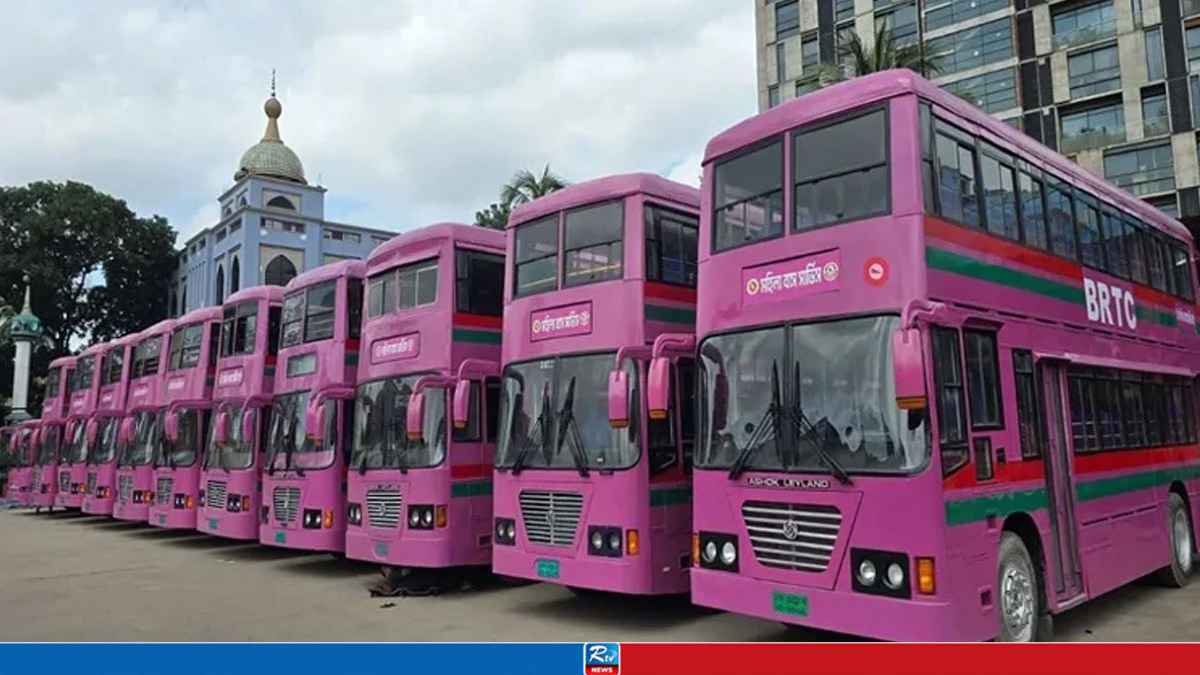
Addressing the primary drivers of traffic congestion, the DMP official explained that most urban public buses fail to utilize designated bus stops to pick up and drop off passengers.
Across city routes, these public buses are operated by transport crews under a daily-payment scheme, creating reckless competition among drivers who stop arbitrarily to board passengers rather than utilizing fixed designated bus stops, ultimately causing heavy gridlock.
In contrast, public buses in developed countries operate on fixed schedules managed through structured transit systems, a framework currently lacking in the country.
To establish discipline in urban transit, the DMP official stressed the necessity of implementing an e-ticketing framework alongside bus route rationalization, warning that city residents will continue to face daily travel hardships unless these measures are introduced.
Elaborating on the technical capabilities of the aerial units, Rahman explained that each drone comes equipped with an integrated public address system to deliver direct warning messages to offending motorists.
He noted that if a specific vehicle causes a road blockage, the drone will issue an alert stating, "you [the particular vehicle] are creating gridlock, so please go away and make the road clear."
The advanced hardware will also enable authorities to file official traffic citations against non-compliant vehicles while providing a comprehensive real-time view of the city's traffic flow.
However, the technology remains in its early testing phase, according to the DMP additional commissioner.
"The DMP has received a drone from an organization and it is currently under testing and hope that work will begin at the field level soon," the official stated.
While the system yields real-time data, the DMP official highlighted that establishing a robust internet and server infrastructure is required to support the facility fully.
Clarifying whether traffic citations would be issued automatically or logged manually after reviewing video records, Anisur Rahman explained that while the department has not fully transitioned to automated citation processing, the technology possesses automated case-filing capabilities.
The DMP official emphasized that the total volume of citations issued does not reflect overall performance, as a higher number of cases indicates widespread non-compliance with traffic rules. "Our goal is not to file more cases but to make people abide by the traffic law," he noted.
To prepare personnel for field operations, Anisur Rahman confirmed that training programs have already begun, with officers from the Tejgaon division having completed their instruction, while training for traffic personnel in the Uttara division is set to begin next week.




 Live TV
 RTV Plus