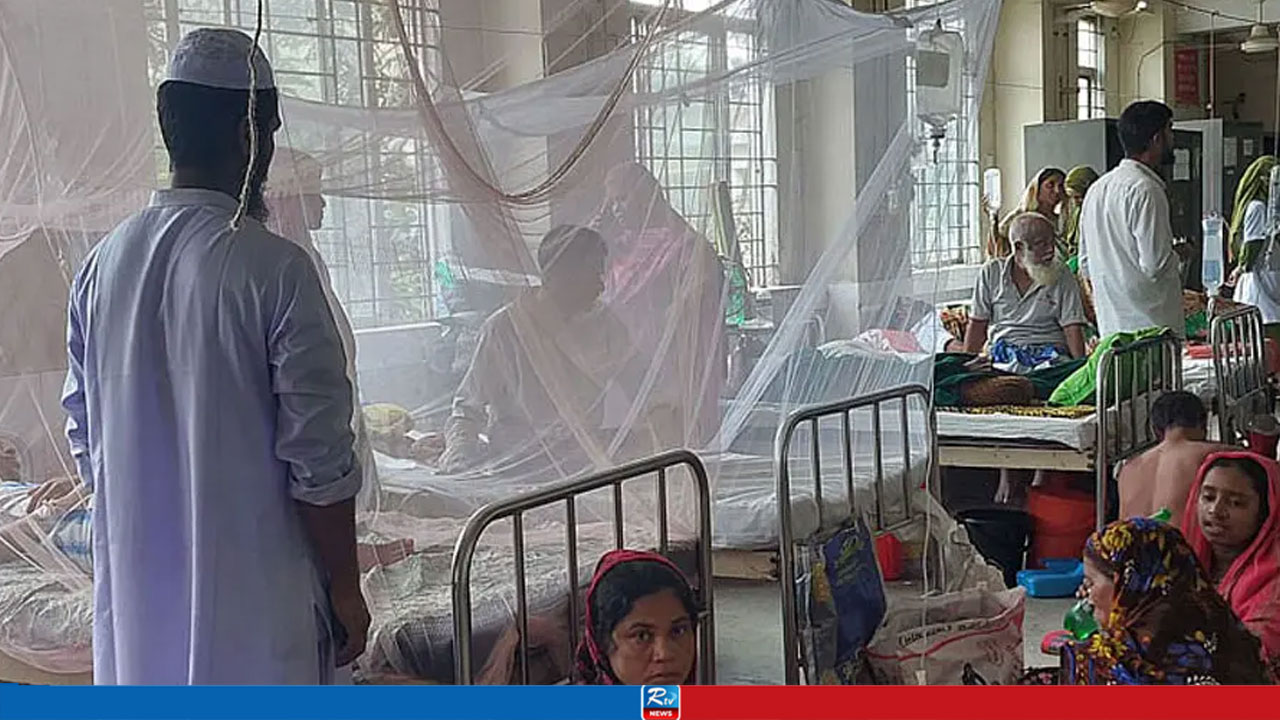
Thalassaemia has emerged as a major public health concern in Bangladesh, with experts warning that the hereditary blood disorder is gradually spreading as a “silent threat” across the country.
Ashik and Rahela have a happy family with one daughter and one son. Ashik works as the manager of the Matuail branch of a courier service, while Rahela runs an online clothing business.
Eight years ago, they were blessed with another son. Two years after his birth, they learned that their younger child was suffering from Thalassaemia. Darkness descended on their lives. The child requires blood transfusions every three months. In addition, he has to visit doctors once or twice every month.
According to experts, Thalassaemia has now become a major public health problem in Bangladesh. The country is among the regions of the world with a high prevalence of Thalassaemia, and the hereditary blood disorder is gradually spreading as a “silent threat.” Nearly 20 million people in the country are carriers of the Thalassaemia gene.
Every year, around 6,000 to 8,000 children are born with Thalassaemia in Bangladesh. At present, the number of patients suffering from the disease in the country is estimated at 60,000 to 70,000. However, affected children can be completely cured through bone marrow transplantation if the procedure is carried out within one to two years after birth. Experts suggested the disease can be easily prevented through awareness.
According to specialists, Thalassaemia is a hereditary blood disorder in which the body cannot produce sufficient or normal haemoglobin. As a result, patients suffer from long-term anaemia and require regular blood transfusions to survive. Thalassaemia is not a contagious disease; rather, it is genetically transmitted from parents to children. Therefore, it is entirely preventable. The risk can be reduced through blood testing before marriage, and several countries have successfully controlled the disease through this approach.
According to the World Health Organization, around 250 million people worldwide are carriers of Thalassaemia. In Bangladesh, around 10 to 12 percent of the population are carriers of the disease. Globally, around 100,000 children are born with Thalassaemia every year.
A review published in the “Orphanet Journal of Rare Diseases” by the Biomedical Research Foundation (BRF) found that around 10.9 to 13.3 percent of people in Bangladesh are carriers of Thalassaemia, meaning approximately 17 to 22 million people carry the gene. Due to a lack of awareness and a weak healthcare system, future generations are at risk.
According to the Bangladesh Bureau of Statistics (BBS) “National Thalassaemia Survey 2024,” the national carrier rate stands at 11.4 percent. By division, Rangpur has the highest carrier rate at 27.7 percent, followed by Rajshahi at 11.3 percent and Chattogram at 11.2 percent. The rates in other divisions are: Mymensingh 9.8 percent, Khulna 8.6 percent, Dhaka 8.6 percent, Barishal 7.3 percent, while Sylhet has the lowest rate at 4.8 percent.
Vice Chairman of the Bangladesh Thalassaemia Foundation Professor Dr Syeda Masuma Rahman told BSS that Thalassaemia is a hereditary disease caused by defects in the genes responsible for the structure of haemoglobin. If one part of the gene is defective, the person becomes a carrier. Therefore, only when both father and mother are carriers of Thalassaemia is there a risk of their child being born with the disease. If one parent is a carrier and the other is not, there is no risk of the child being affected.
She said symptoms usually appear within one to two years after birth. These include stunted growth, pale appearance, weakness, frequent infections, loss of appetite, failure to gain weight, jaundice and irritability. In many cases, the child’s abdomen may become abnormally swollen.
Highlighting that prevention through awareness is easier than treatment, Syeda Masuma Rahman said carriers must know that they are carriers of Thalassaemia. They should marry someone who is not a carrier. In that case, there will be no risk of their children developing Thalassaemia. For this purpose, both individuals should undergo a blood test before marriage. This is known as the CBC test or Complete Blood Count test. In addition, carriers can also be identified through haemoglobin analysis or DNA and genetic testing.
Social Welfare and Women and Children Affairs Minister Professor Dr AZM Zahid Hossain said Thalassaemia is a complex congenital blood disorder that occurs mainly when both husband and wife are carriers of the disease. Therefore, it is extremely important for both men and women to undergo carrier screening before marriage.
“We often do not know who is a carrier of Thalassaemia. Therefore, health screening and awareness before marriage must be increased,” he said.
The minister said the government is committed to ensuring healthcare services for the people. The current government is working to integrate people into the mainstream through the implementation of social safety net programmes.
He said the government’s goal is not only to ensure healthcare services but also to enhance people’s skills and engage them in the development process.
Referring to the Thalassaemia situation in the country, he said one in every nine people in Bangladesh is a carrier of the disease and around 8,000 children are born with Thalassaemia every year. He stressed that the role of the media is extremely important in preventing the disease.





 Live TV
 RTV Plus