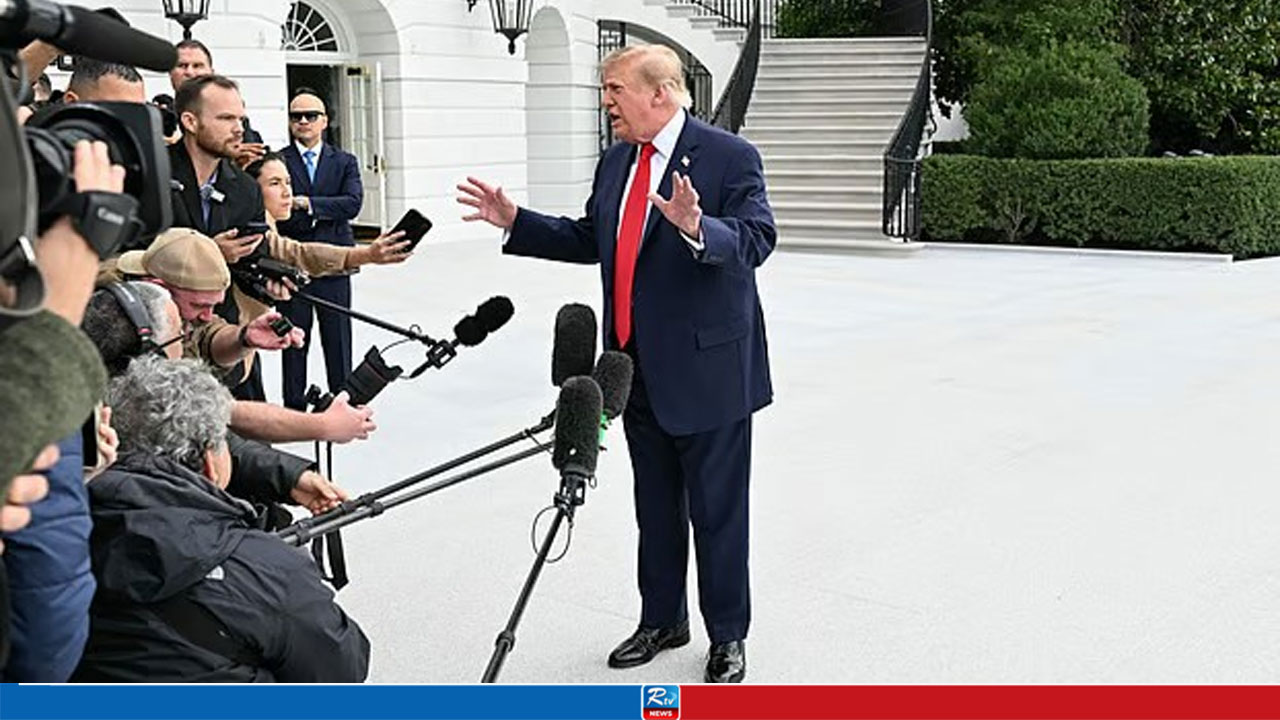
U.S. President Donald Trump has launched a sharp verbal attack on Pope Leo XIV, the first American Pope, following the pontiff’s condemnation of Trump’s threats regarding the destruction of Iranian civilization.
In a series of posts on his social media platform, Truth Social, on Sunday (April 12), the President criticized the Pope’s stance on foreign policy, labeling his remarks a "terrible danger."
Escalating Rhetoric
The friction between the White House and the Vatican has intensified as the conflict in the Middle East continues. Key points of the President's critique include:
Foreign Policy Interference: Trump stated that the Pope’s comments are "horrible for foreign policy," adding, "I don't want a Pope who thinks it’s okay for Iran to have nuclear weapons."
Accusations of Weakness: The President further alleged that Pope Leo is "weak on crime and weak on the nuclear issue."
Theological Dispute: While Trump—who identifies as a non-Catholic Christian—claimed in a recent press conference that "God supports the Iran war" because "God is good and wants to see the welfare of people," the Pope has explicitly rejected the use of religion to justify the conflict.
The Pope’s Stance
Pope Leo XIV has emerged as a vocal critic of the administration's military rhetoric since the onset of the war. His recent interventions include:
Condemning Threats: The Pope previously described Trump's threat to target Iranian cultural and civilization sites as "totally unacceptable," warning that such actions only "fuel hatred."
Moral vs. Legal: He emphasized that while there are questions of international law, the primary issue is a "moral" one.
Call for Peace: In a post on X (formerly Twitter) last Friday, the Pope wrote:
A Widening Rift
The State Department and the Vatican appear increasingly at odds over the path to regional stability.
While the Trump administration maintains that military force is a necessary tool for "human welfare," the Pope has countered that peace can only be achieved through "patient coexistence and dialogue among people," rather than military might.
This public fallout marks a significant moment of tension between the executive branch of the United States and the leadership of the Catholic Church.




 Live TV
 RTV Plus