Maha Saptami, the seventh day of Devi Paksha marking the core celebrations of Durga Puja—the grandest religious festival of Bengali Hindus—is being observed with traditional fervor across Bangladesh and around the world on Saturday.
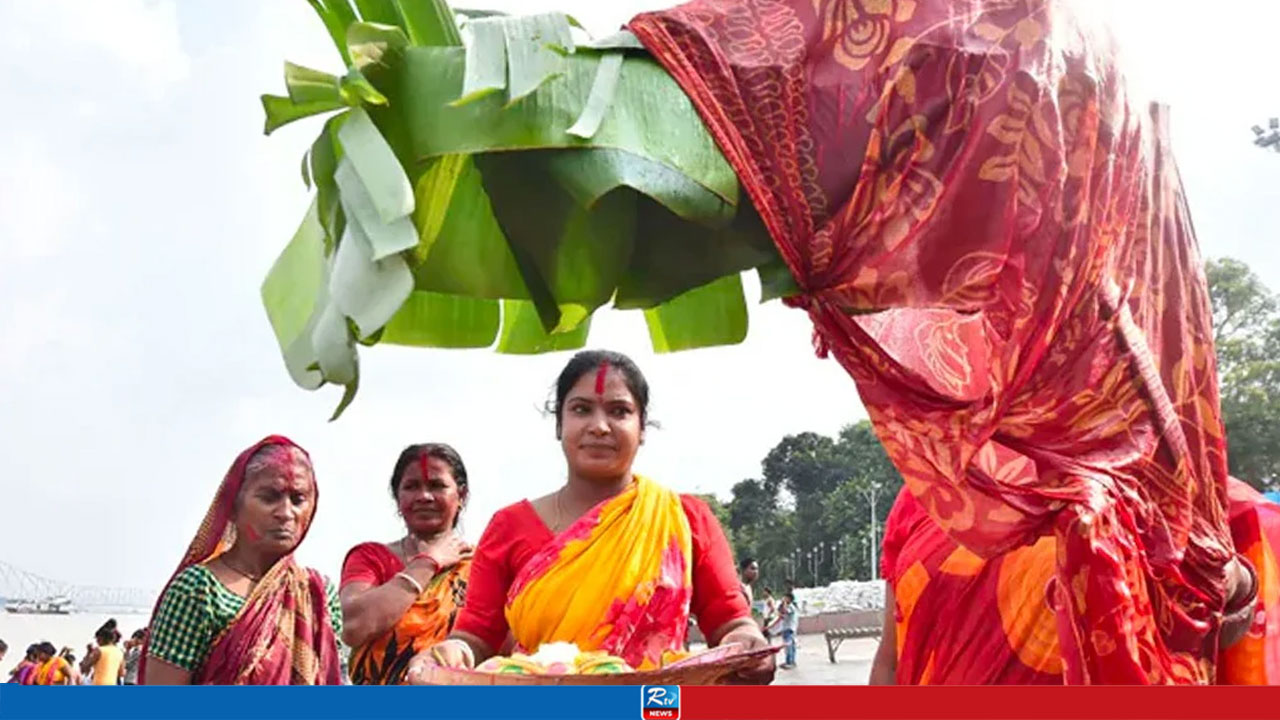
A pivotal ritual of Maha Saptami morning is the Nabapatrika Snan, popularly referred to as Kalabou Snan. During this ceremony, a banana plant along with eight other specific plants is bundled together, draped in a classic white saree with a red border and ritually cleansed with sacred water.
Known collectively as Nabapatrika, these nine plants represent distinct manifestations of divine energy alongside nature's bounty.
Following the ceremonial bath, the Nabapatrika is brought into the Durga Puja pandal and venerated alongside Goddess Durga.
This serene tradition highlights the deep-rooted relationship linking nature, fertility, prosperity, and spirituality, infusing a distinctive charm into Durga Puja while reminding worshippers of the sacredness of the natural world and the supreme power of the Divine Mother.
On Maha Saptami, Kala Bou or Nabapatrika is stationed right next to Lord Ganesha.
Although widespread folklore and her bridal attire—complete with a red-bordered white sari and vermilion—cause many to perceive her as Ganesha's newly wedded bride, she actually embodies his mother, Goddess Durga herself.
Ultimately, this sacred rite symbolizes the invocation of Shakti into the elements of nature prior to the divine life force being consecrated into the main clay deity.





 Live TV
 RTV Plus