Dhaka 16 September, 2026

Spanish Scientists Find First Signs of Diplodocus in Europe

Deutsche Welle

Publish : 16 Sep 2026, 08:57 AM
Update : 16 Sep 2026, 08:58 AM
'Dippy' the Diplodocus in the British Natural History Museum contributed to making the giant herbivore one of the most recognizable Jurassic creatures of them all [FILE: September 2016]. Photo: picture alliance

Paleontologists in Spain say they have found the first evidence of the long-necked Diplodocus genus of dinosaur outside of North America. They found bones at the rich La Tejeria fossil site in Teruel in eastern Spain.

Researchers writing in the Journal of Vertebrate Paleontology this week said they found the first skeletal evidence of the Diplodocus dinosaur outside of North America, uncovering various vertebrae and chevron bones dating back around 150 million years at a site in eastern Spain.

The team from the Dinopolis Foundation in Teruel, studying the rich La Tejeria fossil site in the El Castellar municipality, said the dinosaur joined a growing list of giant sauropods found in the area.

Although the long-necked herbivore with its vast tail is one of the world's most recognizable dinosaurs, fossilized remains had until this point only been recovered in North America.

What did the researchers say about the find?
The paper published on Monday concluded that the find was "one of the most complete diplodocid skeletons from Europe."

It said that systematic study and analysis of 14 caudal vertebrae and several chevron bones "reveals that it can be confidently referred to as Diplodocus," one of several genuses in the diplodocid family of sauropod dinosaurs.

"This discovery consists of the first evidence of Diplodocus outside North America (Morrison Formation) and is one of the strongest piece of evidence that supports the exchange of continental faunas between North America and Europe during the Late Jurassic," the authors wrote.

Although the diplodocus is well known worldwide, not least thanks to the famous skeletal cast nicknamed "Dippy" that for years greeted visitors entering the British Natural History Museum, the researchers said that the "European diplodocid fossil record is scarce and fragmentary."

How could dinosaurs cross an ocean?
During the time of the dinosaurs the continents were only just starting to drift apart. In recent decades scientists have begun to theorize that the proto-Atlantic Ocean still had ephemeral land bridges or episodic sea regressions or some other temporary means of crossing that occasionally enabled land-based dinosaurs to move vast distances between the separating continents.

Recent fossil finds, not least in Spain and Portugal near the Atlantic coast, have been further reinforcing this notion. This is part of a land bridge thought to have connected Iberia to what's now Canada.

The authors said the find "constitutes one of the strongest pieces of evidence of episodic dispersal events and faunal exchanges across the proto-North Atlantic Ocean during the late Kimmeridgian–early Tithonian" period, approximated 150 million years ago.

Another route linked North America with Scandinavia, and one much further south connected what's now Brazil to Cameroon.

Follow google news channel to get RTV news Google News
Four Astronauts Return to Earth After Historic Lunar Mission
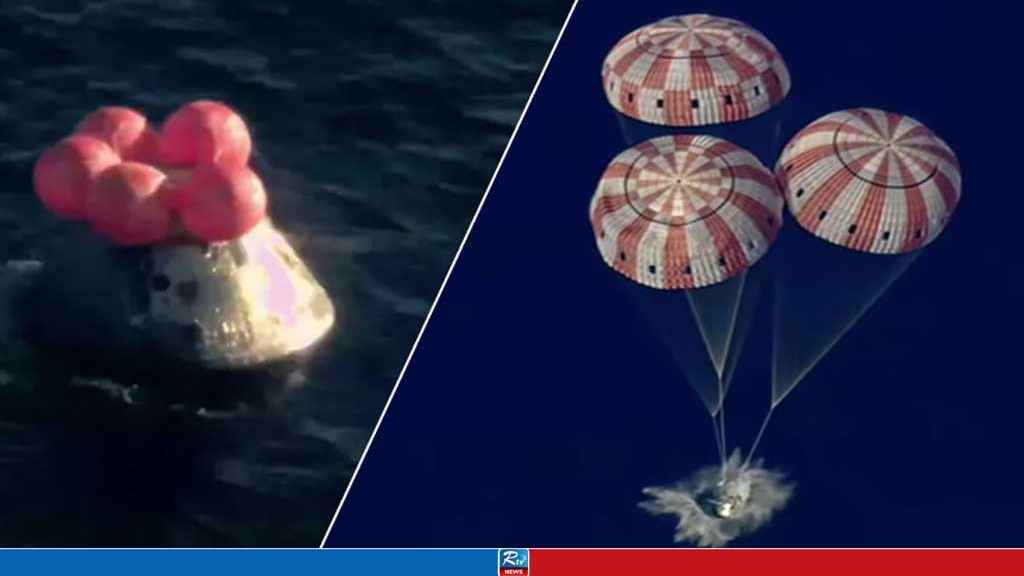
Marking the end of a historic chapter in lunar exploration, the four astronauts of the Artemis II mission have returned safely to Earth after completing a journey around the Moon—the first in over half a century. The Orion spacecraft successfully splashed down in the Pacific Ocean off the coast of San Diego, California, at 8:07 PM ET Friday (6:07 AM Bangladesh Time, Saturday). "What an incredible journey," exclaimed Artemis II Commander Reid Wiseman shortly after the capsule hit the water. We are stable, and all four crew members are in excellent health. Recovery and Medical EvaluationFollowing the splashdown, the crew was transferred from the Orion capsule to a specialized watercraft known in aerospace terms as the "front porch." From there, they were airlifted via helicopter to the medical bay of the USS John P. Murtha, a sophisticated U.S. Navy recovery ship. Onboard, specialists are conducting routine evaluations of the astronauts' vitals, including heart rate, blood pressure, and neurological function. These checks are standard procedure to assess the physical impact of prolonged weightlessness. Following these initial exams, the crew will be transported to the Johnson Space Center in Houston. A Record-Breaking JourneyWhile the mission had a 10-day target, NASA confirmed it concluded successfully in 9 days, 1 hour, 32 minutes, and 15 seconds. The crew—consisting of Reid Wiseman, Christina Koch, Victor Glover, and Jeremy Hansen—launched on April 1. Artemis II has officially etched its name in the history books by surpassing a long-standing record held by Apollo 13. At its furthest point behind the Moon, the spacecraft reached a distance of 252,757 miles from Earth, breaking the 1970 record of 248,655 miles. During the flight, the crew also witnessed a rare celestial display, observing at least six bright meteor strikes on the lunar surface. A Milestone for DiversityThe mission stands as a landmark for inclusivity in space exploration: Victor Glover becomes the first person of color to orbit the Moon. Christina Koch is the first woman to achieve the feat. Jeremy Hansen marks the first non-U.S. citizen (Canadian) to travel to lunar orbit. As the astronauts moved from the capsule to the recovery craft, scientists at Mission Control in Houston erupted in applause, celebrating the flawless execution of the mission. Looking Toward MarsThis mission serves as a critical test flight for NASA’s broader goal of landing humans on the lunar South Pole by 2028. The historic return was broadcast live across multiple platforms, including NASA Plus, Amazon Prime, and Netflix. Experts suggest that the success of Artemis II not only paves the way for a permanent lunar presence but also provides vital momentum for future human missions to Mars.Source: AFP and CNN
Four Astronauts Return to Earth After Historic Lunar Mission
Artemis Astronauts Shatter Record for Farthest Distance from Earth
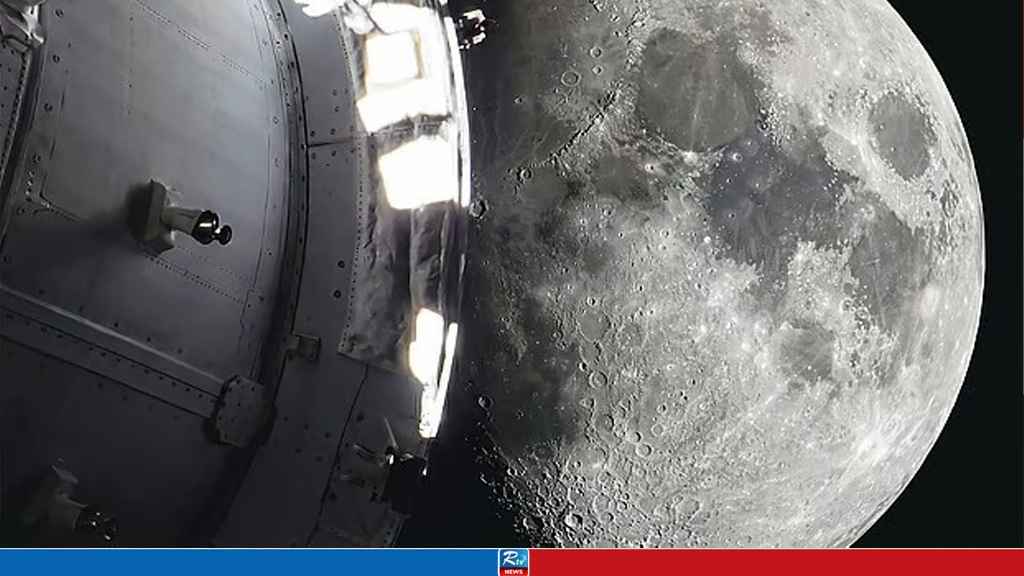
The four astronauts of NASA’s Artemis II mission have set a new record for the farthest distance humans have ever traveled from Earth. As the Artemis II spacecraft swung behind the far side of the Moon, communication with the control center in Houston, Texas, was lost for approximately 40 minutes.  Upon emerging from the lunar shadow, contact was re-established, confirming the historic milestone. At 3:58 PM GMT on Monday, the crew reached their maximum distance from home, clocking in at approximately 406,788 kilometers (about 252,760 miles) from Earth.  This eclipses the previous record set 56 years ago during NASA’s Apollo 13 mission in April 1970, where astronauts reached a distance of 400,171 kilometers (248,655 miles). A Historic JourneyThe historic journey began on April 1, when the four-person crew launched from the Kennedy Space Center aboard the Orion capsule. This mission marks the first time humans have traveled toward the Moon since Apollo 17 in 1972. The record-breaking crew consists of: Reid Wiseman (NASA) Victor Glover (NASA) Christina Koch (NASA) Jeremy Hansen (Canadian Space Agency) "It’s wonderful to hear voices from Earth again," Christina Koch remarked after communication was restored following the lunar flyby. During their journey, the crew also had the unique opportunity to witness a total solar eclipse from space. Orion pilot Victor Glover described the experience as surreal, stating, "It felt like we were in a science fiction world. It was truly otherworldly." Looking Toward the FutureWhile the Artemis II crew will not land on the lunar surface, their 10-day mission is a critical test of the systems required for deep-space exploration.  The spacecraft is scheduled to orbit the Moon before returning to Earth. This mission serves as a primary stepping stone for NASA’s long-term goals.  The agency aims to establish a regular human presence on the Moon, with current plans targeting a crewed landing at the lunar South Pole by 2028.Source: BBC and Al Jazeera
Artemis Astronauts Shatter Record for Farthest Distance from Earth
Historic Artemis II Mission Successfully Launches Toward the Moon After 53 Years
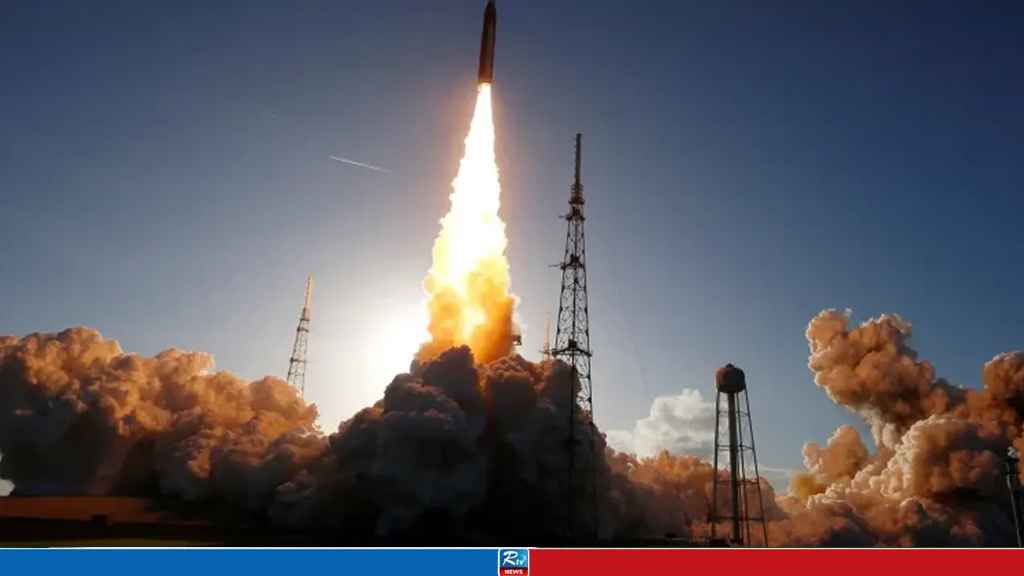
The historic Artemis II space mission has successfully launched from Florida, marking the first time in over 50 years that humans have journeyed beyond low-Earth orbit toward the Moon. The mission, carrying a crew of four astronauts, commenced from NASA’s Kennedy Space Center at Wednesday local time (Thursday morning, Bangladesh time), according to Al Jazeera. This mission represents a pivotal step in NASA’s long-term strategy to return humans to the lunar surface and eventually send astronauts to Mars. It is the first crewed lunar flight since the Apollo 17 mission in 1972. Thousands gathered at Cape Canaveral to witness the 32-story Space Launch System (SLS) rocket ascend into the skies. The Crew and the MissionThe Artemis II crew consists of NASA astronauts Reid Wiseman, Victor Glover, and Christina Koch, alongside Canadian Space Agency astronaut Jeremy Hansen. Their 10-day mission will take them around the far side of the Moon, reaching the furthest distance from Earth that humans have traveled in decades. During the flight, the crew will rigorously test every system of the Orion spacecraft to ensure its viability for future permanent lunar bases and deep-space exploration. Addressing the crew before liftoff, Launch Director Charlie Blackwell-Thompson stated: On this historic mission, you carry with you the spirit of the Artemis team, the bold resolve of the American people and our partners worldwide, and the hopes and dreams of a new generation. Godspeed, Artemis II. Go for launch. Shortly after liftoff, Commander Wiseman radioed back from the capsule: "We have a beautiful moonrise in view, and that’s exactly where we’re headed." Technical Hurdles OvercomeThe hours leading up to the launch were filled with tension as engineers began the delicate process of loading over 700,000 gallons (2.6 million liters) of super-cooled liquid hydrogen fuel. This stage was under heavy scrutiny following a dangerous fuel leak during a countdown test earlier this year that caused significant delays. This time, the operation proceeded smoothly. Engineers also quickly resolved two minor technical issues: a signal discrepancy in the "flight-termination system"—designed to self-destruct the rocket if it veers off course—and a temperature irregularity in a battery within the Orion capsule’s launch-abort system. Neither issue delayed the historic liftoff. What’s Next?The mission will unfold in several critical phases: Earth Orbit Testing: For the first 24 to 48 hours, the crew will remain in high-Earth orbit to test life-support, propulsion, and navigation systems. Trans-Lunar Injection: Once systems are verified, a major engine burn will propel the spacecraft out of Earth's orbit and toward the Moon. The Free-Return Trajectory: Orion will swing around the back of the Moon using a "free-return" path, which utilizes the gravity of the Moon and Earth to naturally pull the craft back home with minimal fuel consumption. Re-entry: Upon returning, the capsule will enter Earth’s atmosphere at speeds of approximately 40,233 km/h (25,000 mph) before splashing down in the Pacific Ocean. A New Generation’s "Apollo"With more than half of the world's current population born after the final Apollo mission, NASA is framing the Artemis program as a lunar mission for a new era. "There are many people who don't remember Apollo. There are generations who weren't even born yet," NASA Science Mission Chief Nicola Fox said earlier this week. "This is their Apollo."
Historic Artemis II Mission Successfully Launches Toward the Moon After 53 Years
'Jurassic Park' Vision Turns into Reality: / Mosquitoes Revealed as Reservoirs of Animal DNA
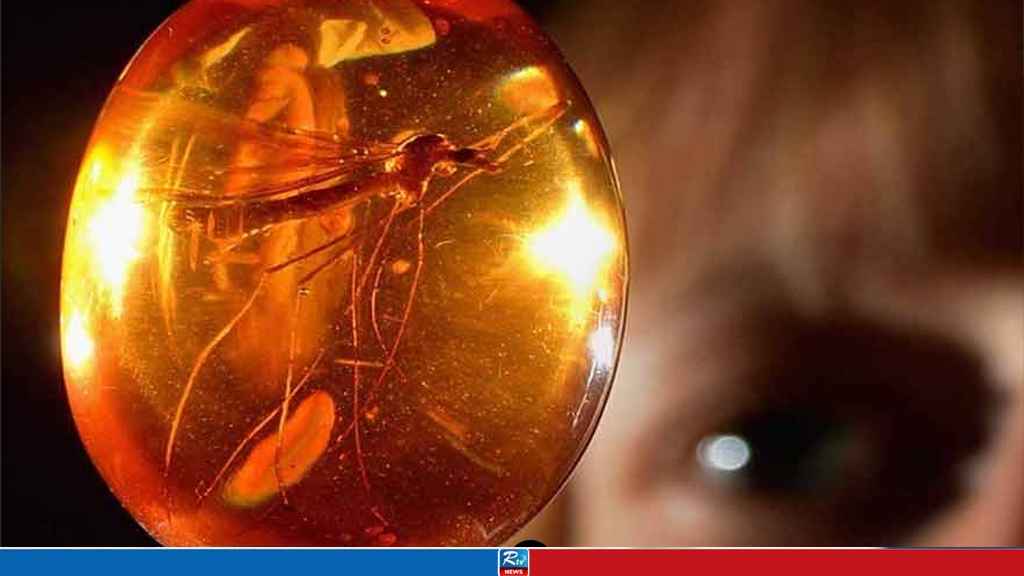
In the 1993 blockbuster Jurassic Park, scientists extracted dinosaur DNA from a prehistoric mosquito trapped in amber to recreate extinct giants. While that remains science fiction, a new study by American entomologists proves that the core concept—mosquitoes as carriers of diverse animal DNA—is a scientific reality. Inspired by Steven Spielberg’s film, entomologist Lawrence Reeves and his colleague Hannah Atusma launched a research project to see if modern mosquitoes could serve as a "genetic database" for contemporary wildlife. The Research: A "Blood-Based" Census The study was conducted in a 10,900-hectare protected area in Central Florida. Over eight months, the team collected more than 50,000 mosquitoes across 21 different species. Because only female mosquitoes bite to obtain the protein necessary for egg production, the researchers focused on several thousand females. By analyzing the "blood meals" found inside their abdomens, the team made a startling discovery: DNA from 86 different animal species was present within the insects. Key Findings Biodiversity Snapshot: The DNA found in the mosquitoes represented nearly 80% of the vertebrate species known to live in that area. Diverse Species: The "DNA vault" included everything from small frogs and cows to migratory birds, predators, and even endangered species. Missing Links: Interestingly, some animals were absent from the sample. No DNA was found for the endangered Florida Panther or the Eastern Mole (a burrowing mammal), suggesting some animals have natural defenses or behaviors that keep them safe from mosquito bites. A New Tool for Conservation The researchers, including biologist Sebastian Botero-Cañola, suggest that analyzing mosquito blood could revolutionize how we track wildlife. Traditional Census Mosquito-Based DNA Tracking Expensive and labor-intensive. Cost-effective in mosquito-rich areas. Requires physical sightings or camera traps. Acts as a passive "biodiversity sensor." Can be difficult for shy/hidden animals. Captures genetic data from diverse habitats (treetops to swamps). Can We Bring Back Dinosaurs? Despite the breakthrough, the researchers clarified that the "Jurassic Park" scenario of reviving extinct creatures is still impossible. DNA degrades over time, and usable genetic material cannot be extracted from ancient fossils or amber-preserved mosquitoes. However, as Hannah Atusma noted in the research paper, this method could be vital in preventing current species from going extinct like the dinosaurs. By monitoring the genetic health and presence of elusive animals through mosquitoes, conservationists can act faster to protect them.
Mosquitoes Revealed as Reservoirs of Animal DNA