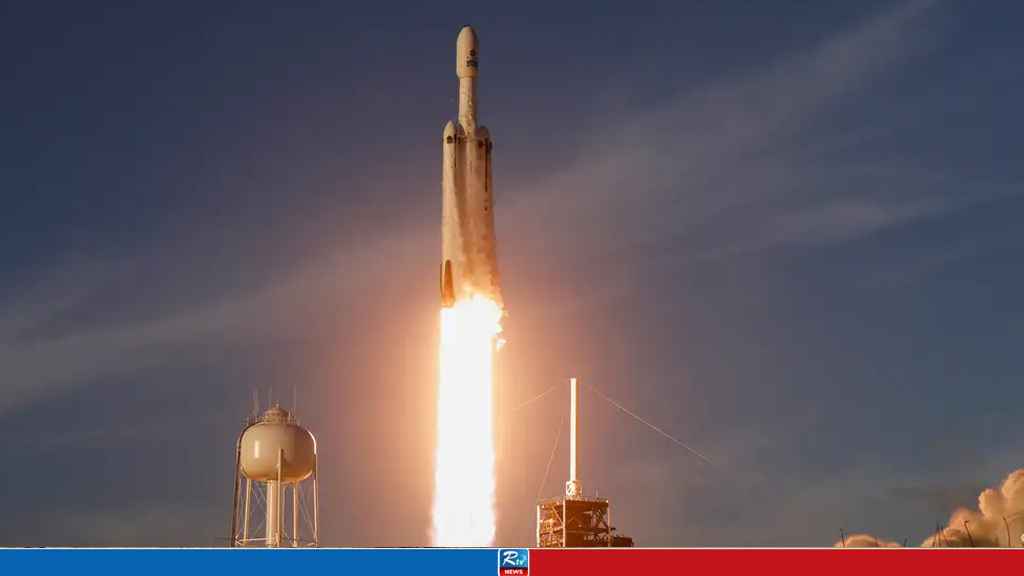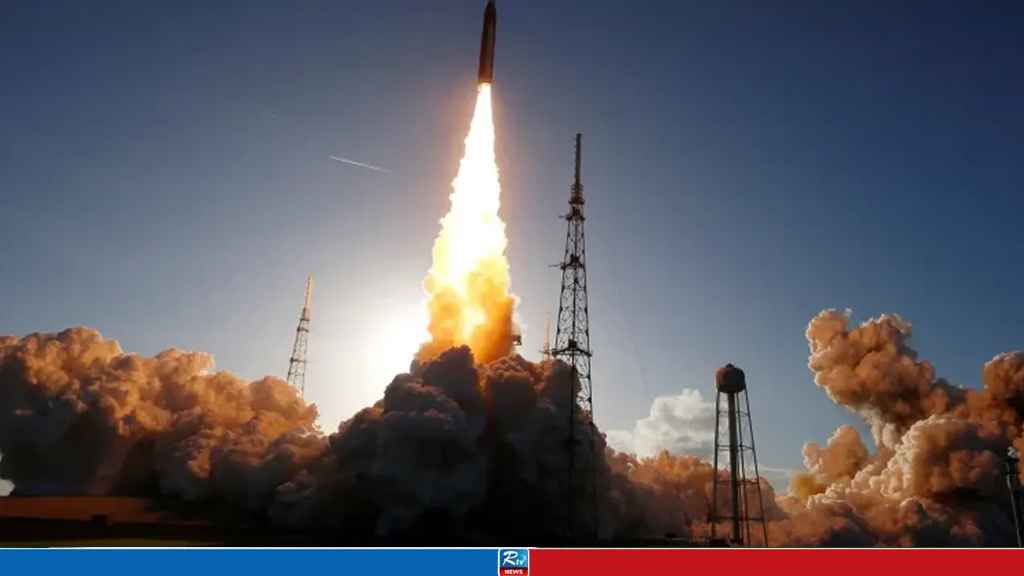
The historic Artemis II space mission has successfully launched from Florida, marking the first time in over 50 years that humans have journeyed beyond low-Earth orbit toward the Moon.
The mission, carrying a crew of four astronauts, commenced from NASA’s Kennedy Space Center at Wednesday local time (Thursday morning, Bangladesh time), according to Al Jazeera.
This mission represents a pivotal step in NASA’s long-term strategy to return humans to the lunar surface and eventually send astronauts to Mars.
It is the first crewed lunar flight since the Apollo 17 mission in 1972. Thousands gathered at Cape Canaveral to witness the 32-story Space Launch System (SLS) rocket ascend into the skies.
The Crew and the Mission
The Artemis II crew consists of NASA astronauts Reid Wiseman, Victor Glover, and Christina Koch, alongside Canadian Space Agency astronaut Jeremy Hansen.
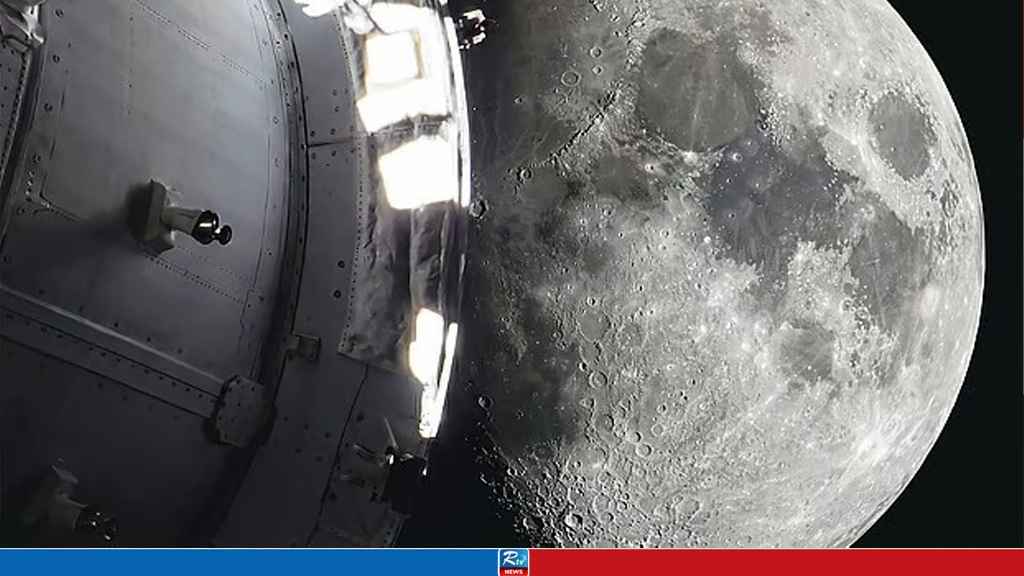
Their 10-day mission will take them around the far side of the Moon, reaching the furthest distance from Earth that humans have traveled in decades.
During the flight, the crew will rigorously test every system of the Orion spacecraft to ensure its viability for future permanent lunar bases and deep-space exploration.
Addressing the crew before liftoff, Launch Director Charlie Blackwell-Thompson stated:
Shortly after liftoff, Commander Wiseman radioed back from the capsule: "We have a beautiful moonrise in view, and that’s exactly where we’re headed."
Technical Hurdles Overcome
The hours leading up to the launch were filled with tension as engineers began the delicate process of loading over 700,000 gallons (2.6 million liters) of super-cooled liquid hydrogen fuel. This stage was under heavy scrutiny following a dangerous fuel leak during a countdown test earlier this year that caused significant delays.
This time, the operation proceeded smoothly. Engineers also quickly resolved two minor technical issues: a signal discrepancy in the "flight-termination system"—designed to self-destruct the rocket if it veers off course—and a temperature irregularity in a battery within the Orion capsule’s launch-abort system. Neither issue delayed the historic liftoff.
What’s Next?
The mission will unfold in several critical phases:
Earth Orbit Testing: For the first 24 to 48 hours, the crew will remain in high-Earth orbit to test life-support, propulsion, and navigation systems.
Trans-Lunar Injection: Once systems are verified, a major engine burn will propel the spacecraft out of Earth's orbit and toward the Moon.
The Free-Return Trajectory: Orion will swing around the back of the Moon using a "free-return" path, which utilizes the gravity of the Moon and Earth to naturally pull the craft back home with minimal fuel consumption.
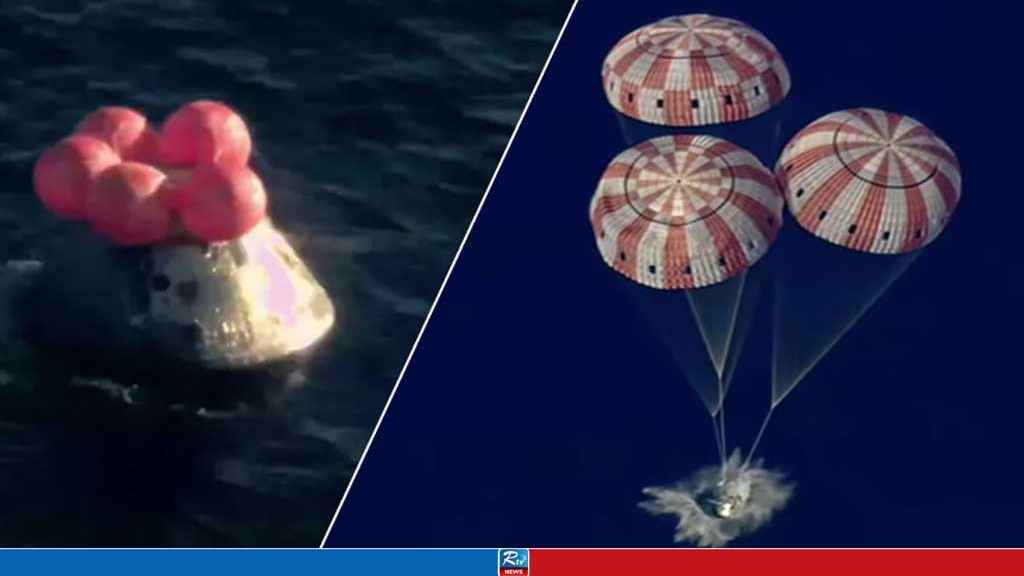
Re-entry: Upon returning, the capsule will enter Earth’s atmosphere at speeds of approximately 40,233 km/h (25,000 mph) before splashing down in the Pacific Ocean.
A New Generation’s "Apollo"
With more than half of the world's current population born after the final Apollo mission, NASA is framing the Artemis program as a lunar mission for a new era.
"There are many people who don't remember Apollo. There are generations who weren't even born yet," NASA Science Mission Chief Nicola Fox said earlier this week. "This is their Apollo."






 Live TV
 RTV Plus