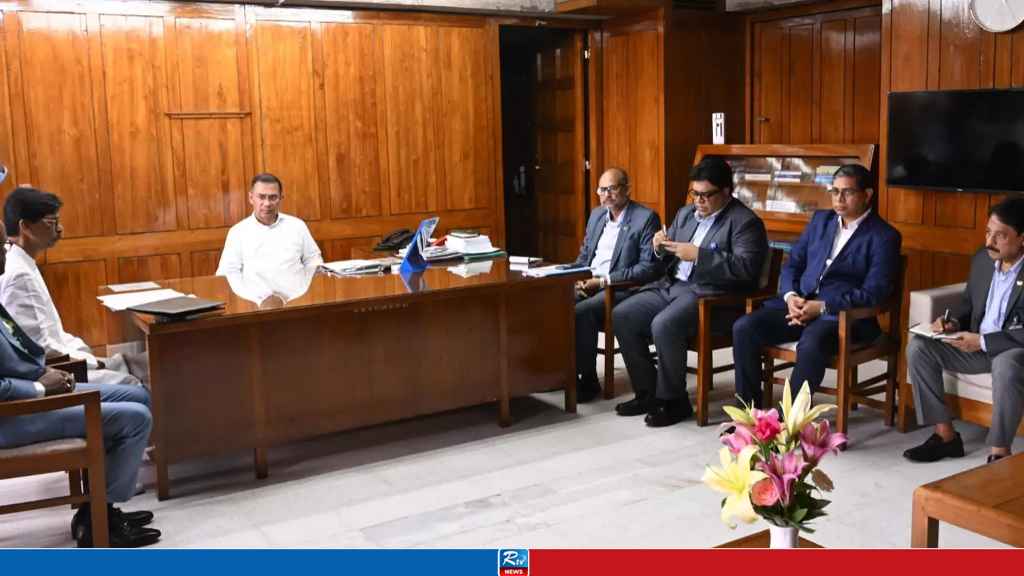
Home Minister Salahuddin Ahmed clarified on Sunday that the Constitution of Bangladesh does not currently recognize a "Reform Council," asserting that such a body cannot exist without a formal constitutional amendment.
Speaking to journalists before attending the adjourned sitting of the Jatiya Sangsad, the Minister addressed ongoing debates regarding the proposed council.
“The honorable President has convened a session of the National Parliament, not a session of any ‘Reform Council,’” he stated, emphasizing the current legal framework.
The Home Minister referenced the July National Charter, noting that while the charter proposes a constitutional reform council, implementing it requires prior legislative changes.
He further revealed that the legal standing of the proposed council is currently being contested.
“The constitutional validity of the council mentioned under the July National Charter has been challenged, and the court has issued a rule in this regard. The matter is now under judicial consideration,” the Minister explained.
He underscored that any formation of such a council—even if based on a national referendum—must be preceded by parliamentary discussion and a constitutional amendment.
“Only after the Constitution is amended and the provision incorporated can steps be taken to form the council and arrange the oath-taking, if necessary,” he added.
In response to inquiries regarding the status of the Speaker and Deputy Speaker, the Home Minister noted that both officials maintain their primary memberships within their respective political parties.
Addressing concerns over parliamentary discipline, he clarified, “They have not resigned from their parties. Therefore, Article 70 of the Constitution does not apply here.”
He explained that the anti-defection provision only becomes applicable if a member officially resigns from their party.
With Inputs from UNB






 Live TV
 RTV Plus