The government is planning to introduce locally manufactured electric ambulances to strengthen emergency healthcare services and dramatically improve access to patient transport across the country, including remote rural areas.
The ambitious project was finalized during a high-level meeting focused on developing electric ambulances using local technology.
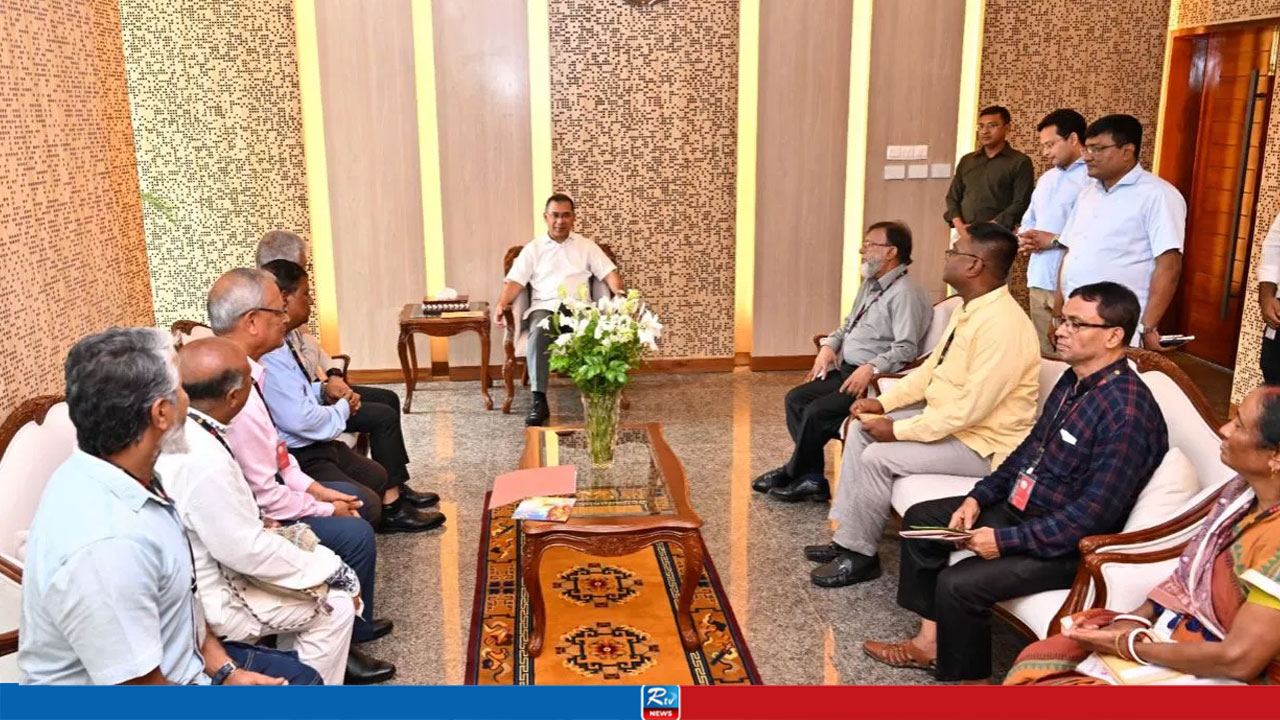
The session was held at the Prime Minister’s Office on Saturday morning with Prime Minister Tarique Rahman in the chair, according to Deputy Press Secretary Hasan Shiplu.
Underscoring the government's core vision for the healthcare sector, Hasan Shiplu stated that the administration is working tirelessly to ensure ambulance services are available closer to people's doorsteps.
"To achieve this goal, the meeting was held today where detailed discussions took place and several decisions were made," Shiplu said.
He further revealed that the highly anticipated project will initially be launched in one upazila as a structured pilot programme.
"If the initiative proves successful, it will help meet the country’s growing demand for ambulances and reduce dependence on imports," the deputy press secretary added.
The Prime Minister’s Press Wing outlined that the government is carefully considering a three-tier ambulance service system to optimize medical responses. Under this strategic framework, different types of specialized ambulances will be developed for transporting patients sequentially: from villages to upazilas, from upazilas to districts, and from districts to the capital city.
During the session, technical experts and senior officials informed the meeting that the initiative could significantly reduce long-term reliance on expensive imported emergency vehicles while simultaneously making modern ambulance services available to citizens at a much lower cost.
They also noted that the project would fundamentally help improve the country's overall emergency patient transport infrastructure.
According to further details from the Press Wing, experts explicitly informed the meeting that these locally produced electric ambulances will not be basic transit vehicles; they will instead come fully equipped with essential medical equipment, robust oxygen support systems, and other vital emergency healthcare facilities.
Furthermore, the specialized vehicles will be custom-designed by taking into account Bangladesh’s distinct geographical conditions, climatic challenges, and rural road networks.
The crucial policy meeting was attended by a prominent delegation of government leaders and top-tier academics.
Among those present were Health and Family Welfare Minister Sardar Md Sakhawat Husain Bakul, State Minister MA Muhit, Prime Minister’s Special Assistant on Health SM Ziauddin Haider, Health Services Secretary Kamruzzaman Chowdhury, and the Prime Minister’s Principal Secretary ABM Abdus Sattar.
To ensure the technical viability of the electric vehicles, a team of prominent engineering experts from the Bangladesh University of Engineering and Technology (BUET) also actively participated and shared their insights, including Professor Muhammad Ehsan, Professor Ziaur Rahman, Professor Abdul Salam Akhand, and Professor Jahangir Alam, alongside other senior government officials.







 Live TV
 RTV Plus