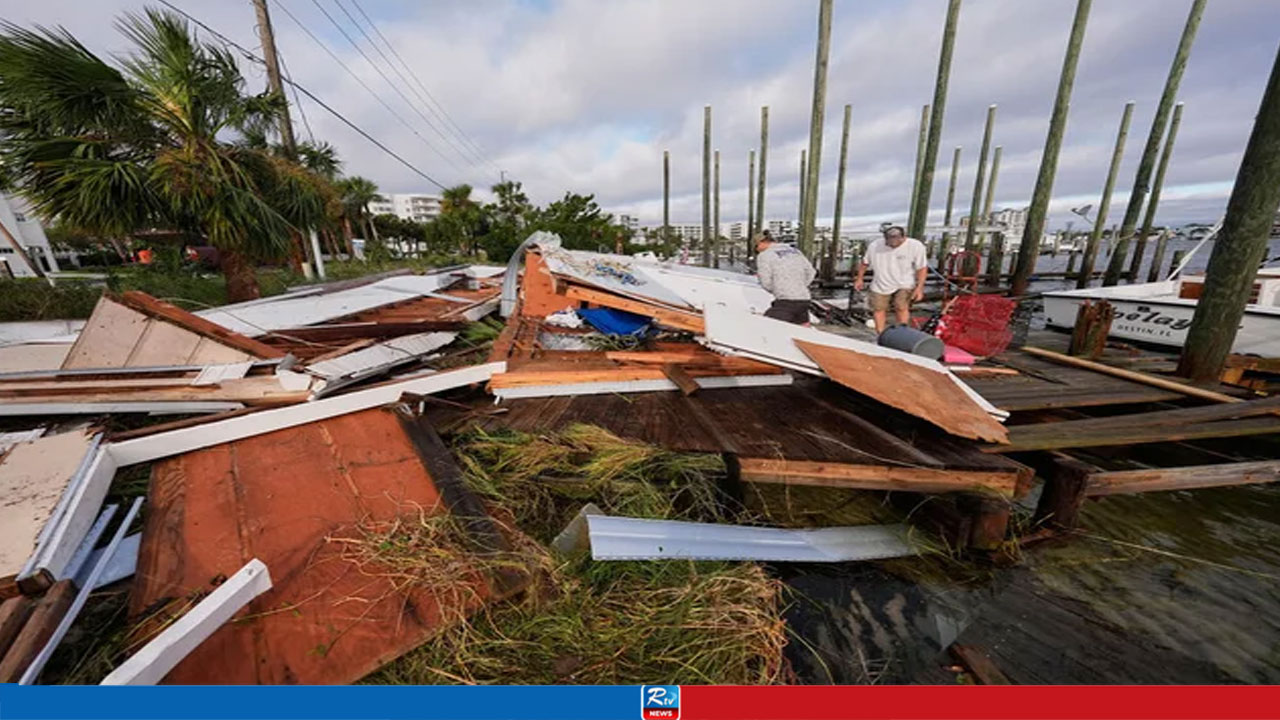
At least four people have been killed after Hurricane Isaias battered the southeastern region of the United States. The fatalities include two in Florida and two in Alabama.
Although the storm has weakened, severe winds, flash flooding, and coastal storm surges remain major threats.
Over 600,000 customers across the region have been left without power, while thousands of residents fled their homes for safer shelter.
Isaias—the first hurricane of the 2026 Atlantic season—made landfall near Destin on Florida's northern Gulf Coast on Friday night (October 9).
At the time of landfall, it was a Category 2 hurricane with maximum sustained winds of nearly 105 mph.
However, within hours of moving inland, the storm lost intensity and degraded from its tropical characteristics.
The storm inflicted extensive damage across Pensacola and surrounding areas in Florida.
The gymnasium at Milton High School was destroyed, while roofs were torn off at least two gas stations and a residence in the Gulf Breeze area.
Uprooted trees and fallen power lines severely disrupted road traffic across multiple neighborhoods.
Jaime Mitich, a resident of Gulf Breeze, Florida, recounted taking shelter beneath a mattress with her 13-year-old daughter, Julliana Jackson. Within minutes, part of their roof blew away amid deafening sounds of shattering debris.
Returning later to view her damaged home, Mitich broke down in tears, though she expressed resolve to rebuild despite the adversity.
In Navarre, Tamara Stamm and Daniel Pagan were busy clearing debris following the storm. Members of both families spent the night together so their nine children could remain in one place.
Meanwhile, Shawn Palamarchuk, owner of a seafood restaurant in Panama City, estimated damages to his business between $50,000 and $75,000, adding that he plans to reopen and begin restoration work immediately.
Florida Governor Ron DeSantis warned that while the storm’s center has passed the state, the risk of severe flooding persists.
Meanwhile, US President Donald Trump approved an emergency declaration for Georgia on Saturday (October 10), unlocking federal assistance and resources to support disaster response in affected areas.
Emergency declarations had previously been approved for Florida and Alabama.
The National Hurricane Center noted that parts of northeastern Georgia could receive 3 to 6 inches of rainfall, bringing a significant risk of flash floods.
Forecasts indicate that Isaias could continue to bring gusty winds, heavy rain, and storm surges across wide stretches of the Southeast throughout the weekend, with the storm expected to dissipate fully by Sunday (October 11).
Source: CBS News






 Live TV
 RTV Plus