
Two years after the historic July-August Mass Uprising 2024 that ended the 16-year autocratic rule of Sheikh Hasina, the wounds of the bereaved families remain raw, fueling a singular, unwavering demand for justice.
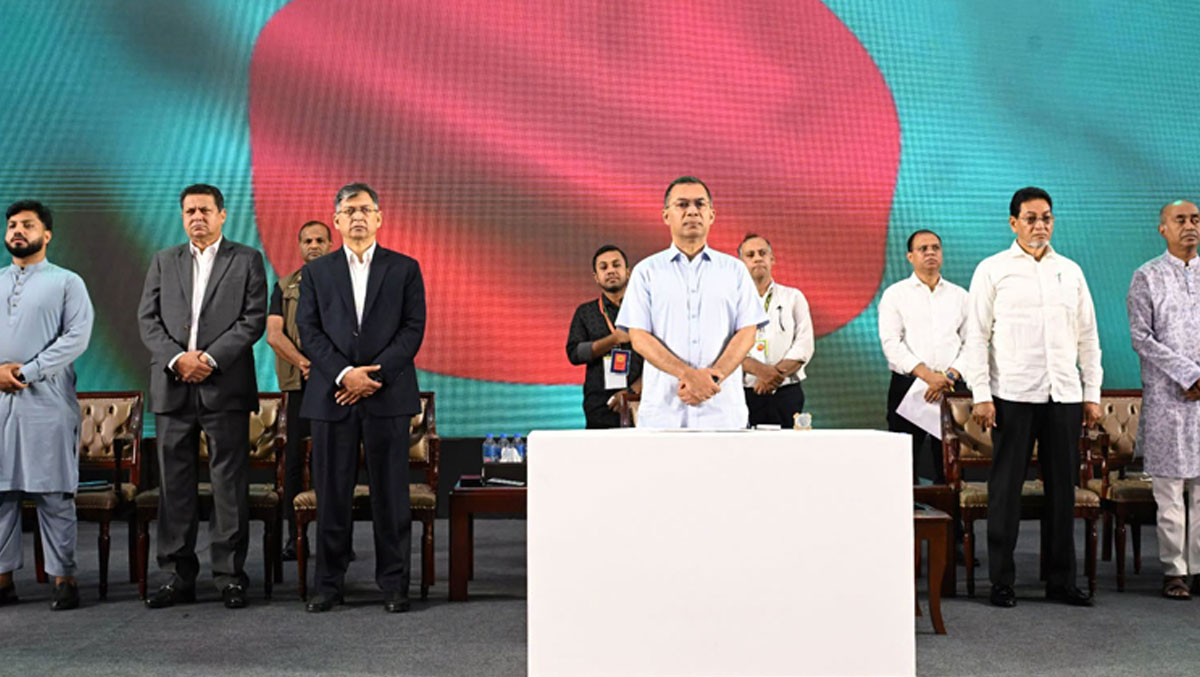
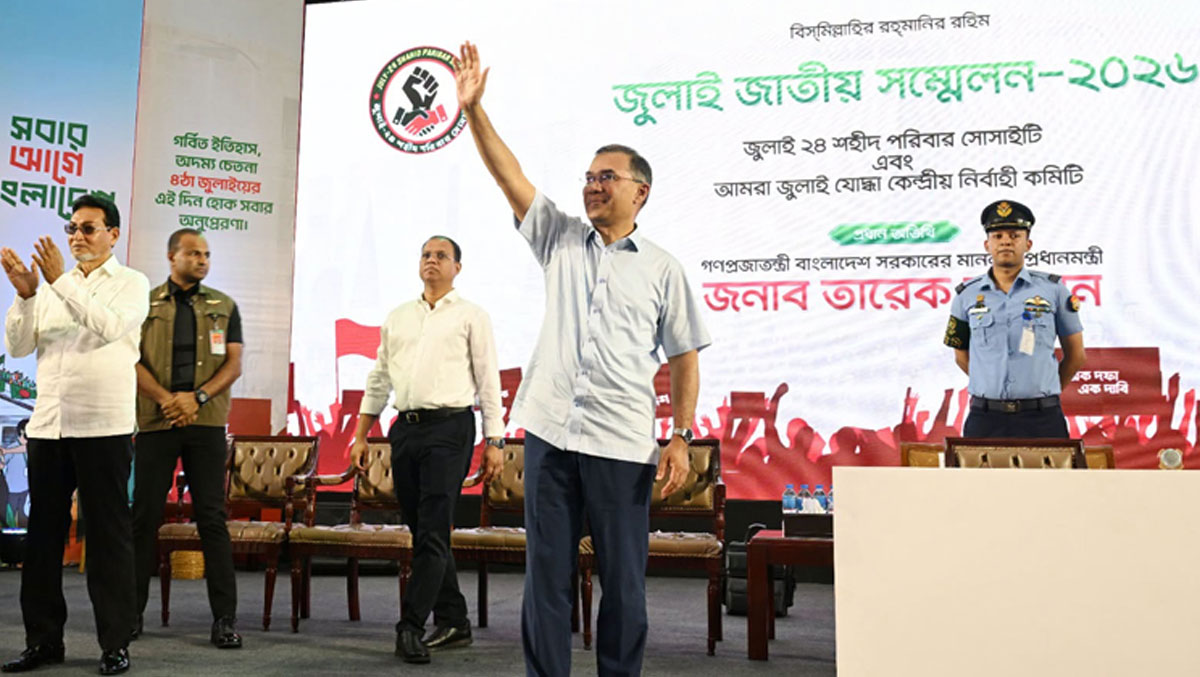
This collective pain took center stage on Saturday at the "July National Conference" held at the Bangladesh-China Friendship Conference Center in Agargaon, where the families of martyrs and injured fighters gathered to share harrowing testimonies of sacrifice before Prime Minister Tarique Rahman.
The event, chaired by Jatiya Sangsad Chief Whip Nurul Islam Moni and attended by cabinet ministers, foreign diplomats, military officials, and civil society leaders, was jointly organized by the July '24 Martyrs' Families Society and the Central Executive Committee of Amra July Joddha (We Are July Fighters).
For many, the month of July no longer signifies a standard calendar interval but serves as an annual reminder of irreparable loss.
Abdul Rob Mia, father of martyred Miraj Hossain, broke down in tears as he recounted the events of August 5: "Every July brings back unbearable pain. On August 5, police of the fascist Hasina government riddled my son's chest with bullets. I am a helpless father seeking justice for this crime and for every July fighter who was killed."
Similar sentiments were echoed by Shafiul Alam, father of martyred Wasim from Chattogram, who stressed the necessity of government support for those who survived with permanent disabilities.
"I have lost my son. No other parent should have to endure such loss. I urge the government to support the July fighters who lost their limbs so they do not suffer in hardship," he pleaded.
Abu Hossain, brother of the iconic Abu Sayeed, highlighted the economic devastation faced by many families who lost their primary breadwinners, urging the government to ensure swift justice and preserve the memory of the fighters nationwide.
The conference also spotlighted the struggle for recognition and aid.
Fatematuz Johra, whose eldest son Abdullah Bin Jahid was killed, shared how she faced bureaucratic indifference until the Amra BNP Paribar stepped in to assist her.
She noted that Prime Minister Tarique Rahman had extended support even while abroad, stating, "Now our only demand from the BNP government is justice for all July martyrs. I hope other July martyrs' families receive the same support that I did."
Other families, such as that of the martyred Alvi, expressed deep frustration over what they described as a lack of meaningful initiative by the previous interim government to ensure justice, pinning their hopes on the current administration.
The gathering also gave voice to the survivors who carry physical scars from the uprising. Shahin Malu, an injured fighter who lost both legs, declared he had no regrets, emphasizing his faith in the Prime Minister's leadership.
"The Zia family has suffered the most over the past 17 years. To safeguard this country, people should stand beside Prime Minister Tarique Rahman. If the martyrs' families truly want justice, they should support him," he said.
Other fighters, including Millat Hossain, Sujan Molla, Alamin, and Mehedi Hasan Miraj, detailed their experiences of being shot during processions, their struggles with unaffordable medical treatment, and their disappointment at being neglected or politically exploited by certain factions during the interim period.
The event commenced with a recitation from the Holy Quran, followed by national prayers and the screening of a documentary on the movement.
Prime Minister Tarique Rahman presented "July Memorial Awards" to representatives, including Rob Mia, Ujjal Hossain, Al Miraj, and Aminul Islam Emon, with organizers promising that plaques would be distributed to all participants.
Representatives of the martyrs' families reciprocated by presenting a memorial plaque to the Prime Minister.
The July 2024 uprising, which began as student protests against the government job quota system, evolved into an unprecedented 36-day nationwide movement that forced the flight of autocratic ruler Sheikh Hasina on August 5.
While the government’s official gazette recognizes 834 martyrs, a United Nations investigation into the unrest suggests that fatalities between July 1 and August 15, 2024, may have exceeded 1,400.
As the nation reflects on these events, the conference underscored that while the political history of Bangladesh has been transformed, the search for closure for those left behind continues to be the most pressing priority.





 Live TV
 RTV Plus


