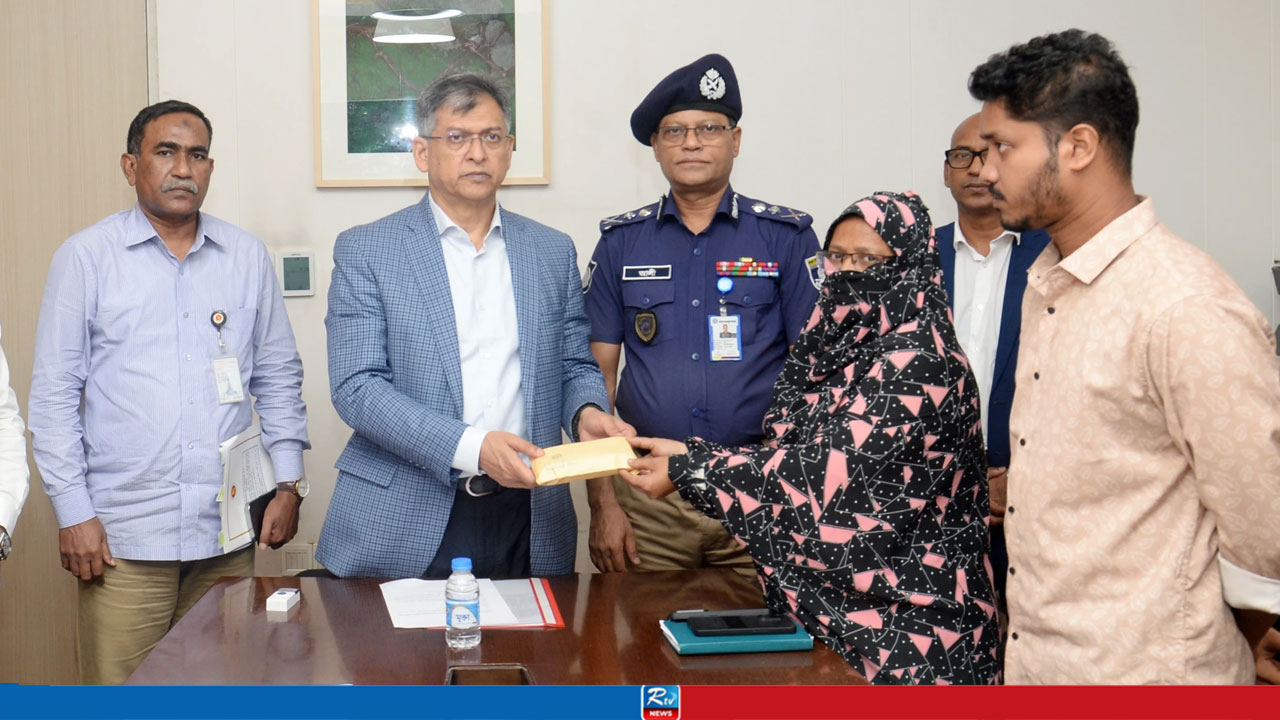
Home Minister Salahuddin Ahmed has stated that no community or group living in Bangladesh needs to be identified as a "minority."
Rather than being based on religion or any other division, every person in the country will enjoy equal rights and security on the basis of citizenship.
He made these remarks as the chief guest at an event organized for Janmashtami at the Dhakeshwari National Temple in the capital on Friday afternoon (September 4).
Expressing a firm commitment to building a non-communal Bangladesh, Salahuddin Ahmed said, "Our leader has clearly stated 'Bangladesh First.' If Bangladesh comes first, then each of us is a Bangladeshi above all else. Our religious, social, or ethnic identities come afterward. The core principle of the government in governing the state is Bangladesh for everyone."
Criticizing past political systems, he said that those in the past who believed and sought to gain political advantage by treating the Hindu community as a specific party's "vote bank"—conscious citizens of this country have completely shattered that misconception and artificial myth.
He stated that since taking office, the current government has ensured religious freedom and practices for people of all faiths across the country over the past six months.
"The people are the judges; you have already given your verdict, and in the future as well, your united role will remain vital in strengthening democracy and standing against all demonic forces and extremism."
Highlighting the importance of the constitution and religious rights, the Home Minister said that according to the Constitution of Bangladesh, the state is obligated to ensure religious freedom for every citizen.
In accordance with the spirit of the constitution, no discrimination can be made on the basis of religion.
He noted that full security and freedom have been provided to the places of worship of all religious communities and to those in charge of them.
The government does not want to keep this merely confined to writing in the constitution, but is determined to ensure this equality and harmony in reality as well.
Calling for a change in language use, the Home Minister further stated, "We commonly use the term 'communal harmony.' However, I believe the word 'communal' is no longer necessary. Starting today, we must say that we will maintain religious and social harmony, coexistence, and peace. This positive practice will make society even more beautiful."






 Live TV
 RTV Plus