Dhaka 16 October, 2026

National Election and Reform Efforts, Insights from Dr Ali Riaz

Rtv News

Publish : 20 Feb 2025, 01:11 PM
Photo: File

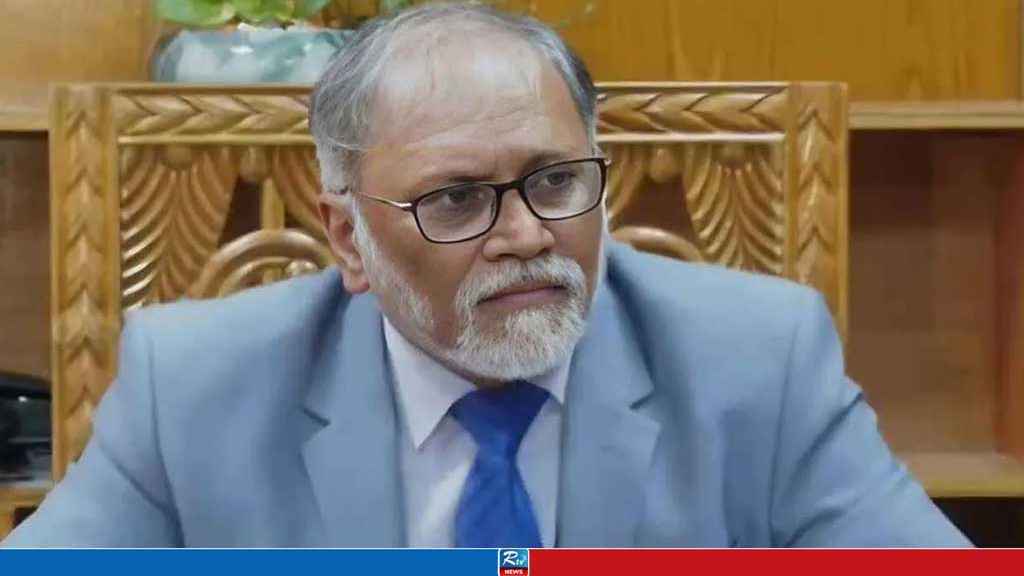
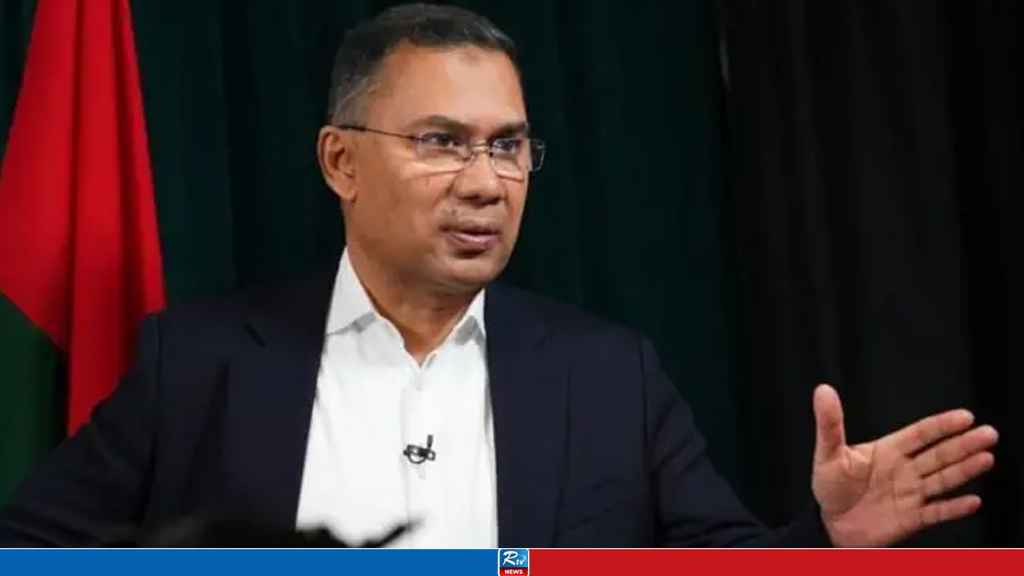
National Consensus Commission Vice-Chairman, Professor Dr Ali Riaz, has expressed optimism about the possibility of holding a national election in December this year, citing the commitment of political parties to the ongoing reform process.

"I am optimistic that significant reforms can be achieved. It is not impossible, and my optimism stems from the commitment shown by political parties," Riaz stated in an exclusive interview with BSS in Dhaka.

As the head of the interim government's Constitution Reforms Commission, Riaz acknowledged skepticism among some observers but emphasized the necessity of staying hopeful. He noted that beyond political parties, the people of Bangladesh are eager for an election, having been unable to vote for the past 17 years.

"This is an ideal moment. The demand for reform and elections is not only coming from political parties but also from the citizens who wish to exercise their right to vote," he added.

Riaz reassured that Chief Adviser Professor Muhammad Yunus and the interim government have no intention of extending their tenure unnecessarily.

National Consensus Commission's Action Plan
The seven-member National Consensus Commission, led by Professor Yunus, was established on February 13 to engage political parties in discussions on reform recommendations proposed by six commissions covering key sectors, including the constitution and electoral system. The commission held its first meeting with political parties on February 15.

As its initial step, the Consensus Commission will provide political parties with full reports from the six commissions. Parties will review these reports, identify key proposals, and determine which recommendations should be prioritized for implementation.

Although no specific deadline has been set, both the Consensus Commission and political parties acknowledge the urgency of the process. "We do not want to rush this, as meaningful discussions are crucial," Riaz explained, adding that Professor Yunus described this as the second phase of the interim government, where dialogue and action must proceed simultaneously.

The Consensus Commission has been given six months to facilitate a consensus on reforms, with political parties expected to provide feedback within a reasonable timeframe. Efforts are underway to expedite the process, as the public eagerly awaits the elections.

"If major parties agree on constitutional reforms, we can set those aside as settled and move forward to areas where opinions differ," Riaz stated. He emphasized that while the six commissions have provided recommendations, political parties may propose alternative solutions aligned with their policies and governance plans.

National Charter
Once key agreements are reached, the process will culminate in a national charter—a guiding document for future governments. "The charter will serve as a reference, ensuring that any elected government adheres to the agreed-upon reforms," Riaz explained.

The commission will also collaborate with parties to determine which reforms should be implemented before the next election, which should be addressed by the new parliament, and whether certain decisions require a referendum. While the Consensus Commission facilitates discussions, political parties ultimately decide the reforms they wish to pursue.

To ensure transparency, the agreed-upon recommendations will be made public through a dedicated website. "Publishing these agreements is essential to engaging citizens, as they have the right to know what reforms political parties are committing to," Riaz noted.

Political Commitment to Reforms
Addressing concerns about political parties' commitment, Riaz called for a forward-looking approach. "Let's not be prisoners of the past," he urged.

Bangladesh has historically struggled with political consensus, but Riaz pointed out successful agreements, such as the caretaker government system, as positive precedents. He emphasized that the current political climate is unique, with all parties acknowledging the necessity for reform following 16 years of challenges and a recent mass uprising that claimed over 1,400 lives.

"No party is claiming that everything is fine. They all recognize the need for structural reforms in governance, the judiciary, and constitutional bodies," he said. However, he acknowledged that while all parties support reform, their priorities may differ. "Our task is to facilitate discussions and find common ground."

Riaz emphasized that political parties must ensure accountability and the ultimate goal of the Consensus Commission is to establish a binding national charter that all parties commit to, both before and after elections.

The Awami League Issue
Regarding the Awami League, Riaz stated that the interim government and political parties would determine the appropriate course of action. However, he asserted that those accused of crimes against humanity must be brought to justice.

He clarified that the issue of banning the Awami League is outside the scope of the national consensus negotiations and falls under a separate judicial and governmental process. He pointed to United Nations documentation of crimes committed under a political party's command and argued that responsibility lies with specific individuals rather than being a matter of political negotiation.

Riaz also highlighted concerns over the Awami League's ideological stance, citing its rule from 1972-75 and 2009-2024. "This political party has twice led the country into personalistic autocracy, suggesting an underlying ideological issue rather than mere coincidence," he argued.

Despite these concerns, Riaz stressed that addressing structural reforms should remain the primary focus. "We must not allow these issues to derail the essential reforms needed for the country's future. These are two separate matters."

Constitutional Reforms
As the head of the Constitution Reforms Commission, Riaz reiterated that constitutional changes cannot be imposed unilaterally. "Reforms require national consensus and a clear process," he said. He outlined multiple potential approaches, including a constituent assembly, a referendum, or a negotiated agreement, suggesting that Bangladesh could draw from global experiences or develop its own path.

He emphasized that the commission's role is to review the constitution, identify gaps, and make recommendations rather than dictate the reform process. "We never used the term ‘amendment.’ Instead, we highlighted articles requiring reform. It is up to political parties to decide what to adopt and how to implement it."

Certain proposals, such as forming a bicameral parliament and a national constitutional council, require broad political support. However, Riaz urged parties to first reach a consensus on necessary reforms before debating their implementation.

"Let's first agree on what needs to change. Then we can discuss how to implement it. The priority now is establishing the national charter," he concluded.

Follow google news channel to get RTV news Google News
27 Platoons of BGB Deployed for Khaleda Zia’s Funeral and Burial
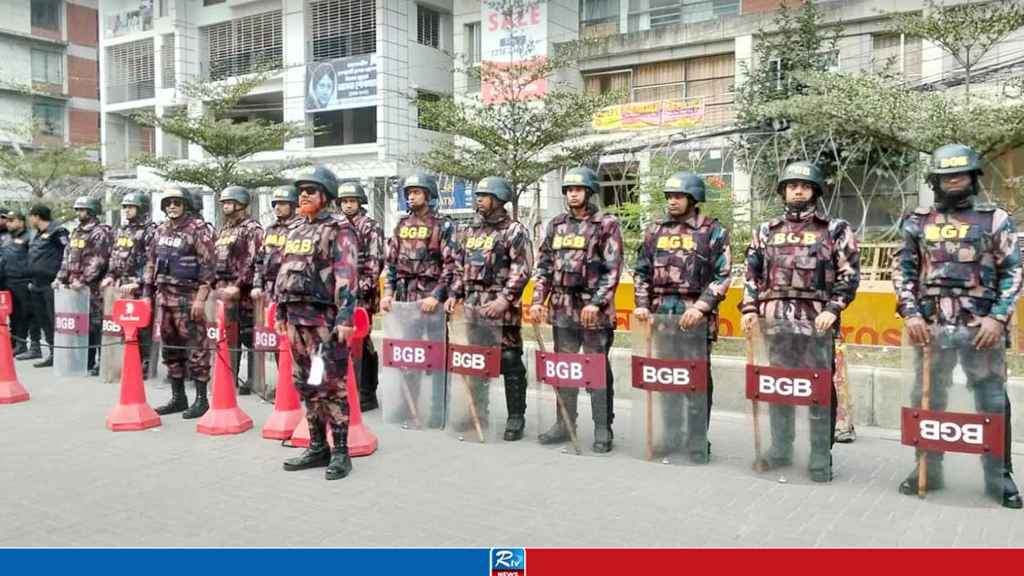
The government has deployed 27 platoons of the Border Guard Bangladesh (BGB) across the capital to ensure foolproof security during the funeral and burial of former Prime Minister and BNP Chairperson Begum Khaleda Zia. The funeral prayer (Janaza) is scheduled to take place after the Zuhr prayer today, Wednesday (December 31), at Manik Mia Avenue. Read More Khaleda Zia’s Funeral Today at 2 PM The Chief Adviser’s Office confirmed late Tuesday night that all logistical preparations for the massive gathering have been completed. Strict Security Measures To maintain law and order and ensure the smooth execution of the services, BGB personnel have been stationed at key points. BGB Public Relations Officer Md. Shariful Islam confirmed the deployment, noting that the 27 platoons are concentrated around: Evercare Hospital The National Parliament (Jatiya Sangsad Bhaban) area Zia Uddan In addition to the BGB, other law enforcement agencies are on high alert to manage the hundreds of thousands of mourners expected to attend the historic leader's final rites. Following the Janaza at Manik Mia Avenue, Begum Zia will be laid to rest with state honors at Zia Uddan in Sher-e-Bangla Nagar.
27 Platoons of BGB Deployed for Khaleda Zia’s Funeral and Burial
Special Assistant to Chief Adviser Prof. Md. Sayedur Rahman Resigns
Professor Dr. Md. Sayedur Rahman, the Special Assistant to the Ministry of Health and Family Welfare (holding the rank of State Minister), has resigned from his post. He was one of three special assistants appointed by Chief Adviser Professor Muhammad Yunus. The President accepted his resignation letter on Tuesday night (December 30), according to a statement from the Chief Adviser's Press Wing. A notification issued by the Cabinet Division confirmed the development, stating that the President has accepted the resignation of Professor Dr. Md. Sayedur Rahman, who was entrusted with executive powers as a Special Assistant to the Ministry of Health and Family Welfare of the interim government. Context of Resignations The interim government had previously appointed three special assistants with the status of State Ministers to oversee key ministries: Prof. M. Aminul Islam: Appointed to the Ministry of Education; he resigned several months ago. Khoda Baksh Chowdhury: Former Inspector General of Police (IGP), appointed to the Ministry of Home Affairs; he resigned on December 25. Prof. Dr. Md. Sayedur Rahman: Vice-Chancellor of BMU, appointed to the Ministry of Health; he has now become the latest to step down. With Prof. Sayedur Rahman’s departure, all three initial special assistants appointed to these executive roles have now resigned from their positions.
Special Assistant to Chief Adviser Prof. Md. Sayedur Rahman Resigns
3-Day State Mourning for Khaleda Zia, Public Holiday Today
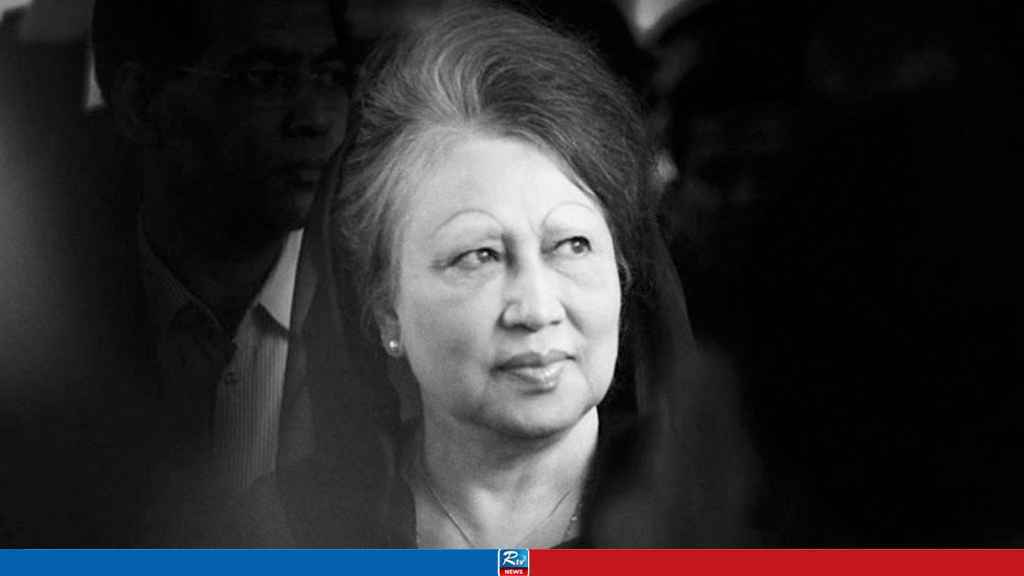
The government has declared three days of state mourning from Wednesday to Friday (December 31 to January 2) following the passing of BNP Chairperson and former Prime Minister Begum Khaleda Zia. Additionally, a nationwide public holiday has been announced for today. Cabinet Secretary Sheikh Abdur Rashid shared the information with journalists at the Secretariat on Tuesday (December 30). A formal notification was subsequently issued by the Cabinet Division. State Mourning and Honors The gazette notification stated that the interim government is deeply saddened by the death of the "uncompromising leader" of the movement to restore democracy. Read More Khaleda Zia’s Funeral Today at 2 PM To honor the memory of the three-time Prime Minister, the government has decided on the following: Duration: State mourning will be observed from Wednesday (December 31) through Friday (January 2, 2026). Flag Protocol: The national flag will be flown at half-mast at all government, semi-government, autonomous, and educational institutions, as well as private buildings and Bangladesh missions abroad. Special Prayers: Special prayers (Dua) for the departed soul will be held at all mosques across Bangladesh on Friday. Other religious institutions will also organize special prayers for her soul. Public Holiday and Exemptions In a separate notification from the Ministry of Public Administration, the government declared a general holiday today (Wednesday, December 31) by executive order. While all offices and private institutions remain closed, the following emergency services are exempt from the holiday: Electricity, water, gas, and fuel supplies. Fire services and port activities. Waste management and cleaning services. Telephone, internet, and postal services. Hospitals, emergency medical services, and vehicles carrying medicine or medical equipment. The notification added that Bangladesh Bank and the Supreme Court would issue specific instructions regarding the operations of banks and courts, respectively. Begum Khaleda Zia passed away at the age of 80 on Tuesday morning while undergoing treatment at Evercare Hospital in Dhaka.
3-Day State Mourning for Khaleda Zia, Public Holiday Today
Jaishankar to Attend Khaleda Zia’s Funeral
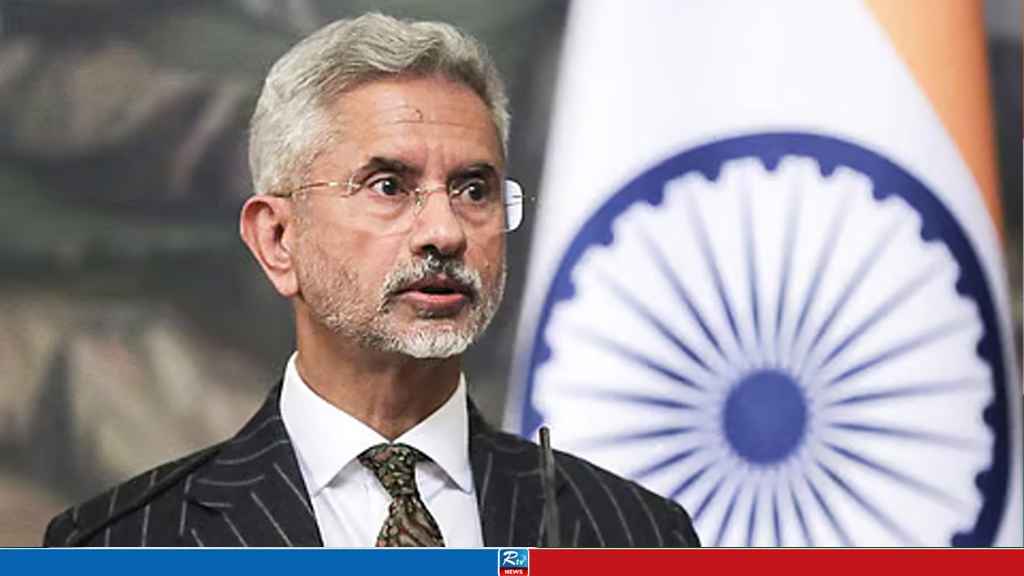
Indian External Affairs Minister, Dr S Jaishankar is to arrive in Dhaka tomorrow to attend the funeral of former prime minister and BNP chairperson Begum Khaleda Zia. “External Affairs Minister, Dr. S. Jaishankar will represent the Government and people of India at the funeral of Begum Khaleda Zia, former Prime Minister of Bangladesh and Chairperson of the Bangladesh Nationalist Party,” the Indian high commission in Dhaka said in a statement this evening. Begum Zia’s Janaza would be held after Zohr prayers while the high commission statement said Jaishankar would accordingly visit Dhaka on December 31. Indian Prime Minister Narendra Modi earlier in the morning expressed deep sorrow at Begum Zia’s demise, recalling her contributions to Bangladesh and bilateral relations. “Our sincerest condolences to her family and all the people of Bangladesh. May the Almighty grant her family the fortitude to bear this tragic loss,” he said. The Indian premier recalled her political legacy saying “as the first woman Prime Minister of Bangladesh, her important contributions towards the development of Bangladesh, as well as India-Bangladesh relations, will always be remembered”. “I recall my warm meeting with her in Dhaka in 2015. We hope that her vision and legacy will continue to guide our partnership,” Modi said.
Jaishankar to Attend Khaleda Zia’s Funeral
Chinese Ambassador Sends Condolences to Tarique Rahman Over Khaleda Zia’s Passin
Yao Wen, the Chinese Ambassador to Bangladesh, has expressed profound grief and condolences to BNP Acting Chairman Tarique Rahman following the death of former Prime Minister and BNP Chairperson Begum Khaleda Zia. The ambassador conveyed his sympathies in a formal letter sent to Tarique Rahman on Tuesday (December 30). The Chinese Embassy in Dhaka later shared the contents of the letter on their official Facebook page. In his message to Tarique Rahman, Ambassador Yao Wen wrote: "It is with deep sorrow and a heavy heart that I extend my profound condolences on the passing of your beloved mother, Khaleda Zia, the Chairperson of the BNP and former Prime Minister of Bangladesh." The ambassador’s gesture follows official diplomatic protocols, as Chinese Premier Li Qiang and Foreign Minister Wang Yi also sent separate condolence messages to Chief Adviser Professor Muhammad Yunus and Foreign Affairs Adviser Md. Touhid Hossain, respectively. A "Steadfast Pioneer" of Democracy Describing her legacy, Yao Wen noted that Khaleda Zia served as a long-standing symbol of democratic aspirations in Bangladesh and was a "steadfast pioneer" of the nation’s independence. "Her leadership played a pivotal role in shaping the country’s history, and her resilience inspired the people," the letter stated. The Ambassador further emphasized her role in international relations, calling her a "dear friend of the Chinese people" whose contributions left a lasting impact on bilateral ties. He noted that the people of China would remember her with "deep gratitude and the highest respect." Future Cooperation Looking forward, Ambassador Yao Wen assured the BNP Acting Chairman that the Communist Party of China (CPC) remains committed to maintaining its long-standing friendly relations with the BNP under Tarique Rahman's leadership. The letter concluded with a wish for the peace of Khaleda Zia’s soul, stating, "May her contributions to Bangladesh and the China-Bangladesh relationship be remembered forever."
Chinese Ambassador Sends Condolences to Tarique Rahman Over Khaleda Zia’s Passin
Read More
Final Voter List Published for Upcoming National Election
Awami League Will Not Be Able to Participate in Next Election: EC Anwarul
EC to start stakeholder talks from Sept 28
Lower House Should be Seat-Based and Upper House PR-Based: Badiul Alam