Dhaka 28 September, 2026
10 Bangladeshis Rescued by BSF Handed Over to BGB after Boat Capsizes in Chapainawabganj
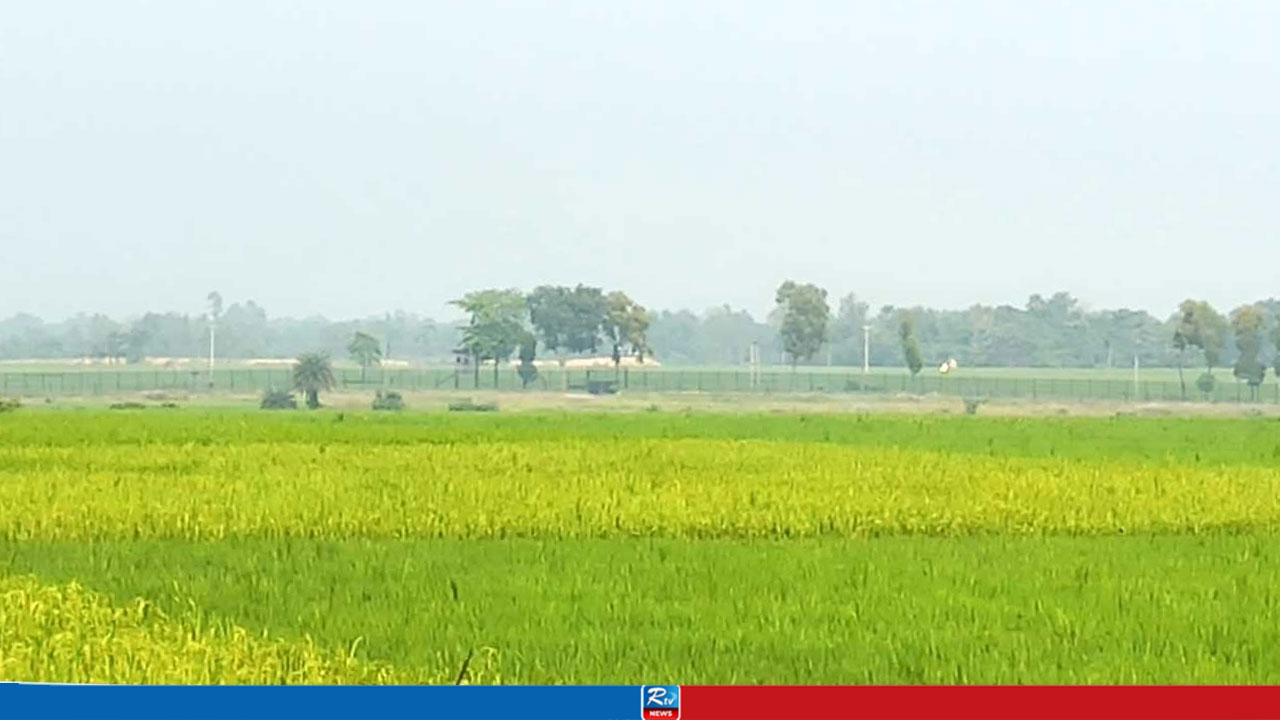
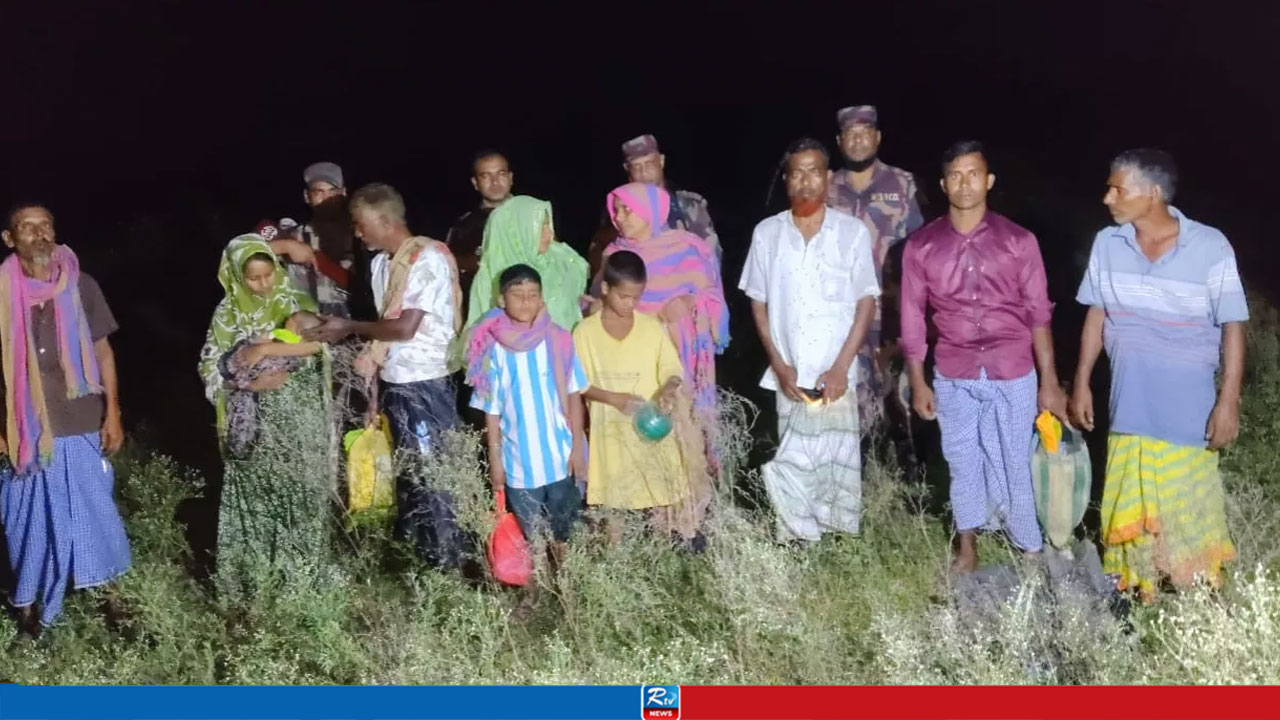
Indian border guards repatriated ten Bangladeshi citizens to the Border Guard Bangladesh (BGB) late Saturday evening following their rescue from the turbulent waters of the Padma River, where a vessel carrying twelve occupants capsized within the Chapainawabganj Sadar upazila.
Five Children Drown while Swimming in Pagla River in Chapainawabganj
RU Students Block Railway Tracks, Paralyze Train Links over TTE Assault on Peer
BGB Thwarts Multiple BSF Push-In Attempts in Lalmonirhat and Joypurhat
BGB, Locals Foil BSF’s Attempt to Push 12 into Chapainawabganj
BSF Forced to Take Back 20 Individuals after BGB Intervention in Chapainawabganj
BSF Attempts to Push Two Individuals into Chapainawabganj, Jamalpur Foiled
BGB Blocks BSF Push-In Attempts at Naogaon, Chapainawabganj Borders
Border Guard Bangladesh (BGB) has successfully thwarted two major push-in attempts by the Indian Border Security Force (BSF) along the Naogaon and Chapainawabganj frontiers.  Following tense, prolonged stand-offs at the zero line, the BSF was forced to withdraw a total of 45 individuals—including women and children—back into the Indian interior. Forced Retreat at the Sapahar Frontier A 19-hour tactical stand-off at the Hapania border in Sapahar Upazila, Naogaon, ended late Friday night when the BSF's 88 Battalion from the Pannachhara camp finally pulled back 17 Bengali-speaking individuals.  The group, consisting of 6 men, 6 women, and 5 children, was initially pushed toward the 238/MP Main Pillar area by the BSF at around 7:30 am on Friday. BGB forces immediately established a strict defensive perimeter along the zero line, preventing their entry. An eyewitness, a local farmer from Kalmudanga village, detailed the grueling experience of the detainees: "BGB members kept a strict guard over those 17 people at the border throughout the day and after evening. BGB was still deployed there around 11 pm.  Then, around midnight, BSF members forcibly dragged those 17 people back inside India. They did not want to go to India and were crying profusely." BSF personnel withdraw 28 individuals who were stranded in severe weather for two days at the Bangabari border in Chapainawabganj after a failed push-in attempt. -Rtv Photo Lt. Col. Mohammad Ariful Islam Masum, Commander of the Naogaon 16 BGB Battalion, outlined the operational response: "As soon as we learned about the incident, we increased extra patrols and manpower at the border. Although they were initially allowed to stay on the zero line out of humanitarian considerations, we strictly sent them back into no-man's-land after evening." The commander further revealed that around 1am on Saturday, BSF personnel switched off the border lights.  Taking advantage of the pitch darkness after failing completely to execute the push-in into Bangladesh, they took the 17 individuals back inside Indian territory. Resolving the Two-Day Bangabari Border Crisis In a parallel development further west, the BSF withdrew another group of 28 individuals who had been stranded in the open air through severe storm and rain for two days at the Bangabari frontier in Gomastapur Upazila, Chapainawabganj.  The group comprised 12 men, 10 women, and 6 children. The crisis originally began in the early hours of June 4, when the 12 BSF Battalion attempted to push the 28 individuals across the Bangabari Border Outpost (BOP) jurisdiction.  Read More Teenage Girl Gang-Raped in Gaibandha, 3 Suspects Caught by Locals Immediate defensive maneuvers by the BGB neutralized the initial push-in attempt, leaving the group stranded on the Indian side of the zero line. Lt. Col. Mohammad Ariful Islam Masum, who also oversees this strategic sector, confirmed the successful resolution on Saturday: "The attempt by the 12 BSF Battalion to push 28 people into Bangladesh in the responsible area of Bangabari BOP was thwarted by the immediate action of the BGB. Those 28 people were staying about 50 yards away from the zero line inside India. Currently, their presence or movement is no longer observed within 150 yards of the border. Therefore, it is assumed that the BSF took them back inside India at some point on Friday night." The BGB officially stated that the frontier situation is being closely and continuously monitored, with maximum alert levels maintained along all outposts to tackle any unsolicited developments.  The combined, resolute resistance from the BGB and frontier communities has brought immense relief to local residents following hours of geopolitical friction.
Farakka Day: Speakers Demand Five-Nation River Commission to Secure Ganges Water
Speakers at a mass gathering marking the historic 'Farakka Long March Day' have demanded the formation of a regional river commission comprising China, Nepal, Bhutan, India and Bangladesh under the supervision of the United Nations (UN) and the World Bank (WB) to secure a fair share of Ganges water.  They observed that such a regional commission would be capable of ensuring the equitable distribution of water across the region's river basins, alongside driving environmental conservation, the economic development of river-basin populations—especially the poor—improving living standards, and protecting the rights of neglected women and children. The mass gathering, organized by the ‘Farakka Long March Day Celebration Committee,’ took place on Saturday afternoon on the banks of the Padma River at Barokuthi in Rajshahi city.  Advocate Enamul Haque, President of the Rajshahi chapter of the ‘Save the River and Environment Movement,’ presided over the function. During the event, the speakers strongly urged the government to take all necessary steps to save the Sundarbans—the world’s largest mangrove forest and a UNESCO World Heritage site—from the devastating effects of reduced river flow and excessive salinity.  They emphasized that the extensive damage caused to Bangladesh due to the unilateral diversion of water through India’s Farakka Barrage in the Ganges River, the dam on the Teesta River and structures on various other cross-border rivers must be officially assessed.  In this connection, they asserted that definitive remedies and compensation must be demanded from the Indian government for causing severe harm to Bangladesh through its unilateral withdrawal of water at Farakka. However, the speakers observed that this deep-seated problem cannot be resolved through bilateral means alone.  In the broader interest of securing a fair share of international rivers, they maintained that a regional forum comprising India, Bangladesh, China, Nepal, and Bhutan must be established to tackle these pressing river issues. Furthermore, the speakers pointed out that if reservoirs are constructed in Nepal to store Himalayan water, the overall water flow at Farakka during the dry season could be successfully increased from 130,000 cusecs to 190,000 cusecs.  Read More Three UPDF Members Arrested with Arms in Khagrachhari They added that everyone in the region would benefit from this move, noting that with the help of these reservoirs, Nepal would be able to generate approximately 10,500 megawatts of electricity annually, which it could then export directly to Bangladesh. The keynote paper at the event was presented by Professor M. Rafiqul Islam, former Vice-Chancellor of Islamic University.  A detailed discussion followed, featuring contributions from Prof. Nazrul Islam Mondol, Member of Parliament from the Rajshahi-5 constituency; Mostafa Kamal Majumder, President of the International Farakka Committee; Ershad Ali Esha; and the Administrator of the District Council.  Other notable speakers who addressed the gathering included Dr. Wasim Hossain, President of DAB’s Rajshahi District Branch; river researcher Mahbub Siddiqui; Azad Khan Bhasani, Member Secretary of the Bhasani Council; and Sultan Mahmud Sumon, Vice President of the Rajshahi Interest Protection Committee.

Farakka Day: Human Chain in Rajshahi Demands Fair Share of Ganges Water
A human chain was formed in Rajshahi on Saturday to mark the historic Farakka Day, drawing widespread participation from social, cultural, and professional organizations demanding Bangladesh's rightful share of international river waters.  The Rajshahi unit of ‘Bangladesh Nodi Bachao Andolon’ (Save the River Movement) organized the program at the city's Shaheb Bazar Zero Point under the banner slogan, “No more treaties of subjugation, we demand our fair share of Ganges water.” Speakers at the human chain highlighted that since the construction of the Farakka Barrage, the Padma River and various other interconnected rivers across the northwestern region of the country have suffered a severe water crisis.  They pointed out that the reduced navigability of these water bodies has triggered negative impacts on local agriculture, the environment, biodiversity, and river transport.  Every year during the dry season, vast sandbars emerge across the bed of the Padma, which the speakers noted has put river-dependent livelihoods and public life at grave risk. Emphasizing the existential nature of the crisis, the speakers declared, “If the rivers survive, the country will survive.”  Read More Illegal Juice Factory Busted in Patuakhali, Owner Jailed and Fined BDT 1 Lakh Consequently, they stressed that alongside raising public awareness to protect the nation's waterways, effective initiatives at the state level are absolutely crucial.  They called on the entire nation to remain united in securing its rightful share of the Ganges water, adding that Bangladesh is continuously being deprived of its fair share in the distribution of international river waters.  The speakers asserted that the government must take more effective and stronger diplomatic initiatives to ensure the just distribution of the Ganges water, while simultaneously demanding the adoption of a long-term national plan to protect the country’s rivers. The program was presided over by Iftekharul Alam Masud, President of the Rajshahi unit of Bangladesh Nodi Bachao Andolon, and was conducted by the organization’s General Secretary Ahsan Habib.  Prominent figures present at the human chain included Wasim Hossain, advisor of the Rajshahi unit of Bangladesh Nodi Bachao Andolon; Sadiqul Islam Swapan, Joint General Secretary of the organization; and Advocate Parvez Toufiq Zahedi, General Secretary of the Rajshahi Bar Association, alongside numerous other regional leaders from various social, cultural, and professional organizations.
Govt Officially Declares Bogura a City Corporation, Gazette Issued
The government has officially declared Bogura as a city corporation, fulfilling a long-standing demand of local residents and marking a major administrative upgrade for one of the key urban centres in the country’s northern region.  The Local Government Division published a formal gazette notification on Thursday regarding this transition.  According to the gazette, issued under subsection (3) of Section 3 of the Local Government (City Corporation) Act, 2009, the "new Bogura City Corporation has been formed by incorporating the existing Bogura Municipality along with several adjoining areas." The notification, which was signed by Local Government Division Secretary Md Shahidul Hasan, also outlined the specific jurisdiction and ward structure of the newly established administrative body.  Read More ‘Modi’ Buffalo Becomes Viral Sensation in Narayanganj Ahead of Eid The Bogura City Corporation will initially comprise 21 wards. In addition to the current municipal area, a number of mouzas under Bogura Sadar and Shajahanpur upazilas have been brought under its new jurisdiction.  The specific areas included in the expanded boundary are Phulbari, Nishindara, Katnarpara, Sutrapur, Chakbrindaban, Malgram, Thanthania, Garamara, Malotinagar, Latifpur, Phuldighi, and Betgari.  This development is expected to pave the way for enhanced urban planning and infrastructure growth for the residents of the northern hub.
More